
Best Kitchen Cabinet Materials for Northern Virginia 2026
How I help clients choose a cabinet box and front that hold up in our climate

Sam K. · Showroom Manager
· 6 min read

If you are shopping cabinets for a kitchen in Northern Virginia, here is the short answer. Buy the box for how it handles moisture and daily abuse, and buy the front for how it will look and how easily it cleans. For most homes here that means a well built engineered cabinet box with sealed edges, paired with a front in painted lacquer, real wood veneer, or a tough laminate. Solid wood on every surface sounds romantic, but in our climate it is rarely the right call.
I have this conversation almost every week in the showroom. Someone walks in convinced that solid wood is the only serious choice, and by the time we have opened a few drawers and talked about how their kitchen actually gets used, the picture changes. So let me walk you through the way I think about it.
What actually goes into a kitchen cabinet?
A cabinet is really two purchases stacked together. There is the box, which is the structure hidden behind the doors, and there is the front, which is the door and drawer face you see and touch. People fall in love with the front and forget the box, but the box is what determines whether your cabinets are still square and quiet in fifteen years.
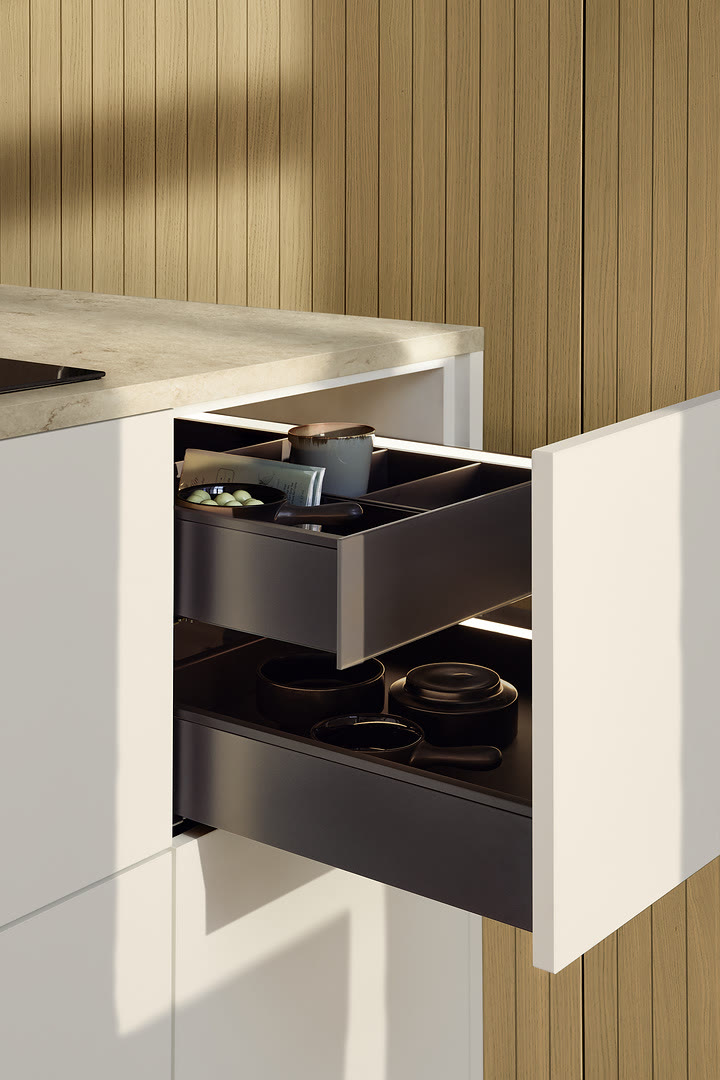
When I show a cabinet, I open a drawer before I say anything about color. I want people to feel the weight of the box, run a hand along the edge, and watch the drawer glide shut on its own. That is where quality lives, and it is the part no photo ever tells you about. The finish sells the kitchen. The box is what you are really paying for.
Which cabinet box survives Northern Virginia's humidity?
Our weather is the whole reason I steer people the way I do. Summers here are humid and heavy. Winters run dry when the heat is on. Wood responds to all of that by swelling and shrinking, and every material in your kitchen lives through that cycle year after year.
A dense, moisture-resistant engineered board is usually the most stable core for a cabinet box in this region. Good plywood boxes also perform well. What matters more than the label is the detailing: are the edges sealed so steam and spills cannot creep in, is the back panel solid rather than a thin stapled sheet, and are the joints built to stay tight. A cheap box will telegraph our humidity swings by sagging shelves and doors that stop lining up. A good box just keeps working.
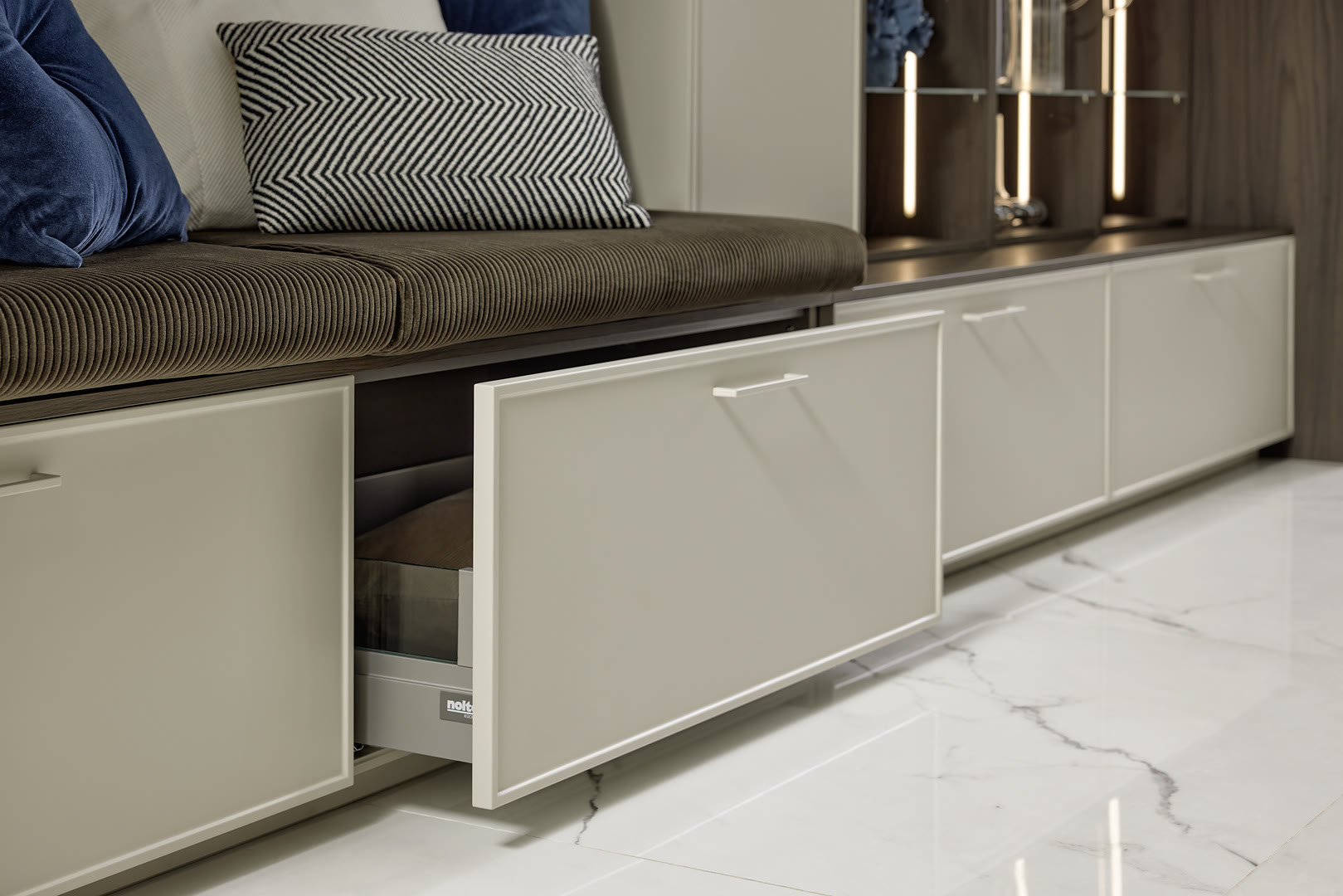
This is also where the European cabinets we build shine. The boxes are engineered as a system, the hardware is heavy, and the interiors are set up to carry real weight without complaint. If you want to see how we put those boxes together, that is the heart of what we do in our kitchen design and build work.
What about the door fronts and finishes?
Once the box is sorted, the front is where your kitchen gets its personality, and here you have real range. Three families cover most of what I recommend.
Painted lacquer. A factory-applied lacquer on a stable engineered front gives you that smooth, even, modern face in any color. It wipes clean, it holds its color, and because it is sprayed and cured in a controlled setting, it does not have the seasonal cracking risk that hand-painted solid wood can develop. If you want a crisp matte or a soft satin, this is usually the answer.
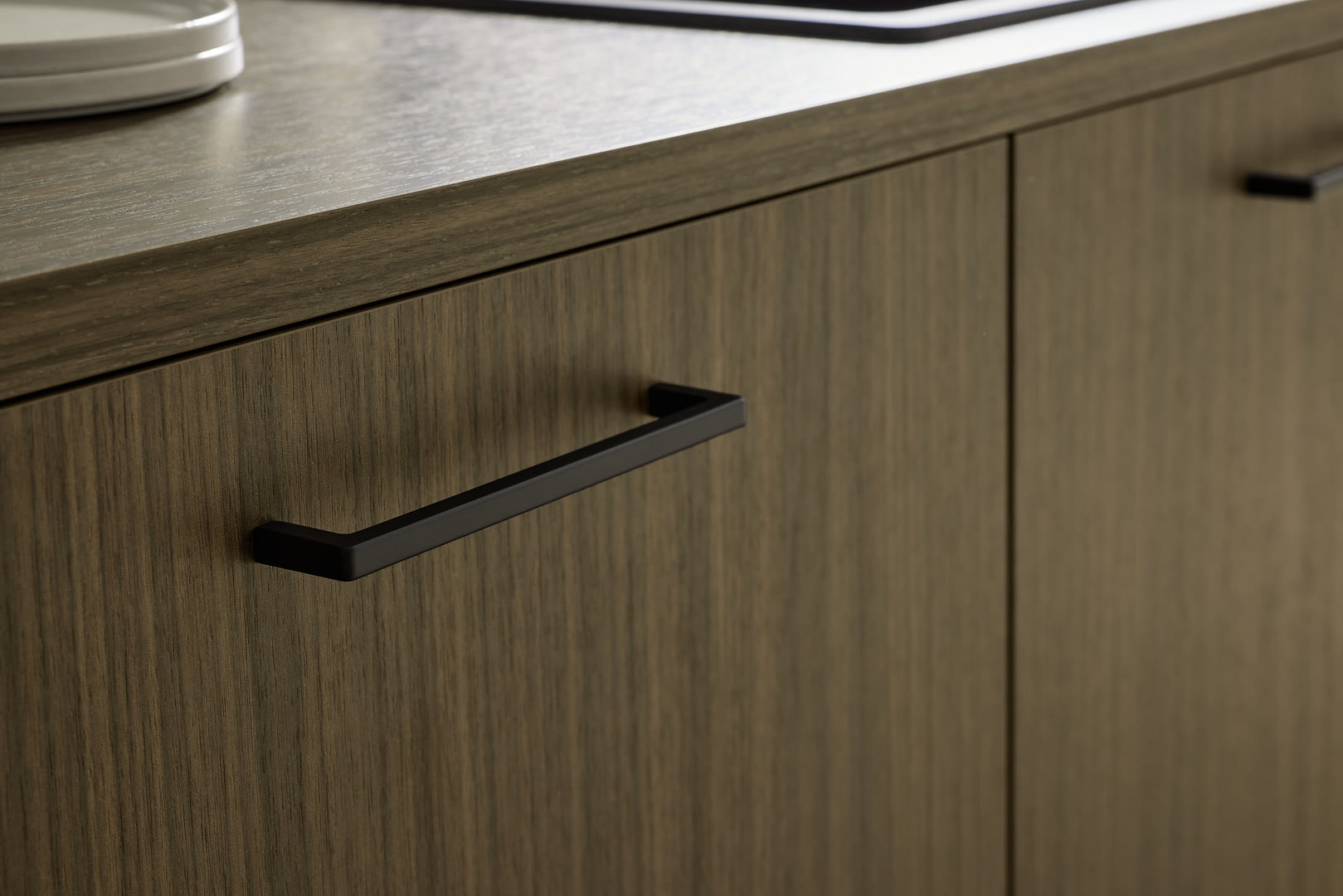
Real wood veneer. This is how I get people the warmth and grain of real wood without the movement problems of solid planks. A veneer is a thin layer of the actual wood bonded to a stable core, so you see genuine oak or walnut but the front stays flat and calm through the seasons. For anyone who loves natural wood, this is often the smart way to have it.
High-grade laminate. Forget the melamine of decades past. Modern laminates and lacquer-look surfaces are tough, they resist fingerprints and scratches, and they take steam near a range without flinching. On a handleless front they read as clean and deliberate. For a busy family kitchen, I have no problem recommending them.
Do solid wood cabinets still make sense?
Solid wood is not the villain of this story. It has a look and a feel that nothing else quite matches, and there are places I am happy to use it, usually on a shaker-style door or a specific accent piece where the client wants that traditional depth.
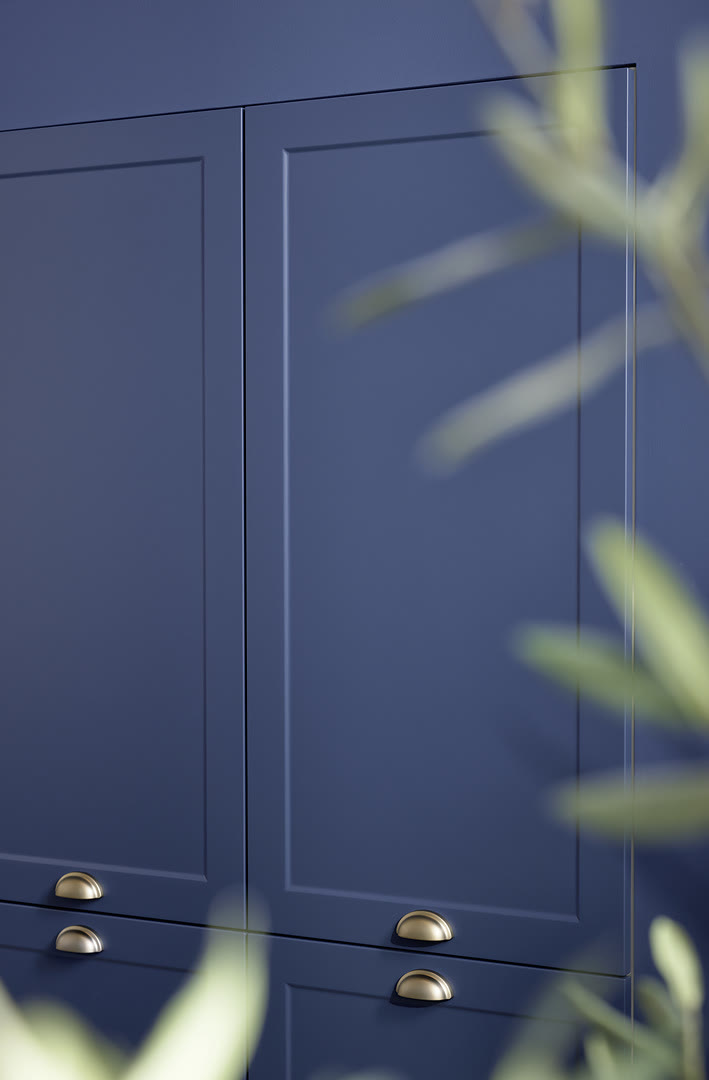
What I tell clients to avoid is solid wood everywhere in a hard-working kitchen, especially painted solid wood. The panels move, and in our climate that movement can open the joints and show fine hairlines in the paint over time. It is not a defect. It is just what wood does. If you love the shaker look, we can get you there with fronts engineered to stay stable, so you get the style without the seasonal drama. If a European aesthetic appeals to you, I get into that trade-off more in our piece on European kitchens in America.
How do I match the material to how you actually live?
Here is the part that matters most, and it has nothing to do with a spec sheet. The best material is the one that fits your life. A household with young kids and a lot of cooking wants surfaces that shrug off handprints and the occasional cabinet-door slam. A couple who entertains and keeps a quiet, spare kitchen might lean into a matte lacquer that photographs beautifully and stays that way with a wipe.
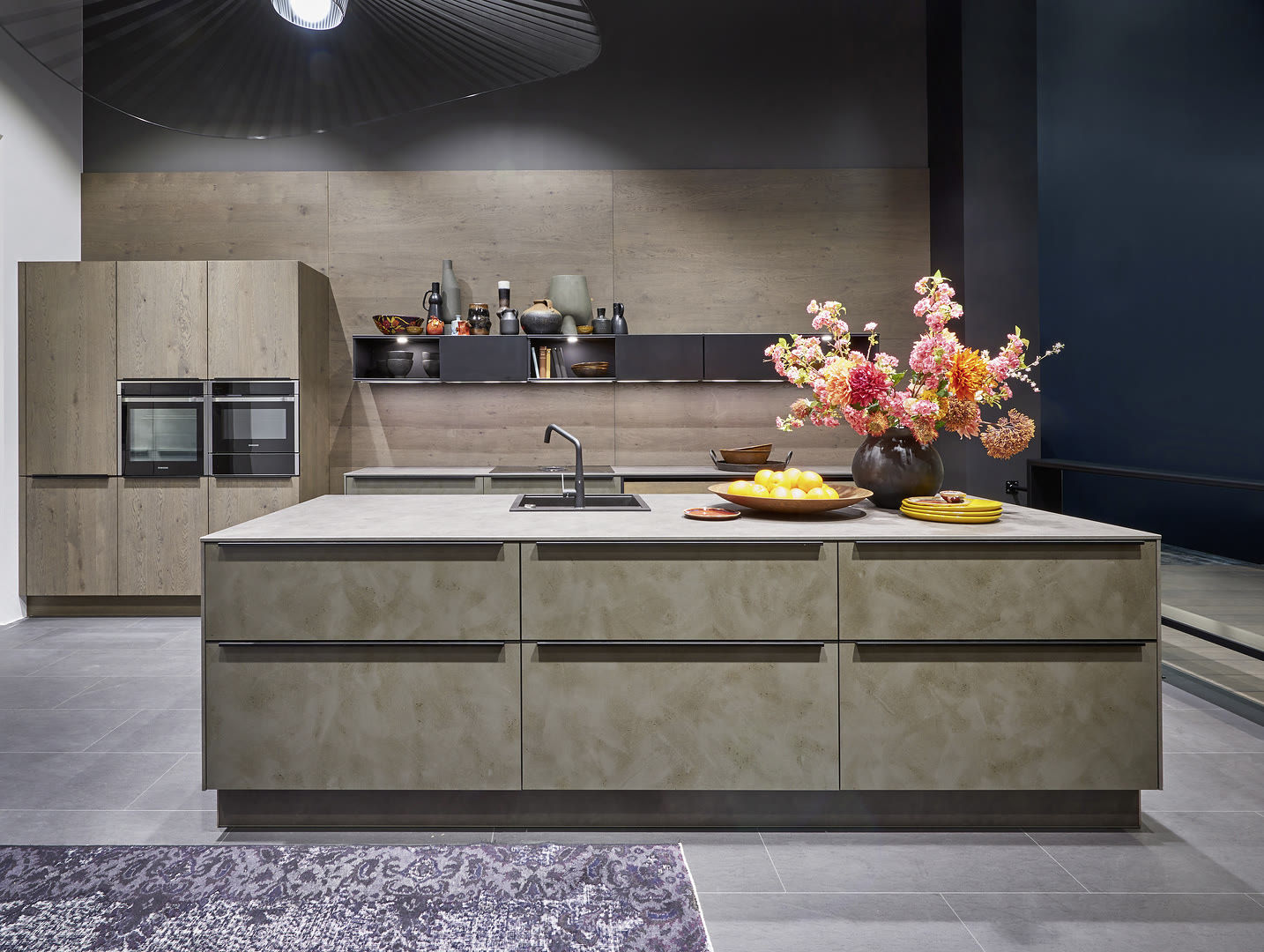
So when someone asks me to name the single best cabinet material for 2026, I push back a little. The honest answer is a combination: a stable, well sealed box that respects our humidity, and a front chosen for your light, your traffic, and your patience for upkeep. That is a better decision than chasing whatever material is trending.
The fastest way to make this real is to put your hands on it. Open the drawers, feel the fronts, see the finishes in daylight. You can do exactly that in our kitchen design showroom, and I am usually the one walking people through it. When you are ready to talk about your own kitchen, book a visit and bring your questions. I would rather you leave better informed than sold to.
Frequently Asked Questions
Are solid wood cabinets better than engineered cabinets?
What cabinet material handles humidity best in Northern Virginia?
Is laminate a cheap-looking choice for kitchen cabinets?
How do I know if a cabinet is well made without opening the wall?
Do painted cabinets hold up over time?
Keep Reading

European Kitchens in America: The Perfect Match for Timeless Elegance
European kitchens are no longer just a continental design statement; they have found a thriving home in America. From sleek, handleless cabinets to precision-engineered storage, these…

How Much Do Custom Kitchen Cabinets Cost in Northern Virginia?
Custom kitchen cabinetry in Northern Virginia starts near $15,000 for a small kitchen and climbs from there. Here is how the numbers actually work.

Top Kitchen Remodeling Trends for 2025
In 2025, kitchen remodeling trends are taking a bold leap forward, merging smart technology, sustainable design, and artisanal craftsmanship. Whether you're renovating a modern condo…
Ready to talk through your remodel?
Visit our showroom or request an estimate. We will walk you from first ideas to final installation.