
Sliding Closet Doors vs Hinged Doors: Space and Access
How I help Northern Virginia clients choose between sliding and hinged wardrobe fronts

Sam K. · Showroom Manager
· 6 min read

If you are deciding between sliding and hinged closet doors, the short version is this: sliding doors save the floor space a hinged door needs to swing, and hinged doors let you see and reach everything at once. In most of the bedrooms I walk through in Northern Virginia, the deciding factor is simply how much clear floor sits in front of the closet. When the answer is "not much," sliding wins. When there is room to swing, hinged usually gives the better daily experience.
I have this conversation almost every week in our Alexandria showroom, and I want to walk you through the real trade-offs the way I would if you were standing in front of the wardrobes with me. Names and a few details here are changed, but the situations are ones I see constantly.
How much floor space does each door really take?
A hinged door needs clear floor in front of it to open. A standard wardrobe door is around 18 to 24 inches wide, and it swings that full distance out into the room. On two or three doors in a row, that is a lot of floor you cannot put anything on, because the door needs to pass through it every day.
Sliding doors take none of that space. They move left and right along a track, so the floor in front stays usable. I had a couple in Falls Church with a narrow bedroom where the bed sat about three feet off the closet wall. With hinged doors, they would have been climbing over the corner of the bed to reach the far side. We went with sliders and the room finally worked.
So the first question I ask is always about the gap between the closet and whatever furniture faces it. If that gap is tight, hinged doors are fighting you before you even hang a shirt.
What do you give up on access with sliding doors?
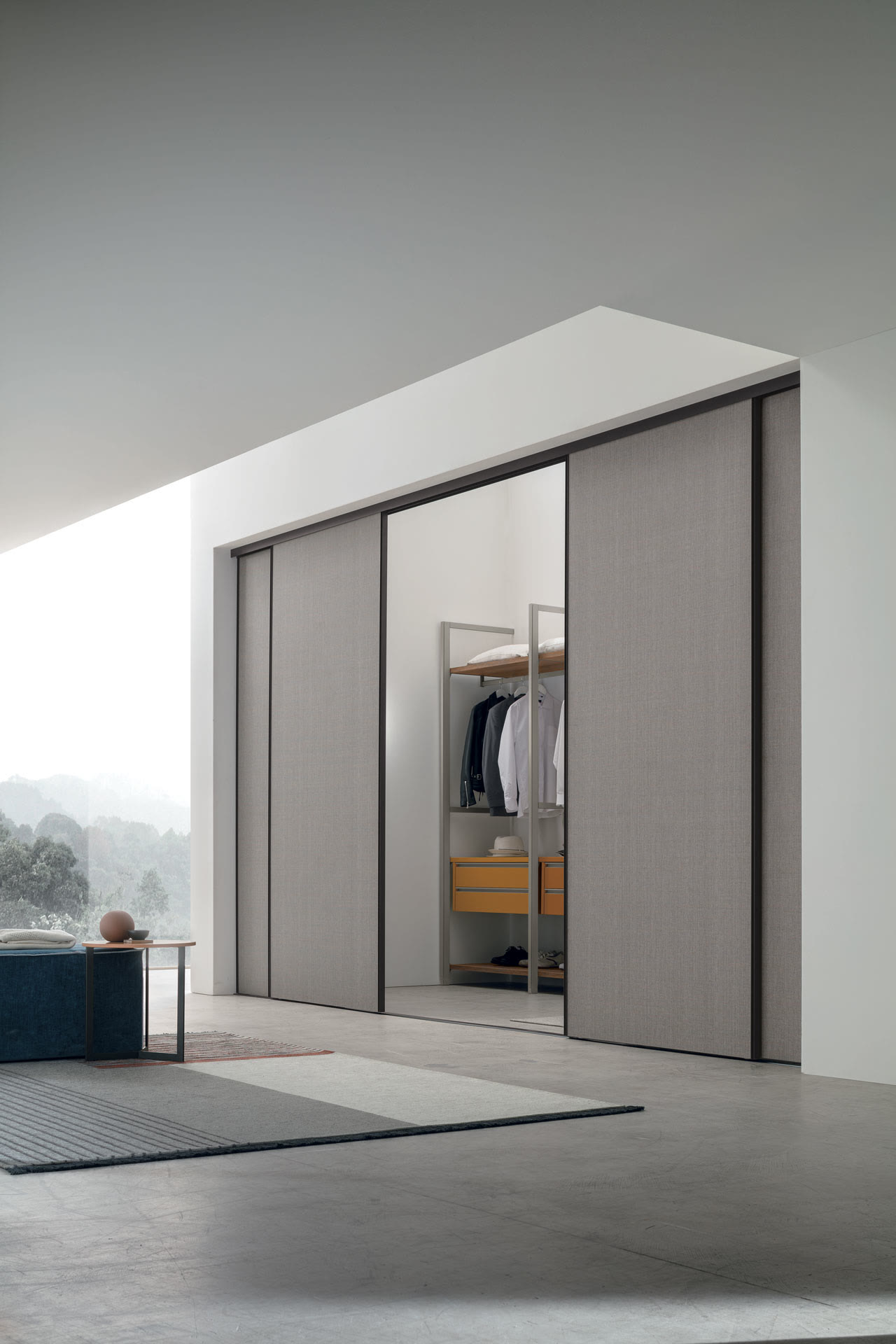
This is the catch, and I am honest about it with everyone. A sliding door can only expose part of the wardrobe at a time, because one panel always sits in front of another. On a two-door wardrobe, you can open the left half or the right half, but never the whole thing at once. There is always a slice you cannot see behind the stationary panel.
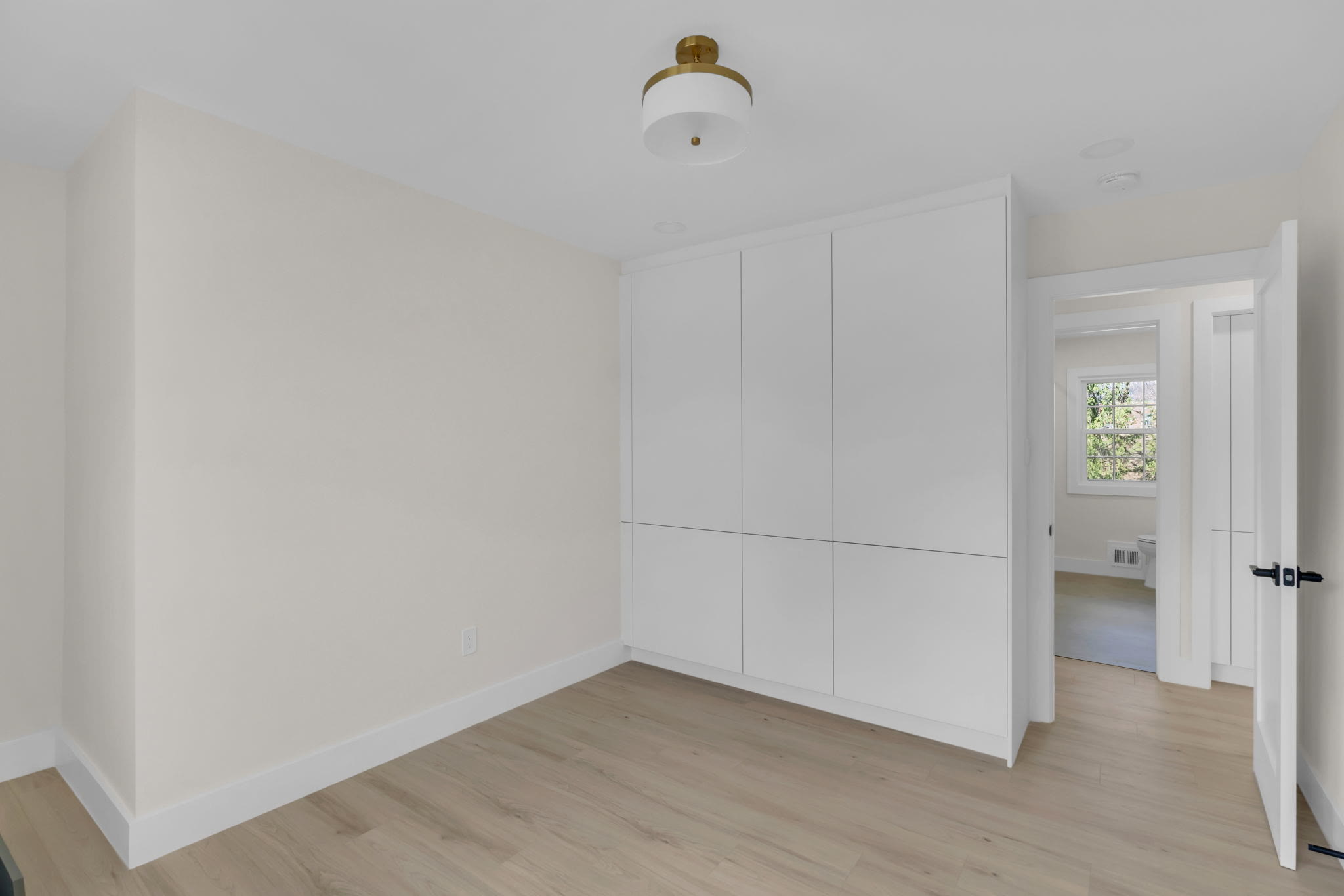
Hinged doors do the opposite. Open them all and the entire interior is in front of you. You see every shelf, every drawer, every hanging rod in one glance. For people who like to stand back and plan an outfit, or who store a lot across the full width, that full view is worth a great deal.
So I tell clients to think about how they actually use the closet. If you reach for the same few sections every morning, sliding doors cost you almost nothing. If you treat the wardrobe like a dressing display and want it all visible, hinged doors earn their swing space. Our perfect closet style guide touches on this, but it deserves a closer look than most people give it.
Do sliding tracks need a lot of maintenance?
The honest answer is yes, a little more than a hinge, but far less than the old reputation suggests. Sliding doors ride on rollers in a track, and the bottom track collects dust and the occasional dropped sock. Every so often you wipe it out so the doors keep gliding smoothly. That is the whole job.
What people picture when they hear "sliding closet doors" is often the flimsy mirrored panels in a 1980s builder home that jump off the track if you look at them wrong. That hardware gave the whole category a bad name. The soft-close roller systems we fit are a different world. They pull themselves shut the last few inches and stay quiet for years with light care.
A good hinge, by comparison, is close to maintenance-free. Fewer moving parts, nothing on the floor to collect dust. If you want the simplest possible mechanism and you have the swing room, that is a fair reason to lean hinged. But I would not let track maintenance alone decide it. A quality slider is not a chore.
Glass or solid fronts: what actually works in a bedroom?
Door type and door material are two separate choices, and they interact. Both sliding and hinged wardrobes can take solid, glass, or mirror fronts, so you are not locked in.
Mirror shows up most on sliding doors because it does two jobs: it covers the wardrobe and gives you a full-length mirror without a separate stand. In a small room that bounces light around and makes the space read larger. The downside is that a mirror facing the bed can feel like a lot of reflection at night, so I ask where the bed sits before I recommend it.
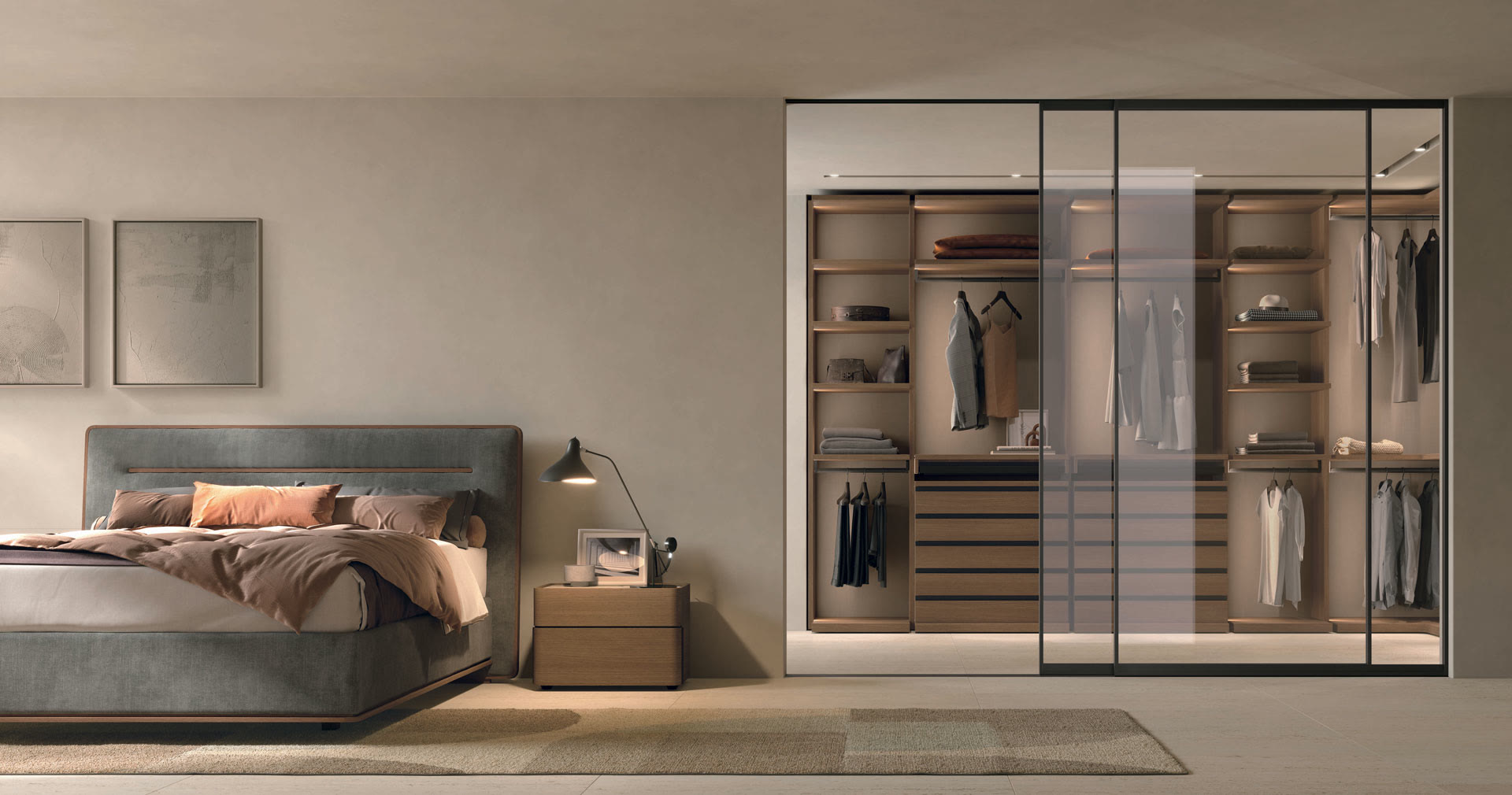
Glass fronts with interior lighting are where hinged doors shine. Open the whole thing and a lit, glass-fronted wardrobe becomes a display, almost like a boutique. Solid fronts are the quietest option, and in a bedroom where you want the closet to disappear into the wall, a handleless solid slab is hard to beat. It reads as architecture, not furniture. If you are still sizing the room itself, our notes on walk-in closet dimensions are a good companion to this decision.
How do Tomasella wardrobes handle the choice?
The reason I point clients toward Tomasella systems is that the door is a layout decision, not a limit on the system. You can build the same quality interior, the drawers, the rods, the lighting, the open shelving, behind sliding or hinged fronts. So we design the inside first for how you live, then choose the door that fits your room.
That order matters. I have watched people fall in love with a glass hinged door online, then discover there is no room to swing it, and feel like they have to give up the whole look. With a system that offers both, we keep the interior they want and switch the fronts to match the space. Nobody has to compromise on storage to solve a swing-space problem.
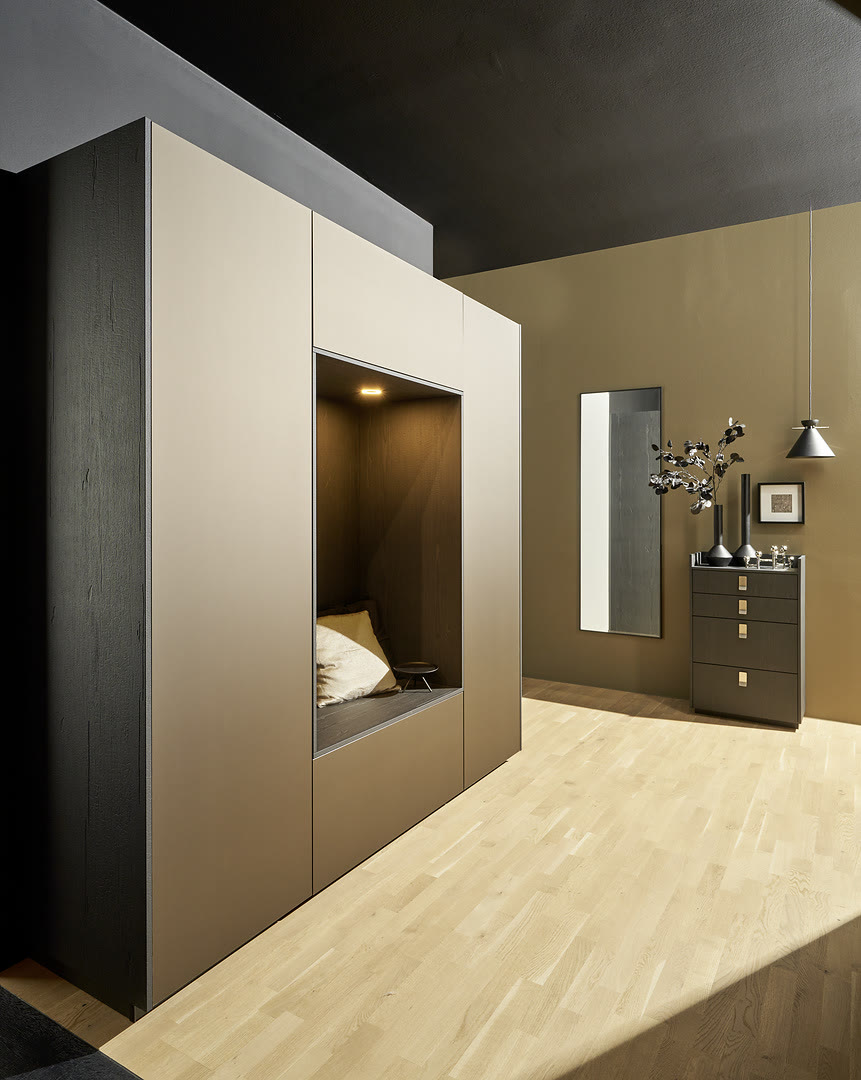
My usual advice: measure the clear floor in front of the closet, decide whether you need to see everything at once or just reach your daily sections, and then pick the front. In tight rooms, sliders with a mirror. In rooms with space and a love of display, hinged with glass. In a bedroom where the closet should vanish, solid handleless slabs either way.
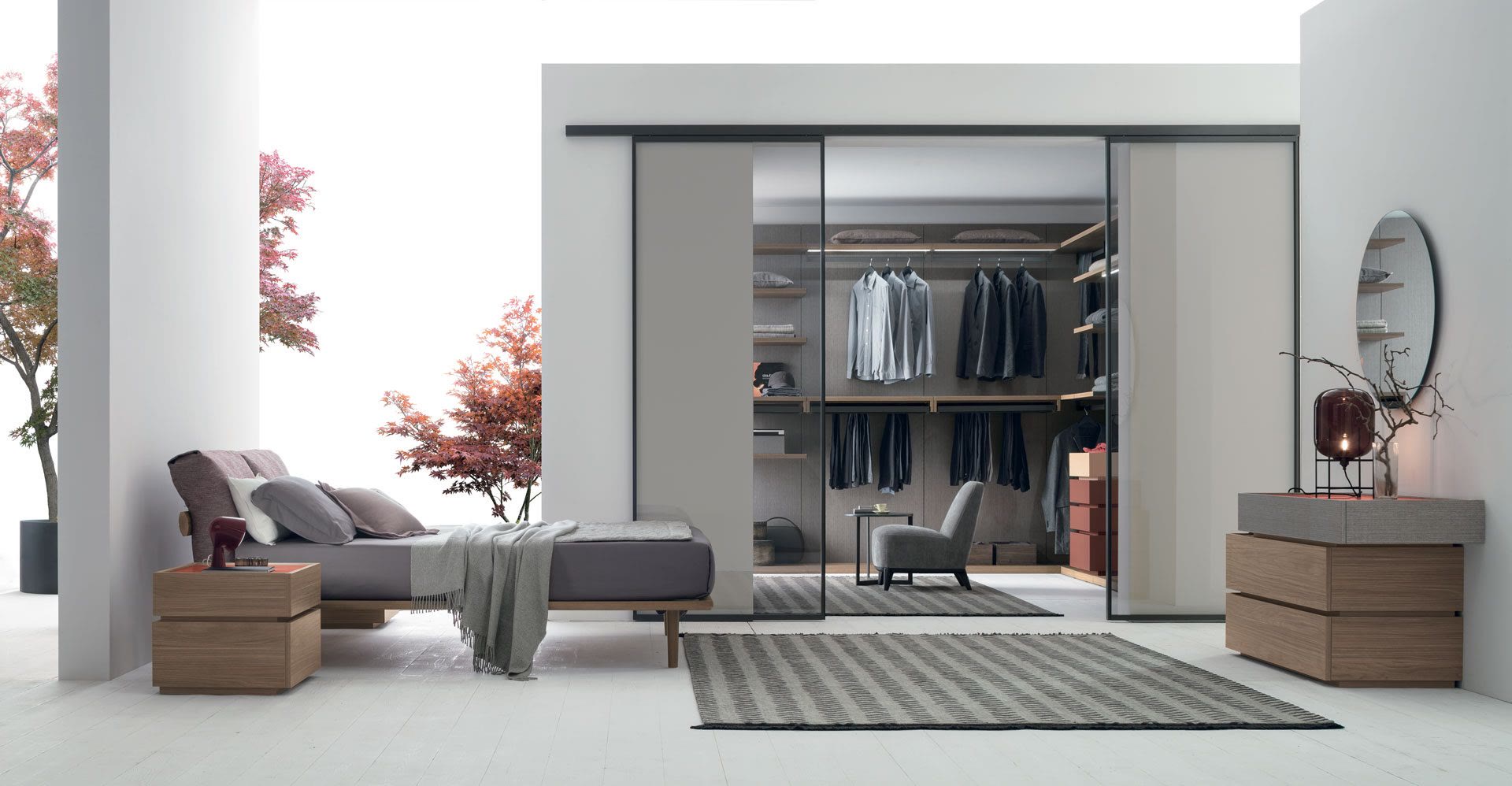
If you are weighing this for your own bedroom, the easiest next step is to bring a rough floor plan, even a phone photo with measurements, into the showroom. We can stand in front of both door types, slide them, swing them, and you will know within a few minutes which one your room wants. See how we approach the whole wardrobe on our closet design-build page, then come talk it through.
Frequently Asked Questions
Are sliding closet doors better for small bedrooms?
Do sliding closet door tracks break easily?
Can I get glass or mirror fronts on both door types?
Which door type lasts longer?
Keep Reading

Perfect Closet Style: Ultimate Guide for Your Home
Perfect closet style sets the tone for both functionality and aesthetic appeal in any home. Whether you have a compact reach-in space or a spacious walk-in, choosing the right layout…

Walk-In Closet Dimensions: Minimum Sizes and Layout
A measurement-led guide to walk-in closet dimensions: hanging depths, clear walkways, single and double-sided and U-shaped layouts, doors, and islands.

Modern Minimalist Closet
Introduction: Why a Modern Minimalist Closet Matters A Modern Minimalist Closet is more than just a space to hang clothes. It’s a reflection of lifestyle, mindset, and design…
Ready to talk through your remodel?
Visit our showroom or request an estimate. We will walk you from first ideas to final installation.