
What You're Paying for in High-End Kitchen Cabinets
A designer's practical breakdown of construction, materials, hardware, and design time for Washington DC homeowners.

Sam K. · Showroom Manager
· 6 min read

When people ask me what they're paying for in high-end kitchen cabinets, the short answer is construction and fit. These are not stock boxes with a nicer front attached. They are built to order to the room's measurements, with materials and hardware chosen to hold up through daily use. In the Washington DC area, cabinetry for a kitchen starts from $15,000, and that figure covers the cabinetry itself, not the countertops, appliances, or construction around it.
What are you actually paying for?
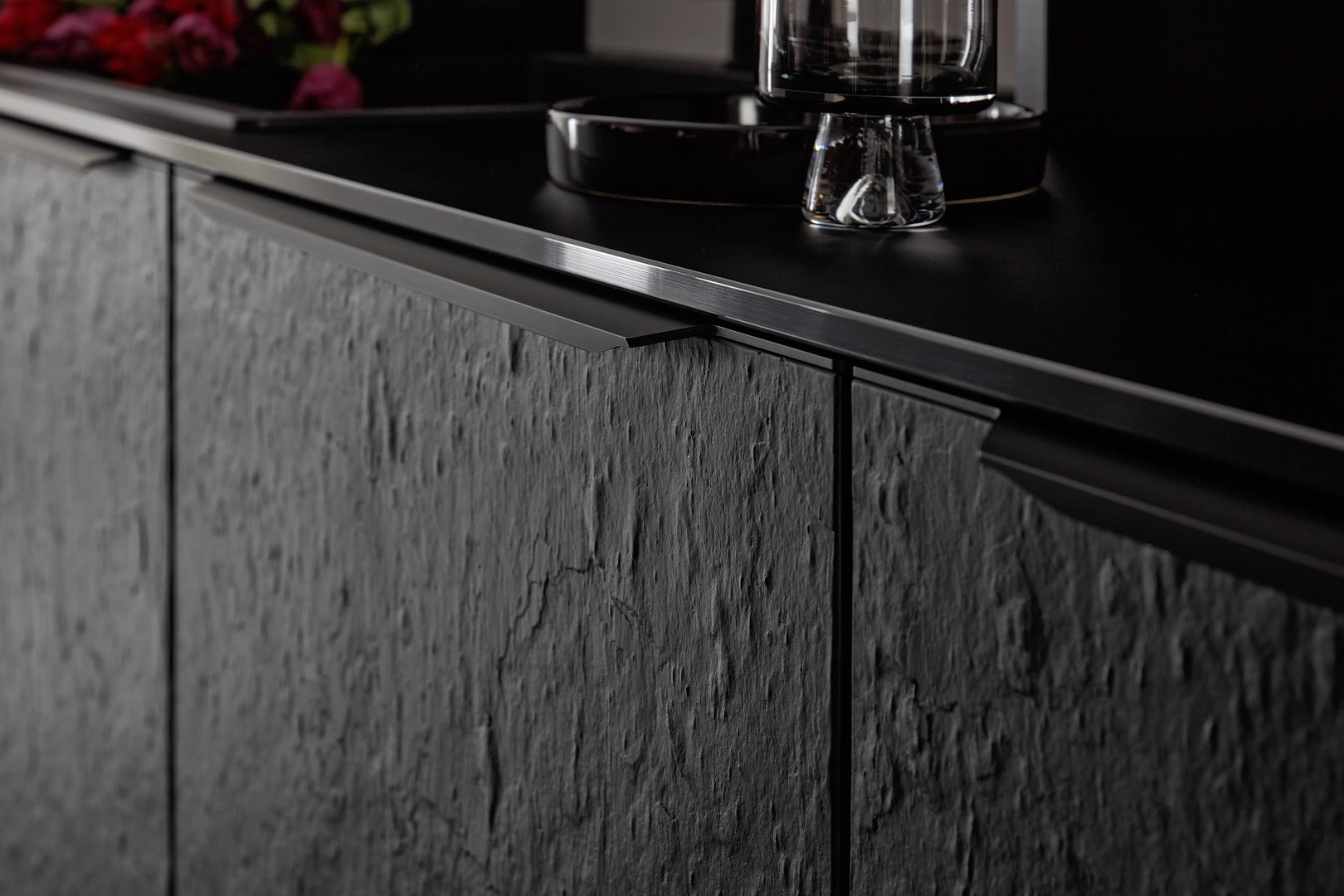
High-end kitchen cabinets are defined by construction and fit rather than price alone. The carcass, the part behind the door or drawer front, is built to the room's measurements, not pulled from a fixed size chart. Hinge and drawer systems are engineered for daily opening and closing, and the fronts come in solid wood, real wood veneer, a metal or slate look, glass, or lacquer with an anti-fingerprint surface. I tell clients to open a drawer and look at the inside edges and underside. That is usually where the difference between a showroom piece and a long-term kitchen first shows up.
Our cabinetry is Nolte, built to order in Löhne, Germany, and designed and installed by our team across Northern Virginia, Washington DC and Maryland. The factory's job is precision within very tight tolerances. Our job is to make sure the ordered sizes, clearances, and appliance openings match the house that already exists. That is a different conversation from buying cabinet boxes off a shelf and finding a filler strip for the gap.
This is why I usually start a showroom visit at the drawers. A drawer that closes softly, opens fully, and does not wobble under a set of pots tells you more about the cabinet than a photo ever will. It is also why the price can look high on paper before you have used the kitchen.
Why do materials change the price so much?
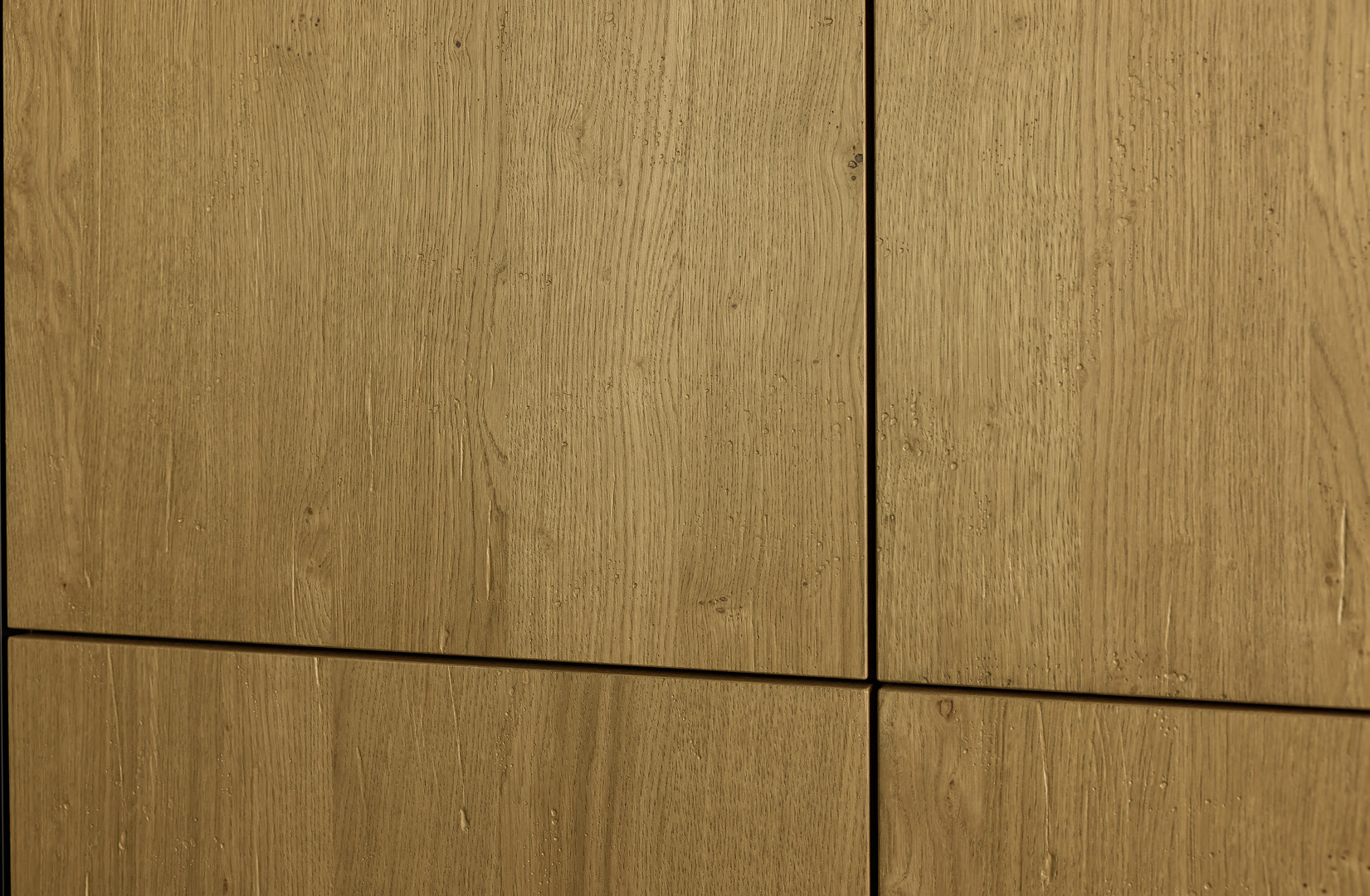
The front is the most visible part, but it is not the only cost. A real wood veneer can be selected for grain and matched across a run of cabinets, which takes more material and more labor than a solid-color lacquer. A framed solid wood front is different again. It is actual wood and can move with changes in humidity, so it has to be built to allow for that. A slate look or a metal look gives a particular effect without being the material it resembles. That is not a trick, as long as the proposal is honest about what you are buying. In our proposal we keep that distinction clear, because the price has to match the material.
When clients compare two white kitchens, I ask them to compare the front material, the edge detail, and the interior finish. A white lacquer door and a white wood-look door can photograph the same and behave very differently after years of cooking, steam, and cleaning. A slab door in high-gloss lacquer has to be flat enough to hold a clean reflection, which is more demanding than a textured surface that hides small variations. Solid wood and real wood veneer have their own cost in selecting stable boards and matching grain. High-end kitchen cabinets are often the place where the difference moves from something you can see on a screen to something you can feel in person.
Why does hardware matter more than people expect?
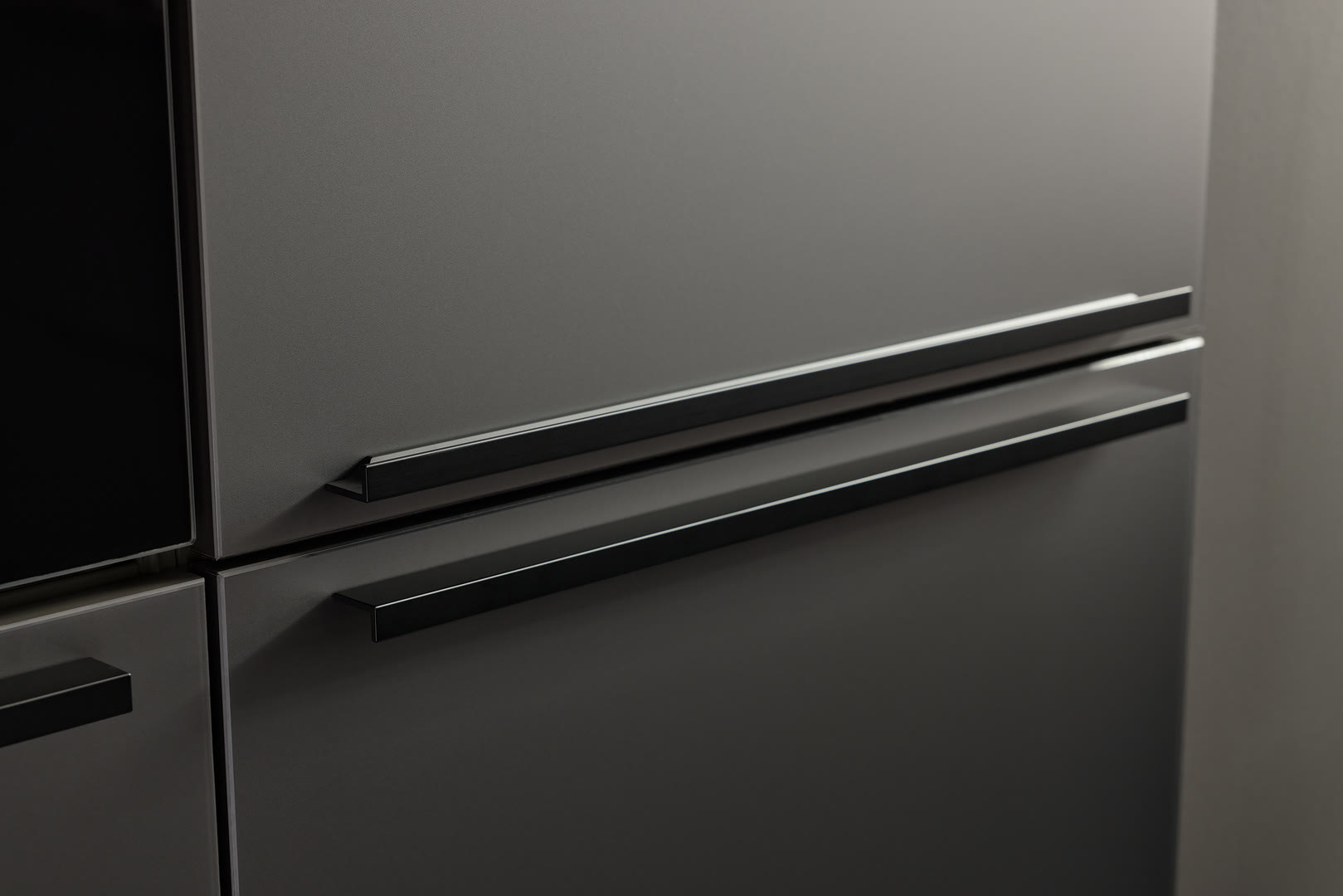
Hardware is the longest-lasting touchpoint in a kitchen. Soft-close drawers, full extension, how much weight a drawer carries, whether an upper door stays open exactly where you leave it. Those details are engineering, not decoration. I would rather spend a showroom appointment opening and closing drawer systems than debating a paint color, because the hardware is what people use hundreds of times a week. When we specify cabinetry, those systems are part of the cabinet maker's engineering, not a separate upgrade bolted on later.
A pot drawer under the cooktop needs a different weight rating than a cutlery drawer. Push-to-open systems need enough clearance and a soft-close mechanism so the door does not slam. Undermount drawer slides carry more weight and cost more than side-mount slides, but they also keep the drawer stable when it is fully extended and loaded. A kitchen that feels precise on day one and still feels precise at year ten usually costs more up front for exactly that reason. The price is not in a label. It is in the tolerance of the drawer slides, the weight rating, and the way the door hangs after ten thousand openings.
What does design and measurement time buy you?
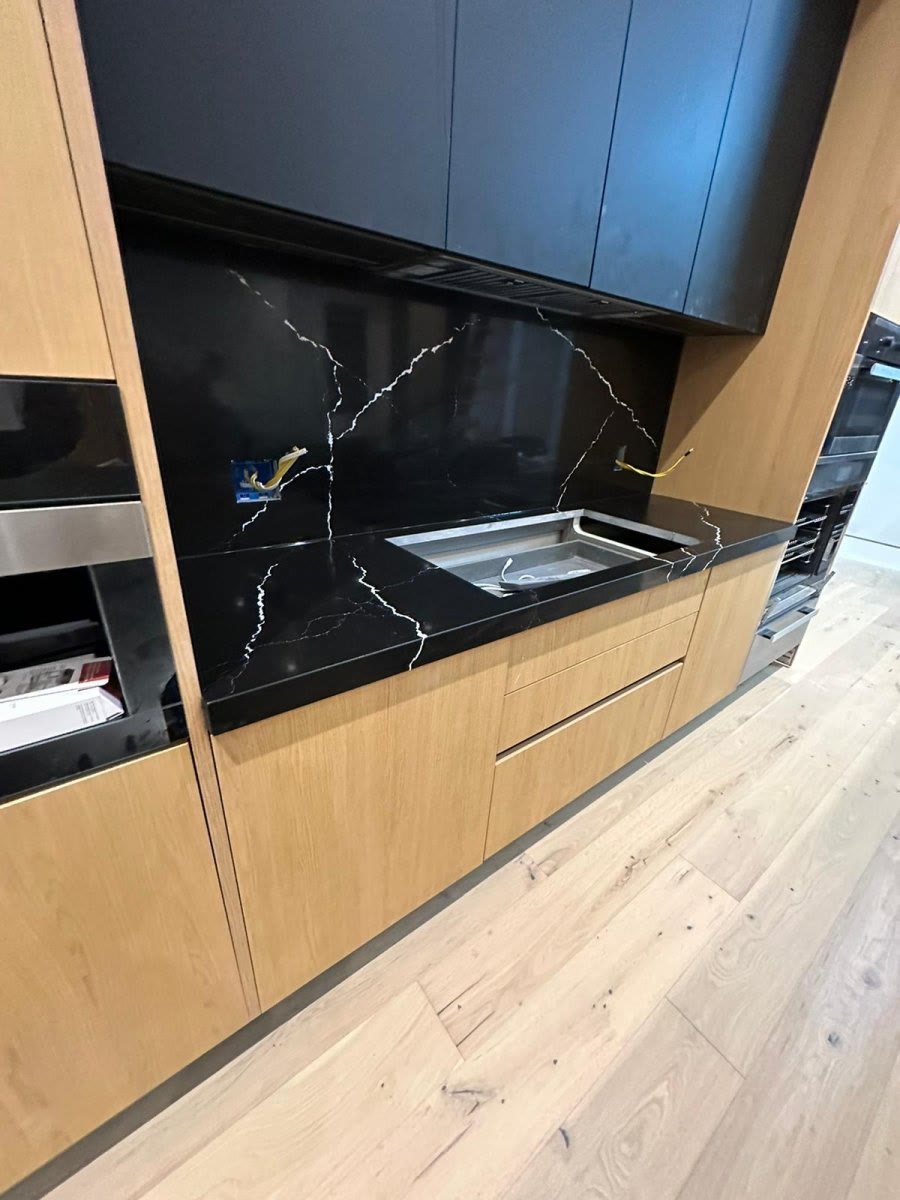
Before an order goes to the factory, someone has to measure the room, map the plumbing and electrical, and draw the cabinets in elevation. That step is not a formality. In Washington DC homes especially, walls can be out of square, old chimneys and pipes sit in inconvenient places, and appliance openings need the correct clearances. Our team designs the kitchen in 3D, specifies the cabinetry and equipment, and checks those clearances before anything is built. If walls, plumbing, or electrical work change, we file the permit with the DC Department of Buildings when the project is in the District. That preparation is part of the price, and it is far cheaper than fixing an error after the cabinets arrive.
We measure at several points because an old wall is rarely straight from corner to corner. Ceiling height affects tall units. Appliance specifications have to be confirmed early, or you can end up with a cooktop that does not sit correctly in the cabinet depth or a hood duct that collides with a wall. Design time is where those conflicts get resolved on paper. I know it can feel abstract to pay for drawings before you can touch a door. But the drawings are where the expensive mistakes get caught. Aksesuar Design has been doing this work since 1985, and the Alexandria showroom has been open since 2017, so the process is not new. That is what kitchen remodeling in Washington DC actually involves.
What should a Washington DC homeowner expect to spend?
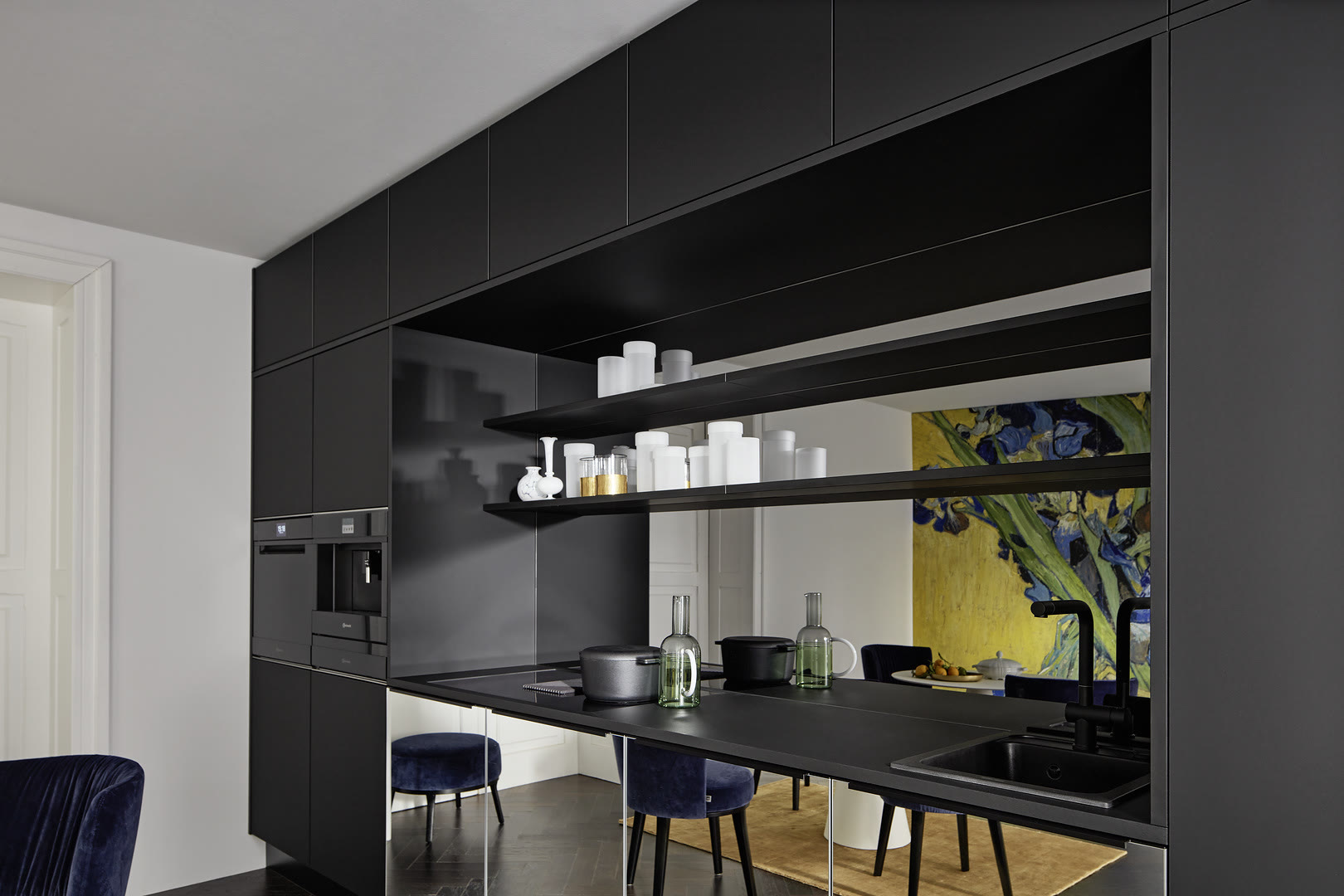
Published cabinetry figures at Aksesuar start from $15,000. That is cabinetry only, not countertops, appliances, or construction. The totals for completed kitchen projects are higher because they include all of those pieces together. I tell clients to compare specifications before they compare totals, because two proposals that look alike on paper can differ by the number of cabinets, the internal storage, the front material, and the amount of construction the house needs. That is not a way to hide cost. It is the honest reason two kitchens that look the same can land far apart.
The starting price is useful because it lets you compare cabinet quality without the rest of the kitchen clouding the picture. If a quote is far below that, ask what you are not getting in the carcass, the hardware, or the front. If a quote is far above, ask which materials and layout changes are driving it. That is a fair conversation to have before you commit.
When you are ready to see the difference in person, come to our Alexandria showroom. We can walk through the materials and hardware and explain what the price is doing. To plan for custom kitchen cabinets in the Washington DC area, that first conversation is the easiest way to separate real differences from marketing language.
Frequently Asked Questions
What do high-end kitchen cabinets cost in Washington DC?
Are European kitchen cabinets worth more than locally built cabinets?
What is the difference between real wood, wood veneer, and a wood-look finish?
Do I need a designer to order high-end kitchen cabinets?
What should I look for when comparing cabinet showrooms?
Keep Reading

Custom vs Semi-Custom Kitchen Cabinets: What Price Buys
Custom and semi-custom cabinets differ in sizing, construction, finishes, and lead time. Here is what the price gap actually buys in a Northern Virginia.

What Makes German-Made Kitchen Cabinets Different
German kitchen cabinets feel different because of tighter tolerances, proven hardware, and built-to-order production.

How Much Do Custom Kitchen Cabinets Cost in Northern Virginia?
Custom kitchen cabinetry in Northern Virginia starts near $15,000 for a small kitchen and climbs from there. Here is how the numbers actually work.
Choosing kitchen cabinets?
See our custom European cabinetry, or request an estimate for your kitchen.