
What Makes German-Made Kitchen Cabinets Different
Tolerances, hardware, and built-to-order production.

Sam K. · Showroom Manager
· 6 min read

German-made kitchen cabinets are different in a few practical ways. The boxes and fronts are built to order for your room. The production tolerances are tighter. The drawer and hinge engineering is designed for daily use. Those differences show up in how a cabinet fits, how a drawer feels after ten years, and how well the finish holds up. It is less about a national label and more about how the box, the drawer, and the hinge are manufactured. When those three are right, a kitchen feels precise from the first day and stays that way.
I work with homeowners in Northern Virginia who come to the showroom after reading about German kitchens. They usually want to know whether the difference is real or whether it is just a label. The best short answer is that the label only matters if the cabinet is actually built in Germany, because the factory system is where the tolerances and hardware come from. We design and install German kitchen cabinets from Nolte Küchen, built to order in Löhne, Germany, for homes across Northern Virginia, Washington DC and Maryland.
Why do tolerances matter in a kitchen?
In a kitchen, a few millimeters changes how drawers line up, how doors close, and whether a cabinet run looks calm. The factory builds cabinets with tolerances held to a fraction of a millimeter. That means two doors on the same run sit in the same plane. A drawer front does not droop by the time the room is finished. When a cabinet is built to order in Germany, those tolerances are part of the production line, not something the installer has to correct on site. We specify and install the cabinetry, but the consistency starts in the factory. In an older Northern Virginia home, that matters because the walls and floors are rarely perfectly level. The installer still has to work with the room, but the cabinet itself arrives straight and square. Nolte was the first German kitchen maker certified to both PEFC and FSC. That certification is not about style; it means the wood sourcing and production chain are audited. For a homeowner, it is another sign the factory process is disciplined rather than cosmetic.
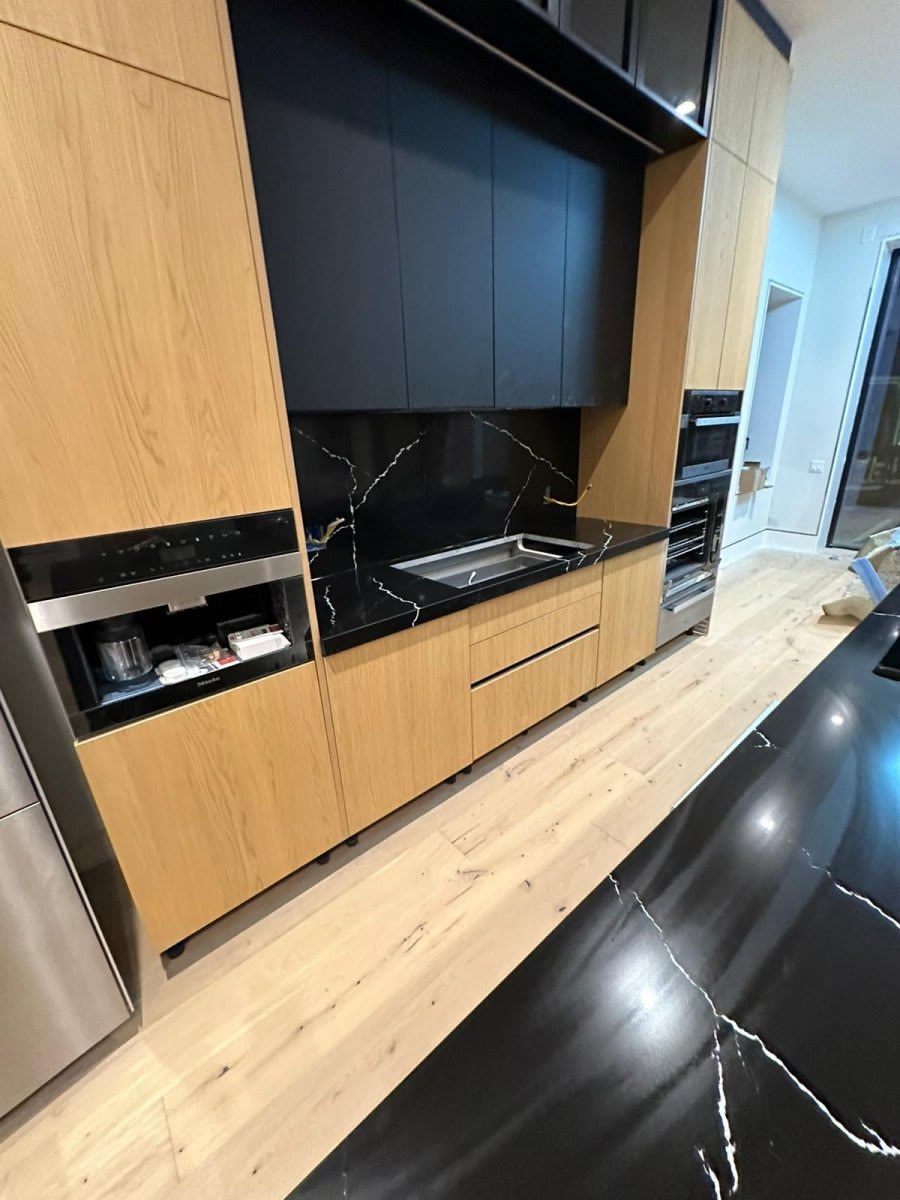
What do German drawer and hinge systems feel like?
People ask about door styles first, but the first thing they notice in the showroom is the hardware. Drawer boxes glide without much effort even when loaded. Hinges close doors softly and hold the weight of a large front without sagging. This is where German production has an advantage. Nolte has made kitchens since 1958 and is still family-owned. The drawer and hinge engineering benefits from that long production history. I tell clients to load a drawer and open it from one side. A good system stays level and quiet. That is the test that matters more than the door style. When you compare drawers, look for full-extension slides and soft-close built into the mechanism rather than added as an afterthought. A full-extension drawer lets you reach the back without kneeling, and soft-close saves the box from being slammed shut. These are small details in the showroom and daily habits at home.
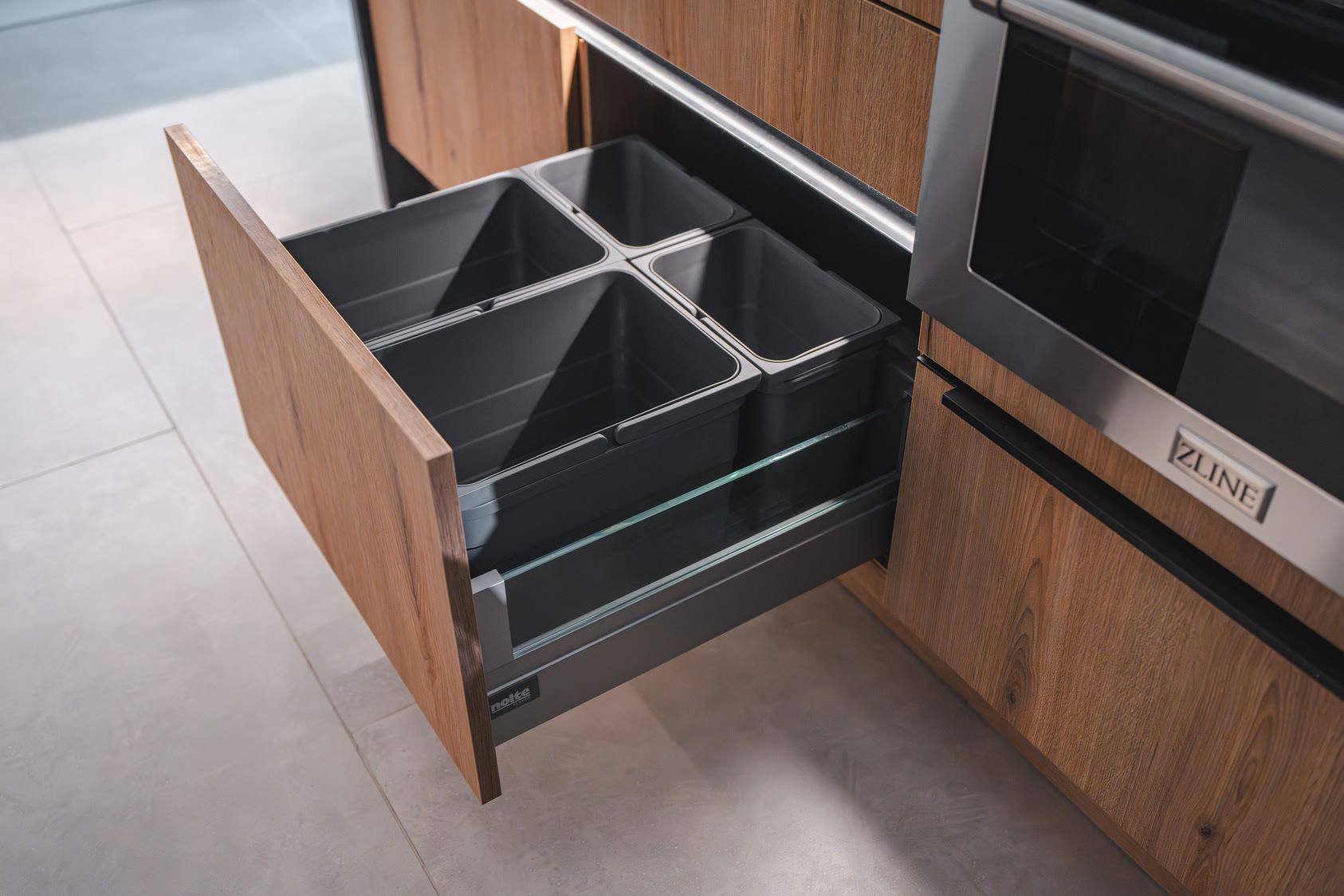
How does built-to-order production change the fit?
A stock cabinet is made to common widths and then filled with spacers. A built-to-order cabinet is made to the room's measurements. In our projects, every kitchen is designed in 3D at our Alexandria showroom and installed by our own team across Northern Virginia, Washington DC and Maryland. The cabinetry is built to order in Germany so the boxes match the design rather than the design being adjusted to a catalog size. That makes more difference in older homes and additions where walls are not perfectly square. The frameless construction also helps: with no face frame, the full cabinet opening is accessible. Wider drawers and pull-out pantries give you more usable space than a framed box with the same outside dimensions. A face frame can cost you an inch or more around each opening, and in a small kitchen that loss repeats across the run. The frameless system returns that space to the drawer, which is why clients who want more storage usually lean this way. If you are weighing the two systems, I explain the difference in our frameless cabinet article.
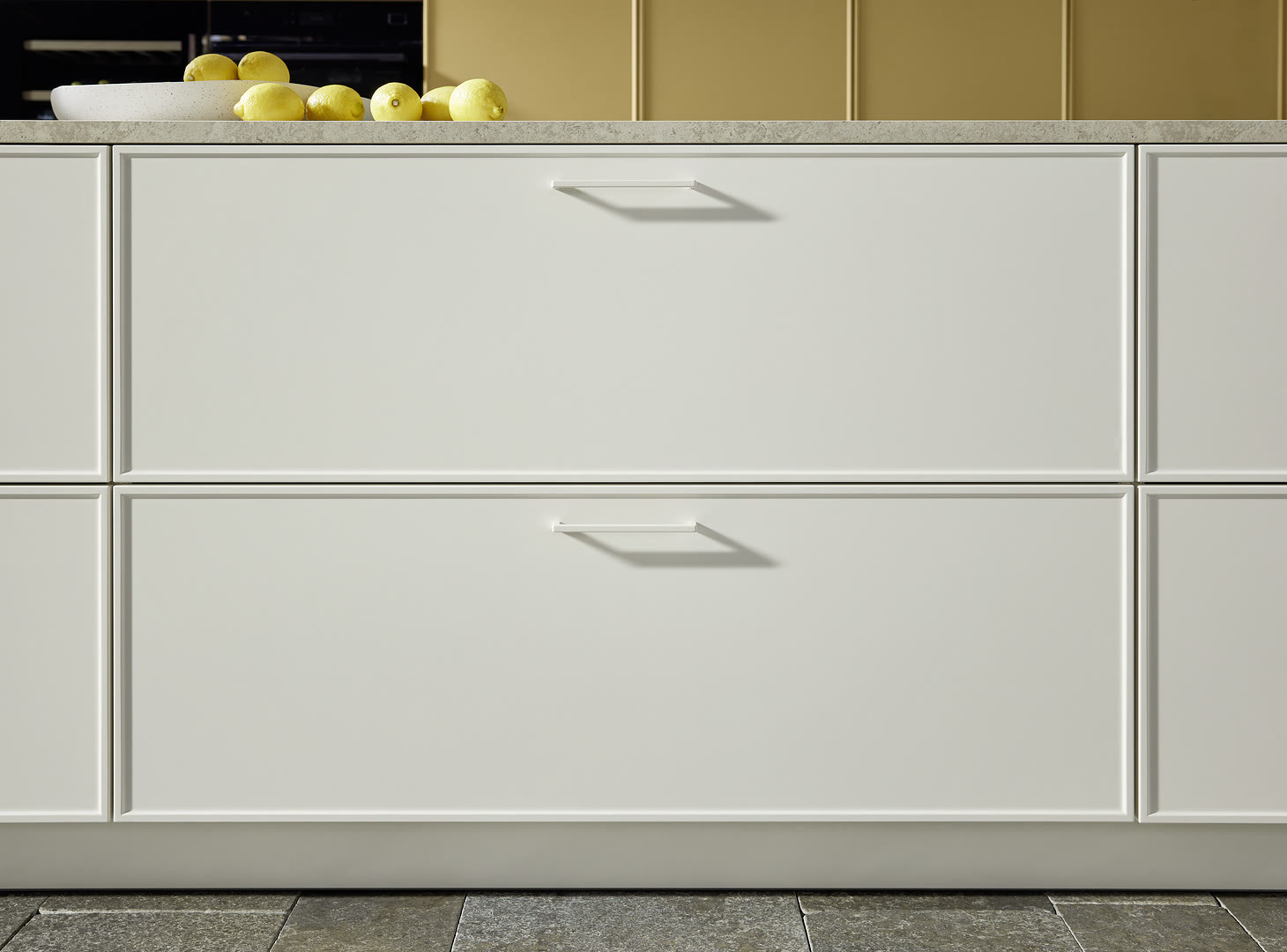
What should Northern Virginia homeowners look for before choosing German cabinets?
First, confirm where the cabinets are actually made. German style is easy to copy, but the production system is not. Our cabinetry is manufactured in Germany and built to order for each project. Second, ask who designs the kitchen and who installs it. A clean design and a poor install can cancel each other out. We design and install our cabinetry with our own team across Northern Virginia, Washington DC and Maryland. Third, check the construction. If you are comparing framed and frameless, ask to see both side by side in person. Seeing boxes in the showroom settles the question faster than a spec sheet. Also ask the manufacturer name, not just the style name. Bring a rough floor plan or measurements with you. It does not have to be perfect. Even a hand sketch with wall lengths and door locations helps the conversation about whether built-to-order cabinetry is worth it for your room. Do not skip the sample door test: run your hand over the edge, open the drawer, and close the door softly. The materials and hardware should feel substantial in your hand.
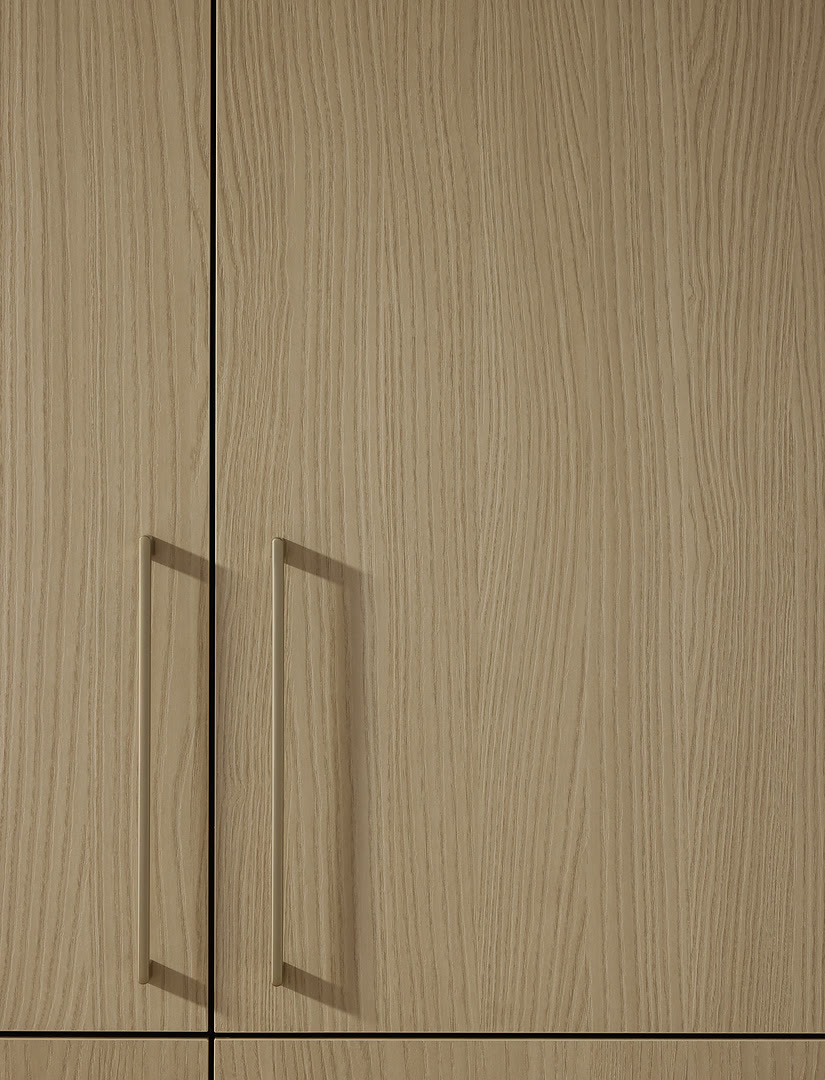
Are German cabinets a good fit for an older Northern Virginia home?
Yes, usually. Many homes in Northern Virginia and Washington DC have older framing, uneven floors, and walls that are not square. A built-to-order cabinet is easier to fit to those conditions because it is made to the measured room. That does not mean every German kitchen will suit every house. The design still has to be right for the home. A city rowhouse usually needs a different layout and door style than a newer great room. What the German production gives you is the same underlying consistency in either setting. The cabinet behind the door remains straight, square, and well-engineered. That is why this works in city rowhouses and larger suburban kitchens. In a rowhouse, a tall pull-out pantry can turn a narrow footprint into usable storage without widening the room. In a larger kitchen, the same precision keeps a long run of handleless doors looking like one plane. The common thread is that the cabinet arrives straight, and the installer can address the house instead of correcting the cabinet.

If you are planning a kitchen in Northern Virginia, Washington DC or Maryland, start by comparing the boxes, not just the door fronts. You can see the difference in person at our Alexandria showroom. For the next step, see custom kitchen cabinets.
Frequently Asked Questions
Are German kitchen cabinets actually made in Germany?
Do German cabinets cost more than American cabinets?
Are German cabinets a good fit for a traditional Northern Virginia home?
What is the difference between frameless German cabinets and framed American cabinets?
How do I know I am getting real German cabinets rather than a German look?
Keep Reading

Frameless European Kitchen Cabinets Give You More Space
Frameless European kitchen cabinets leave out the face frame, so drawers and tall pull-out units use the full opening. Here is what to check before a remodel.

How to Choose a Cabinet Maker in Northern Virginia
The questions to ask a Northern Virginia cabinet maker before you sign: who designs it, where it's built, who installs it, warranty, and timeline.

Fully Custom Kitchen Design-Build in DC, MD & VA
What a fully custom kitchen design-build actually involves in DC, MD and VA, and when the extra planning is worth it for your home.
Choosing kitchen cabinets?
See our custom European cabinetry, or request an estimate for your kitchen.