
Custom vs. Bespoke vs. Designer Cabinets Explained
What the three words really mean, and which one your kitchen actually needs

Sam K. · Showroom Manager
· 6 min read

Here is the short answer I give people in the showroom almost every week. Custom, bespoke, and designer are not three fixed grades of cabinet. They are marketing words that different companies use in different ways. Custom usually means built to your dimensions. Bespoke usually means made as a one-off for you. Designer usually means an engineered collection line curated by professionals. The problem is that any shop can use any of these words, so the label tells you very little. What actually decides whether a kitchen lasts is how the cabinet is built, how precisely it fits your room, and who stands behind it after the truck leaves.
I want to walk through what each term tends to mean, how to see past the language, and how we help clients across Northern Virginia pick the right one. No shame in any budget here. The goal is that you walk into your first design meeting already knowing the questions to ask.
What do custom, bespoke, and designer cabinets actually mean?
Let me define them the way the industry mostly uses them, then tell you where the words fall apart.
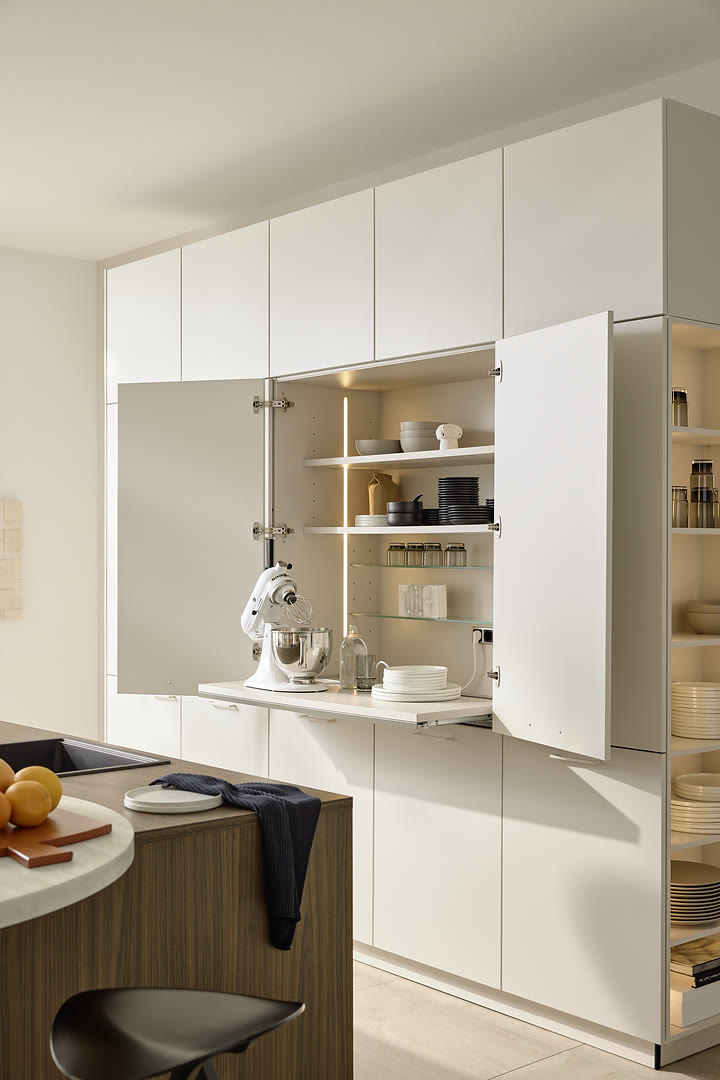
- Designer or collection cabinets. These come from a manufacturer that has engineered a full line: sizes, finishes, hardware, interior fittings. The German and European lines we build with fall here. You configure them heavily, but the parts are made to a repeatable standard.
- Custom cabinets. Built to your measurements rather than pulled from a stock size chart. That might be a factory building to spec, or a local shop cutting to your wall.
- Bespoke cabinets. Usually the same idea as custom, dressed up. It implies a true one-off, made for you and no one else, often with more hand involvement.
Now here is where it gets slippery. I have seen a big-box line call itself custom because you can pick the door color. I have seen a two-person shop call itself bespoke with no finish warranty at all. The word on the brochure is not a promise. So I tell clients to stop sorting by label and start sorting by construction and accountability.
How do you tell them apart when you are shopping?
Open a drawer. Really. Pull it all the way out and look. On the cabinets I trust, the drawer box is solid, the runners are steel, and the soft-close is smooth and quiet even when the drawer is loaded. Cheap work reveals itself here first: stapled boxes, plastic slides, a wobble at full extension.
Then look at the finish. Ask what it is and how it holds up next to a dishwasher that throws steam every night. Painted, foil, lacquer, real veneer, they all behave differently over ten years. A good line will hand you the warranty in writing. A vague answer is an answer.
Then ask the question most people forget: who fixes it if a hinge fails in year three? A large engineered line has parts you can still order. A one-off shop is only as good as whether that shop still exists and still remembers your job. Neither is automatically better. You just need to know which situation you are buying into. If you want more on this, we wrote a longer piece on how to choose a custom cabinet maker in Northern Virginia that goes deeper on vetting a shop.
Which one is right for your kitchen?
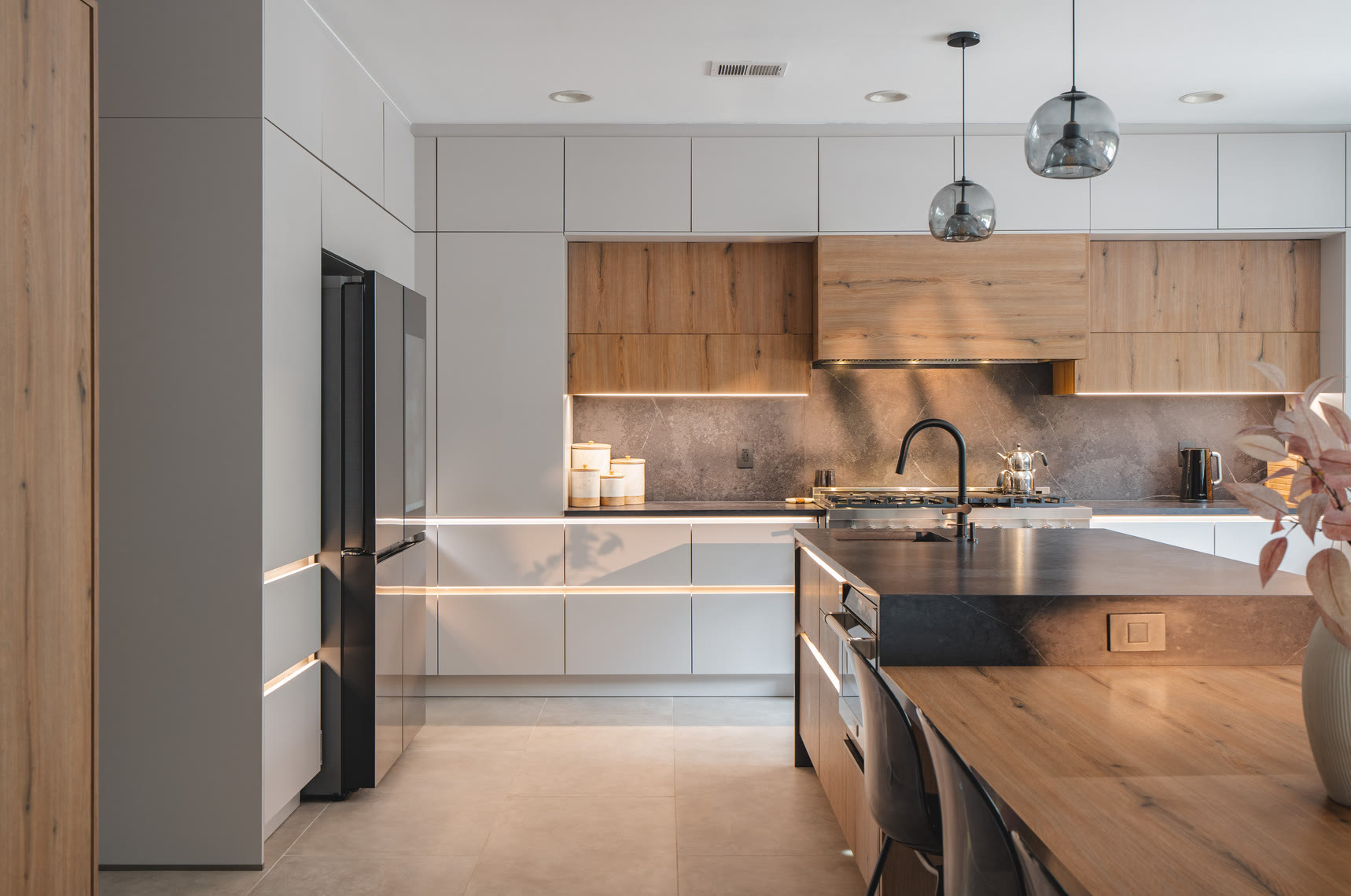
Most of the kitchens we design come out best with a strong collection line, configured tightly to the room. That surprises people who assume one-off equals better. The good European lines come in small size increments, and with proper filler and scribe work a designer can fit them to a wall down to the last practical inch. You get engineered drawer boxes, consistent finishes, and a warranty that means something. For a well-proportioned kitchen, that is usually the smart money.
Where I steer people toward true custom or bespoke is when the room fights the standard sizes. A lot of the housing we work in does exactly that. An older place in Alexandria with a chimney chase and low plaster soffits. An Arlington townhome with a stair bulkhead cutting into the run. A ceiling that is not level end to end. When a wall is genuinely odd, forcing a stock box to fit it looks forced. A custom piece made for that one spot, blended into a collection run everywhere else, gives you both: precision where you need it, value everywhere else.
So the honest answer is often not one or the other. It is a mix, decided wall by wall. That is the conversation we have during kitchen design and build planning, before anything gets ordered.
Does bespoke justify the extra cost?
Sometimes yes, often no, and I would rather tell you that up front. A true one-off costs more because someone is engineering and building a single object instead of running a proven part. When that object solves a real problem, a corner no stock cabinet turns cleanly, a banquette that has to wrap a bay window, it earns the money. You feel it every day.
What I talk clients out of is paying the bespoke premium for something a collection line already does well. Paying one-off prices for a standard run of base cabinets on a straight wall is spending money the kitchen will not thank you for. I would rather see that budget go into better appliances, a stone you love, or the drawer interiors you actually use. Good design is partly knowing where not to spend.
Numbers are impossible to give honestly without seeing the room, because the layout, the finishes, and the appliances swing the total far more than the cabinet label does. If you want a grounded figure for your own project, the fastest path is to get an estimate so we are talking about your walls and not averages.
What should you do before you order anything?
Slow down on the label and speed up on the details. Bring your measurements, or better, let us take them. Bring photos of your room at its worst angle, the awkward corner, the soffit, the window that sits too close to a wall. That is where the real decisions live. Then look and touch. A finish photo online tells you almost nothing about how a door feels or how a drawer glides.
Whether the right answer for you is a fully engineered collection, a true one-off, or the mix most of our kitchens end up being, the deciding factors are the same three: build quality, precise fit, and someone accountable for years afterward. Get those right and the word on the brochure stops mattering.
Come see the difference in person. Visit the Aksesuar Design showroom in Alexandria to open the drawers, compare finishes, and talk through your own kitchen with our design team. We work with homeowners across Northern Virginia, Washington, DC, and select Maryland communities, and you can also book a time or browse our Alexandria showroom before you visit.
Frequently Asked Questions
Is bespoke actually better than custom?
Are designer or collection cabinets less flexible?
Which type suits an older home in Alexandria or Arlington?
How do I compare quotes that use different labels?
Keep Reading

How to Choose a Custom Cabinet Maker in Northern Virginia
How to choose a custom cabinet maker in Northern Virginia: what to check, what to ask, and where people get burned before their project even starts.

Best Kitchen Cabinet Materials for Northern Virginia 2026
A plain-spoken guide to picking kitchen cabinet materials that survive Northern Virginia humidity, from the box construction to the door front.

How Much Do Custom Kitchen Cabinets Cost in Northern Virginia?
Custom kitchen cabinetry in Northern Virginia starts near $15,000 for a small kitchen and climbs from there. Here is how the numbers actually work.
Ready to talk through your remodel?
Visit our showroom or request an estimate. We will walk you from first ideas to final installation.