
Frameless European vs. Framed American Cabinets in 2026
What the box behind the door actually means for your storage, your budget, and the life of your kitchen

Sam K. · Showroom Manager
· 7 min read

Here is the short version I give people at the showroom: a framed American cabinet has a wooden face frame across the front of the box, like a picture frame the doors sit against. A frameless European cabinet skips that frame and mounts the doors straight to the sides of the box. That one structural choice is what drives the differences in storage, in the look, and in how the cabinet is installed. Everything else people argue about follows from it.
I have this conversation almost every week. A couple comes in, they have read a few things online, and they think they need to pick a team. They do not. Both approaches are good. The right one depends on how you cook, what your home looks like, and what you want to open and close ten times a day for the next twenty years. Let me walk through it the way I would if you were sitting across from me.
What is the actual difference in how these cabinets are built?
Picture the front of a cabinet box. On a framed cabinet, there is a strip of solid wood running around the opening, usually an inch and a half or so wide. The door hinges attach to that frame. It is the way American cabinets have been made for a long time, and it gives the box a bit of built-in rigidity.
A frameless cabinet, sometimes called full-access, has none of that. The door covers the whole front of the box, and the hinges bolt directly into the side panels. To make that work without the frame holding things square, the side panels are thicker and the hardware is doing more of the job. Good European systems are engineered around exactly that, which is why the hinges and drawer runners feel so solid when you use them.
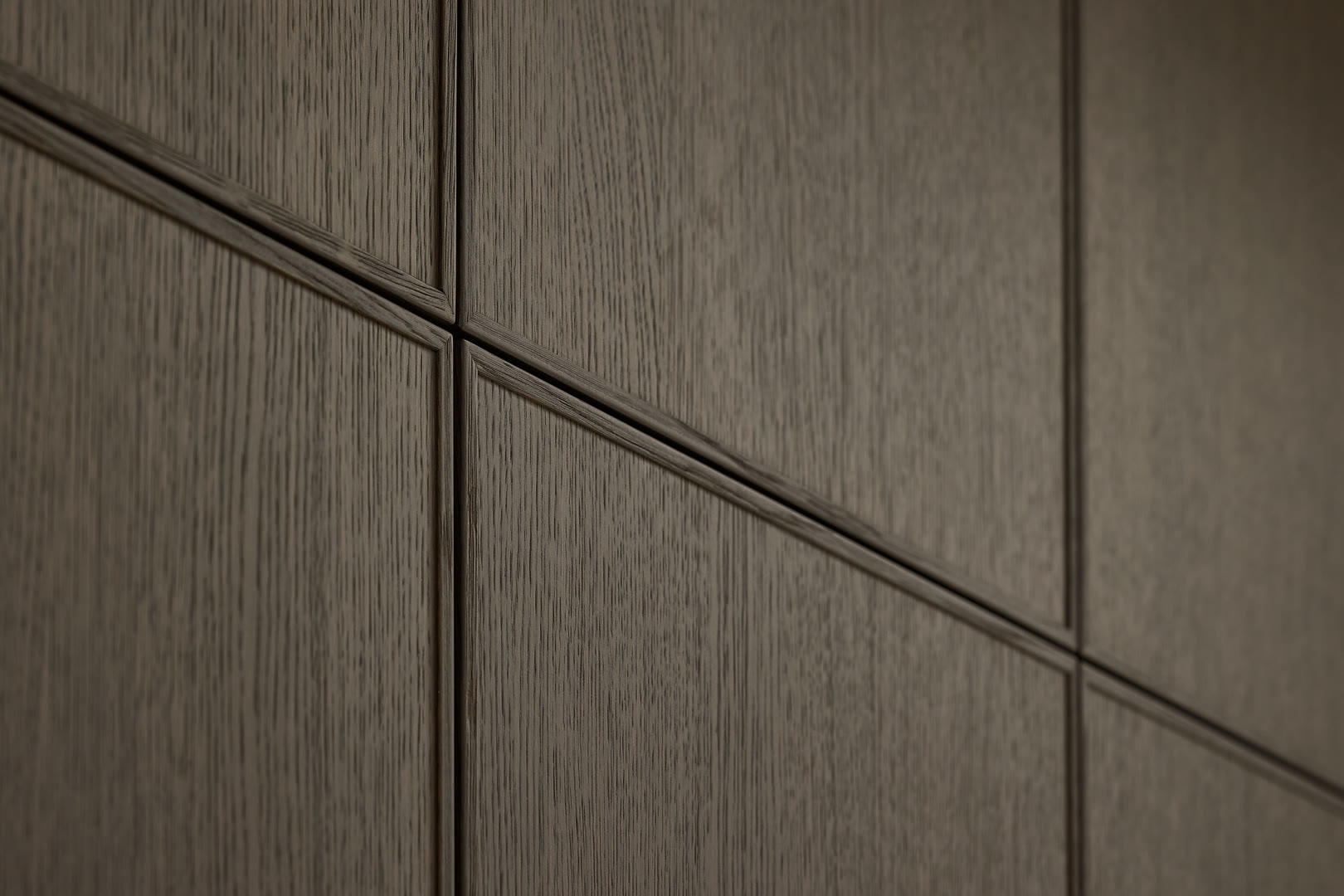
You can see the difference the moment you open a drawer. On a framed box, the frame eats into the opening, so the drawer is narrower than the cabinet. On a frameless box, the drawer runs almost the full width. That is the practical heart of the whole debate, and it is why I always tell people to stop reading and come pull a drawer open. If you want more on how this European approach translates into American homes, we wrote about that in European kitchens in America.
Which one gives you more usable storage?
Frameless wins here, and it is not close. Without the face frame, you gain width in every drawer and full reach into every cabinet. Over a whole kitchen that turns into a shelf you can actually load, a corner you can actually use, and drawers wide enough for a full set of pans instead of a set minus the one that would not fit.
The word I lean on is usable. A framed cabinet and a frameless cabinet can have the same outside dimensions, but the frameless one hands you more of the inside. When a client tells me their old kitchen felt cramped even though it looked big, this is usually the reason. The boxes were full of frames and dead space.
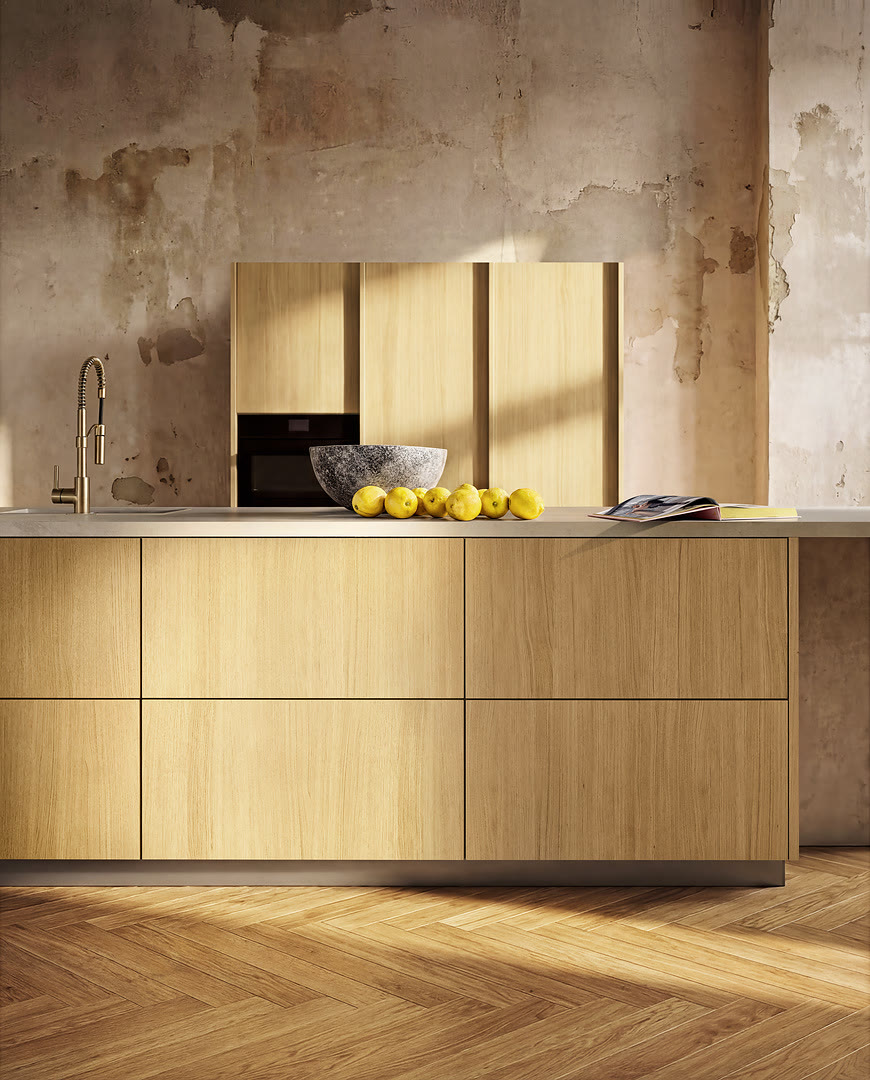
The other thing frameless does well is organization. Because the openings are wide and clean, the interior fittings, the dividers, the pull-outs, the utensil trays, drop in without fighting a frame. I tell clients the storage upgrade is only half the box. The other half is what you put inside it, and frameless gives you room to be smart about that.
None of this means framed cabinets are short on space. A well planned framed kitchen stores plenty. It just asks you to give up a little to the frame in exchange for a look and a feel some people genuinely prefer.
Are frameless European cabinets less durable?
This is the fear I hear most, and it is mostly a myth. People assume the face frame is what holds a cabinet together, so a box without one must be weaker. That is not how it works. A frameless cabinet stays square because its side panels are thick and its hardware is built to carry the load. A framed cabinet leans on the frame for some of that rigidity. Two different engineering answers to the same problem.
Durability comes down to three things, and none of them is the style. First, the carcass material and thickness. Second, the hinges and drawer runners, because those are what you wear out with use. Third, the finish and edge banding, because that is what takes the daily splashes and knocks. Get those three right and the cabinet lasts decades either way. Get them wrong and it fails either way.
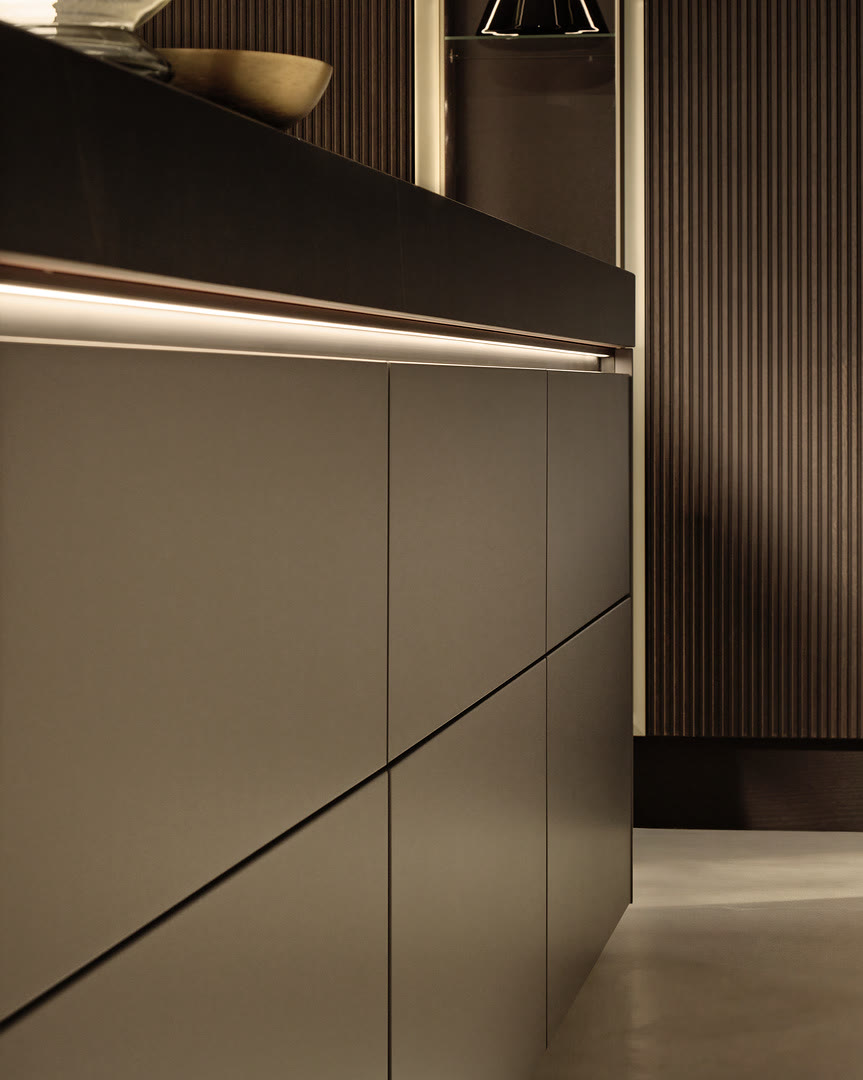
So when someone asks me which is more durable, I turn it around. I ask them to open and close the drawer hard a few times and feel the runner. I ask them to look at the edge of the door where it meets the box. That tells you far more than the label. If you want the deeper material discussion, we put it in our guide to kitchen cabinet materials for Northern Virginia homes.
One honest trade-off worth naming: because frameless hinges are more adjustable and doing more work, they need to be quality hinges. A cheap frameless cabinet with weak hardware will sag and drift over time. That is where I steer clients away from bargain frameless product. If the budget is tight, a solid framed cabinet can be the safer buy. The style is only as good as the hardware under it.
Which is right for a Northern Virginia home?
It depends on the house and how you live in it. We work across Northern Virginia, from historic Alexandria row homes to Arlington townhouses to newer custom builds in McLean and Great Falls, and the answer changes with the home.
In an open, modern kitchen where clients want a handleless look and every inch of storage, frameless is almost always the call. The clean fronts and the wide drawers do exactly what that kind of space wants. In a traditional home where the client loves classic detail, people assume they need framed. Often they do not. You can put a painted shaker front on a frameless box and keep the traditional face while gaining the modern insides. That combination is one of my favorites to show people, because it usually surprises them.
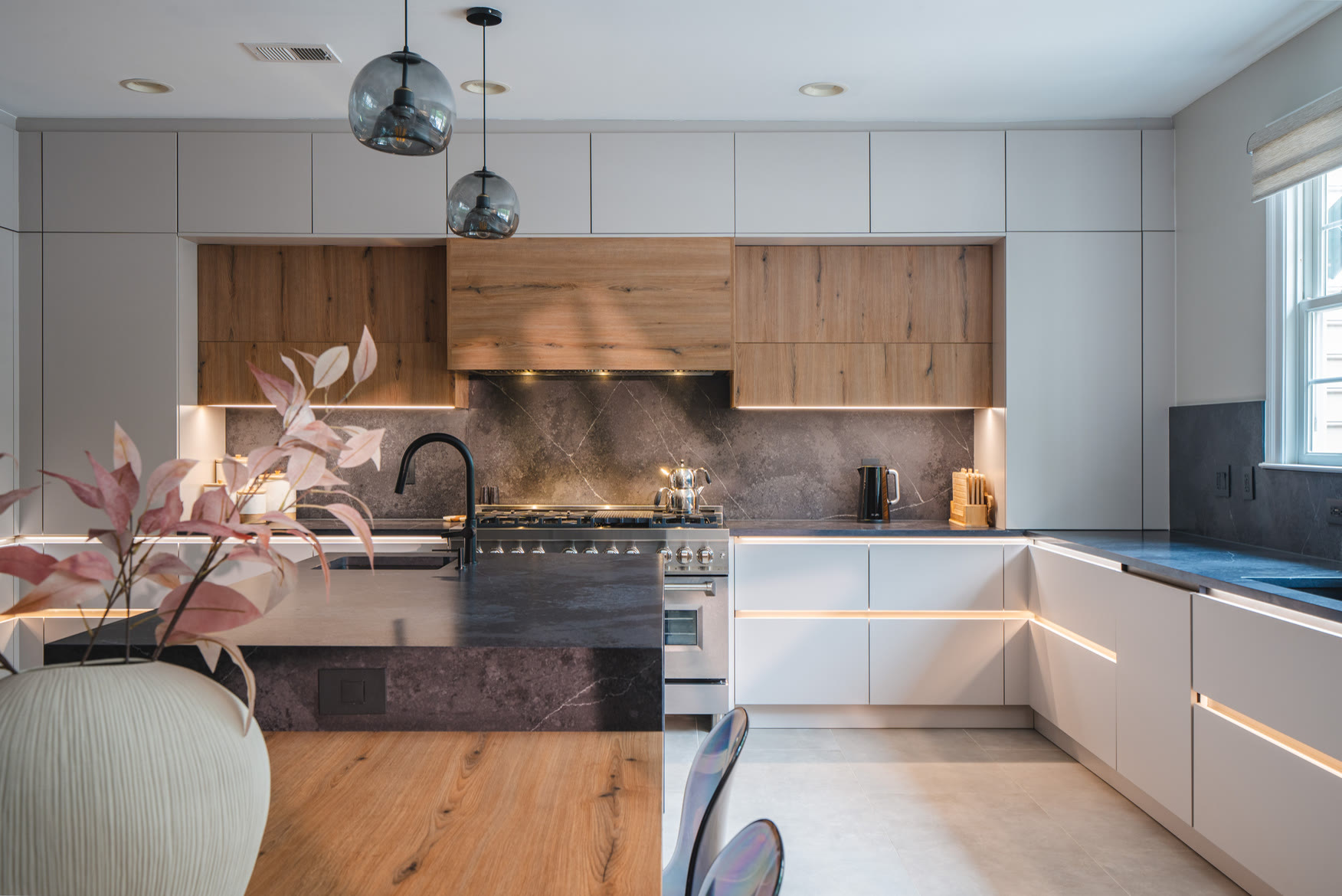
The photo above is a finished Northern Virginia kitchen we built. Frameless boxes, but you would not label it European or American at a glance. It just looks like a well made kitchen, which is the point. The construction method is a decision about the inside. The look is a separate decision about the outside. Once clients separate those two questions, the choice gets a lot easier.
My advice, plainly: do not pick a side from an article, including this one. Come open the drawers. Feel the difference in width. Push on a hinge. That is the fifteen minutes that settles it. If you are still in the planning stage, our overview of kitchen design and build and the rest of our kitchen remodeling writing will help you frame the other decisions too.
Visit Aksesuar Design's Alexandria showroom to see framed and frameless custom cabinets side by side and talk through your project with our design team. We work with homeowners across Northern Virginia, Washington, DC, and select Maryland communities, and we are happy to walk you through the boxes before you commit to anything. You can start by browsing the showroom or reaching out when you are ready.
Frequently Asked Questions
Are frameless European cabinets actually stronger than framed ones?
Do frameless cabinets give you more storage?
Will European style cabinets look wrong in a traditional Northern Virginia home?
Which costs more, framed or frameless?
Keep Reading

European Kitchens in America: The Perfect Match for Timeless Elegance
European kitchens are no longer just a continental design statement; they have found a thriving home in America. From sleek, handleless cabinets to precision-engineered storage, these…

European and American Kitchen Design Fusion: The Best of Both Worlds
European and American kitchen design styles are often seen as two distinct approaches—one rooted in sleek minimalism, the other in spacious practicality. But when these two styles…

Best Kitchen Cabinet Materials for Northern Virginia 2026
A plain-spoken guide to picking kitchen cabinet materials that survive Northern Virginia humidity, from the box construction to the door front.
Ready to talk through your remodel?
Visit our showroom or request an estimate. We will walk you from first ideas to final installation.