
Real Wood vs Veneer vs Lacquer Fronts: Which Lasts
A cabinet maker's practical look at durability, repairability, and how each front ages in Northern Virginia homes.

Sam K. · Showroom Manager
· 6 min read

When a client asks which cabinet front lasts longest, I tell them there is no single winner. Solid wood, real wood veneer, and lacquer all hold up for decades in the right kitchen. The real question is how each one wears, how it can be repaired, and what it looks like in year twelve. I walk through all three the same way I do in the showroom, because the answer changes depending on your light, your humidity, and how close the front is to the cooktop.
What lasts longest: solid wood, veneer, or lacquer?
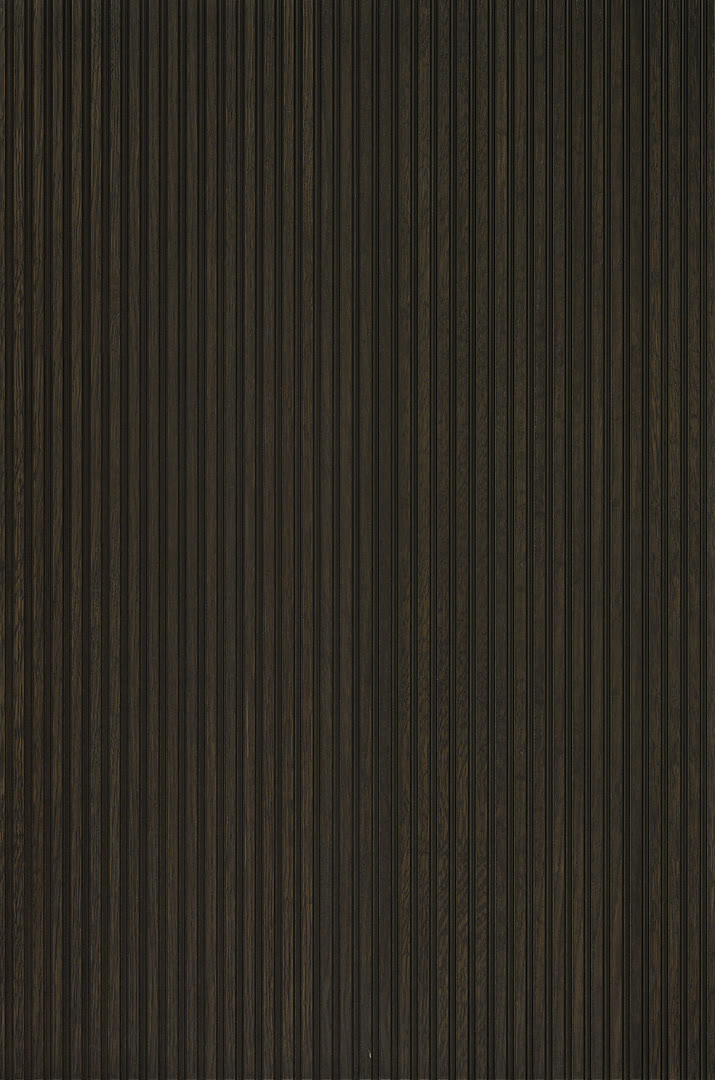
The short version is this. A well made lacquer front and a well made veneer front both last as long as the kitchen does. Solid wood lasts too, but it moves with the seasons. In Northern Virginia, humidity swings are real. A solid wood door can expand in summer and contract in winter. If the box behind it is engineered and sealed, the front can move independently without wrecking the cabinet. If everything is solid wood, the movement can add up.
High-end kitchen cabinets are defined by construction and fit rather than price alone: carcasses built to the room's measurements, hinge and drawer systems that hold up through daily use, and fronts in solid or veneered real wood, a metal or slate look, glass, or lacquer with an anti-fingerprint surface. Our cabinetry is built to order in Germany by Nolte to the room's measurements, designed at our Alexandria showroom, and installed by our own team across Northern Virginia, Washington DC, and Maryland.
The materials we talk about in the showroom are solid wood, real wood veneer, metal look, glass, slate look, and lacquer. In handleless European kitchens, you often see soft-matt lacquer, grooved real wood, metal-look, and glass fronts from ranges such as neoFLAT, neoLODGE, and Manhattan. The effect can be very clean, but the material still decides how the kitchen ages. If I had to simplify the answer to which lasts longest: a well made lacquer or a well made real wood veneer on an engineered core will stay flat and stable longer in a Northern Virginia kitchen than a solid wood door that expands and contracts. But 'lasts' is not only about flatness. It is also about what happens when something hits the front. That is where solid wood comes back.
Which front can you actually repair?
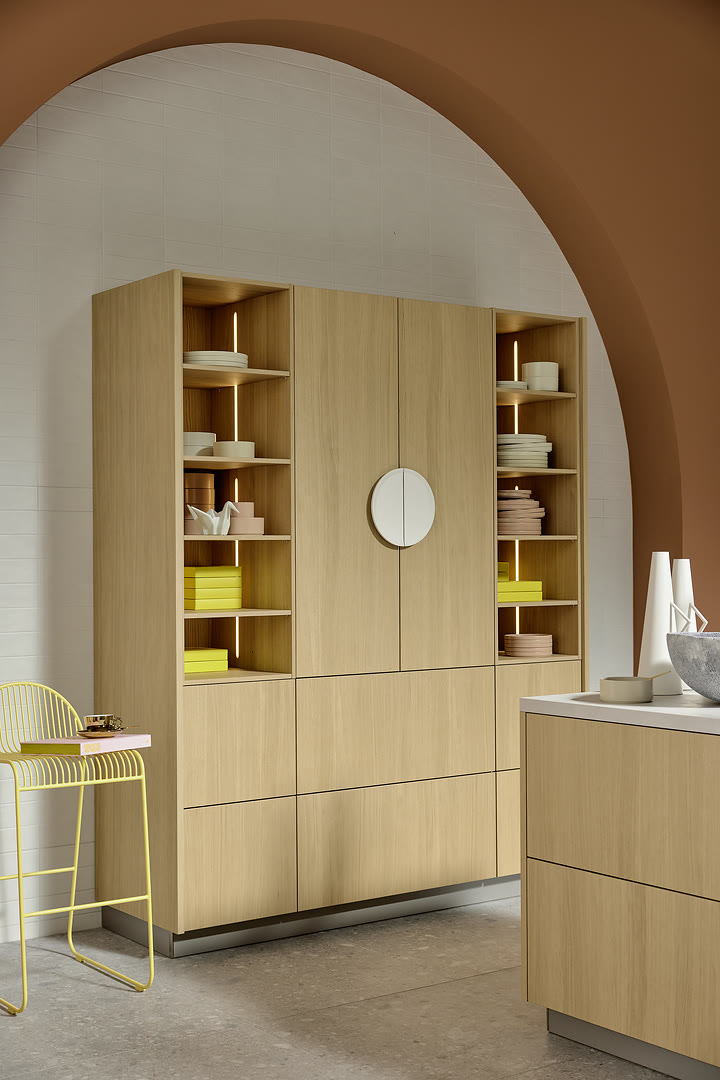
Repairability is where solid wood and real wood veneer separate from lacquer. Solid wood can be sanded and refinished by a good cabinet maker. Real wood veneer can be touched up if the veneer layer is intact, but sanding through it is a risk. Lacquer is the least forgiving. A small chip on a door edge is visible, and the repair usually means replacing the front or accepting a touch-up that is not invisible.
This is why I keep the box decision and the front decision separate with clients. If you want a wood look with a more stable core, real wood veneer is the route. Real wood veneer in our program appears in ranges like neoLODGE, neoFLAT, neoLINE, neoSLIM, and neoNATURE. One example clients ask about constantly: real walnut veneer is neoFLAT in Walnut Rosado, a warm flat handleless front balanced by cashmere lacquer. Because the backing is stable, the veneer is less likely to cup or crack than a solid slab in a humid kitchen, and you still get the depth of real grain. I wrote more about matching wood fronts to a modern kitchen in our modern wood kitchen cabinets guide.
I ask three questions before a client picks a front. How close is the run to the cooktop? What is your tolerance for seasonal movement? Do you want the door to show its history or look new for as long as possible? Those answers steer the material more than any brand name. A family that cooks heavily and hates visible wear is often happier in lacquer. A client who loves the feel of wood and does not mind a little character is a better candidate for solid wood or real wood veneer.
How lacquer wears in a busy kitchen
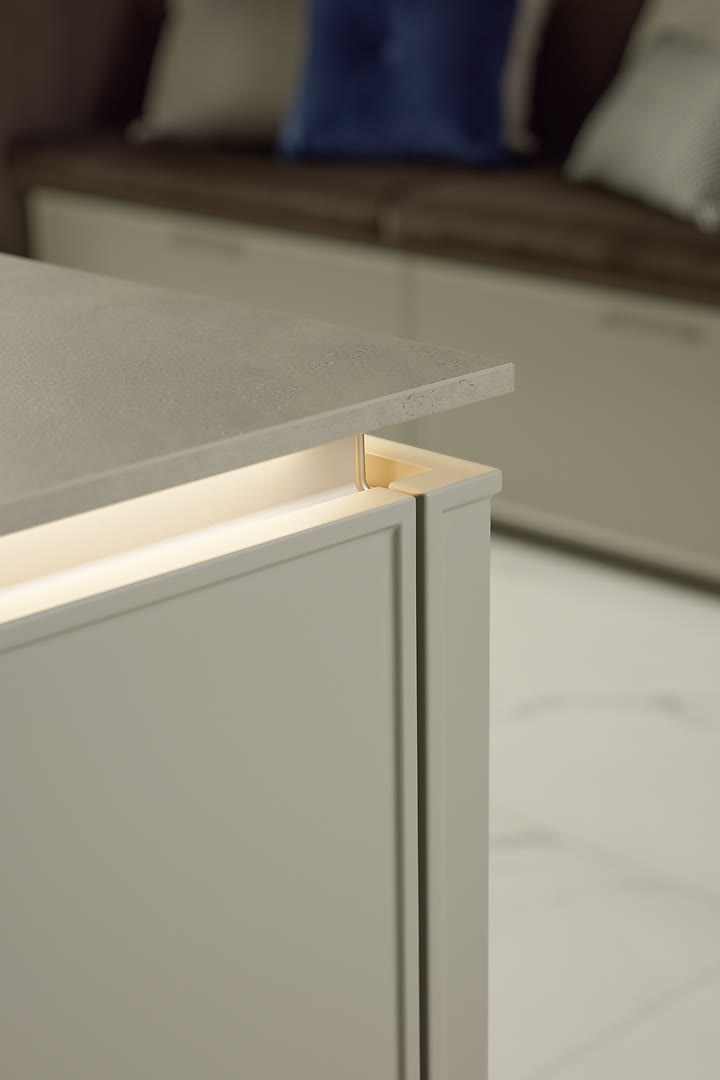
Lacquer fronts, especially soft-matt or high-gloss, are the easiest to clean. They do not have a grain to catch grease, and a good anti-fingerprint surface keeps fingerprints from showing every time someone opens the pantry. The trade-off is that chips and deep scratches are the hardest to hide. A wood front can be sanded and refinished; a lacquer front usually needs a new door or a factory finish to look correct.
Think about where the front lives. The drawer under the cooktop gets splatters. The tall pantry doors get opened with full hands. The island front gets kicks from bar stools. Lacquer handles all of that without absorbing stains, but it will not take a deep scrape the way solid wood can. If the kitchen has a dishwasher steam vent or a pot filler, those lower finishes need to be specified carefully too, because no front material is immune to every mistake.
I do not mean lacquer is fragile. It is not. A good soft-matt lacquer can take everyday use for years. I mean the failure mode is different: when lacquer shows damage, it announces itself. On a wood front, the same event may read as character or disappear with a little work. That is the trade-off, and it is a real one.
The box behind the front matters too
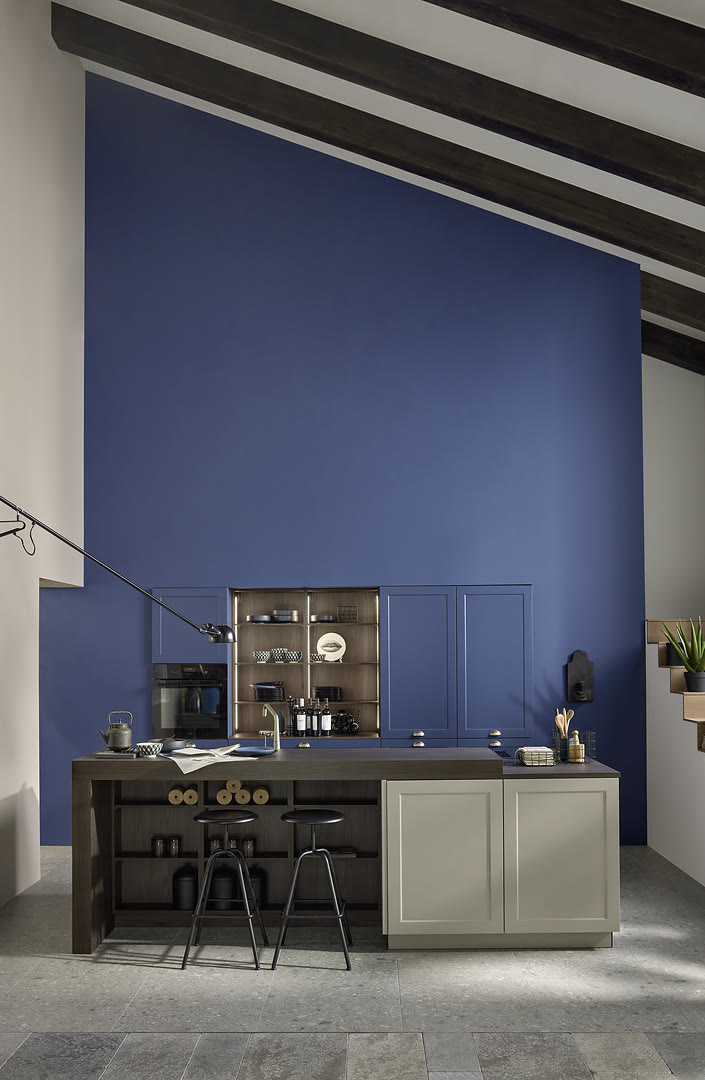
The front material is only half the story. The box behind it is what keeps the door hanging straight for fifteen years. I separate the two decisions with every client. If you want a deeper look at box materials and why an engineered carcass can handle our humidity swings, read our guide to best kitchen cabinet materials for Northern Virginia homes.
In practical terms, the box carries the weight and fights moisture. The front is what you see and clean every day. If the box is stable and the hinges are good, the door behaves. If the box moves, even the best front can start to bind. That is one reason to pay attention to the whole construction, not just the visible surface.
Where the front lives matters more than the material
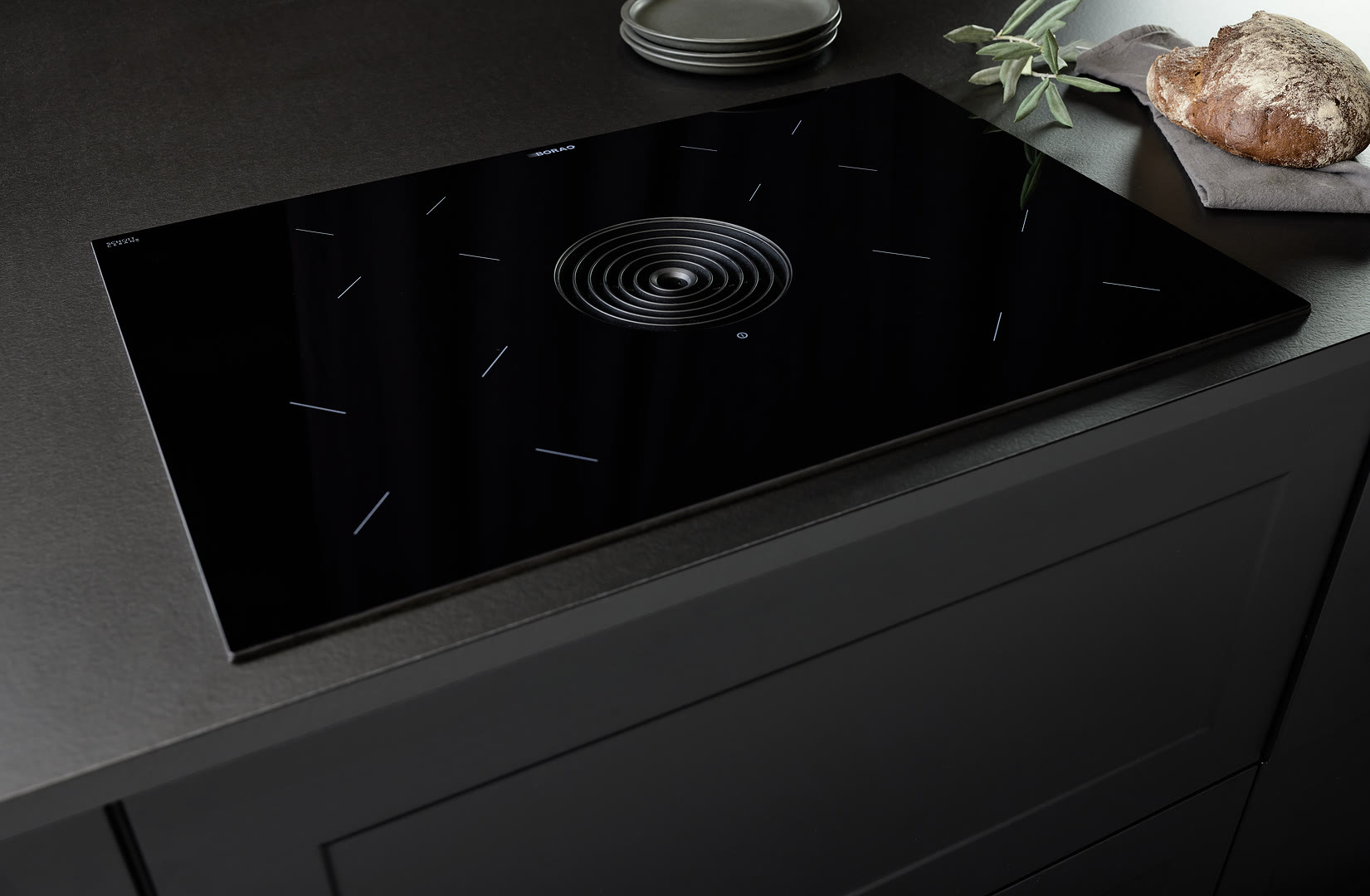
Near the cooktop, I lean toward a front that wipes clean without absorbing oil. Around a dry pantry, a real wood veneer or solid wood front is less at risk. Next to the sink, the story is humidity, not heat. That is why I do not tell every client to pick the same material for the whole kitchen. A tall run may be wood veneer, while the cooktop run and island are lacquer. The kitchen still reads as one room if the colors are kept quiet.
If a client still wants solid wood, it is available. Solid wood means framed fronts from Nolte's full program, and we keep them in the showroom. I do not call a veneer or a wood-look finish solid wood; I say which is which. The same honesty applies to a metal-look or slate-look front: it may look like the material, but we are clear about what the door actually is.
That clarity matters because a front is a long term purchase. If you walk into a showroom and every door is described as 'wood', you cannot compare durability or repair. When we design custom kitchen cabinets, the conversation starts with how you cook and how much movement you are willing to accept. The material follows that, not the other way around. In our Alexandria showroom, seeing the fronts side by side settles the question faster than any spec sheet.
Frequently Asked Questions
Is solid wood better than real wood veneer for cabinet fronts?
Which cabinet front is easiest to repair?
Does lacquer scratch or chip easily?
Are solid wood fronts available from Aksesuar Design?
Keep Reading

Best Kitchen Cabinet Materials for Northern Virginia 2026
A plain-spoken guide to picking kitchen cabinet materials that survive Northern Virginia humidity, from the box construction to the door front.

Walnut Kitchen Cabinets: Warm Wood and Clean Lines
Walnut kitchen cabinets warm up a modern room when you pair real walnut veneer with cashmere lacquer, quiet stone, and one metal finish.

What You're Paying for in High-End Kitchen Cabinets
High-end kitchen cabinets cost more because of construction, fit, materials, and hardware. Here is where the money goes in a Washington DC kitchen.
Choosing kitchen cabinets?
See our custom European cabinetry, or request an estimate for your kitchen.