
Frameless European Kitchen Cabinets Give You More Space
What frameless construction changes in drawer capacity, tall pull-out pantries, and the way a kitchen feels every day.

Sam K. · Showroom Manager
· 7 min read

European kitchen cabinets are built without a face frame. The door attaches directly to the sides of the cabinet box, so the front sits in one flat plane and the full width of the opening is usable. If you are trying to decide whether frameless construction actually gives you more space, the answer is yes, and the difference shows up most in drawers and tall pull-out units.
I have this conversation in the Alexandria showroom most weeks. People often arrive interested in a clean, modern kitchen, then start opening drawers and notice how much more room there is inside the same footprint. This article keeps the focus on construction, because that is what changes how the kitchen feels a year after the remodel.
What does frameless construction actually mean?

A framed cabinet has a face frame across the front of the box. Usually that frame is a narrow strip of wood running horizontally and vertically around the openings. A frameless cabinet removes that frame entirely. The door or drawer front attaches directly to the side of the cabinet box.
The result sounds small, but it changes the opening. In a framed cabinet, part of every opening is covered by the frame. In a frameless cabinet, the whole width of the box is the opening. The drawer front covers the carcass, the interior is fully accessible, and the fronts sit flush in one plane.
When a client is not sure what I mean, I tell them to stand between two adjacent doors and look at the seam. A framed kitchen has a visible stile between the doors. A frameless kitchen does not, because the door edges meet much tighter. That is also why so many European kitchens look clean without heavy handles.
European kitchen design is planned as architecture rather than furniture: frameless cabinetry in flat planes, floor-to-ceiling runs, integrated appliances, handleless fronts or slim bar handles, and real materials such as oak, walnut, metal, glass and matte lacquer. It is a different starting point than fitting a box into a room.
There is a longer side-by-side look at framed and frameless construction on the blog, but the short version is this: one adds a frame, one does not, and nearly everything else follows from that.
Where the extra space shows up day to day
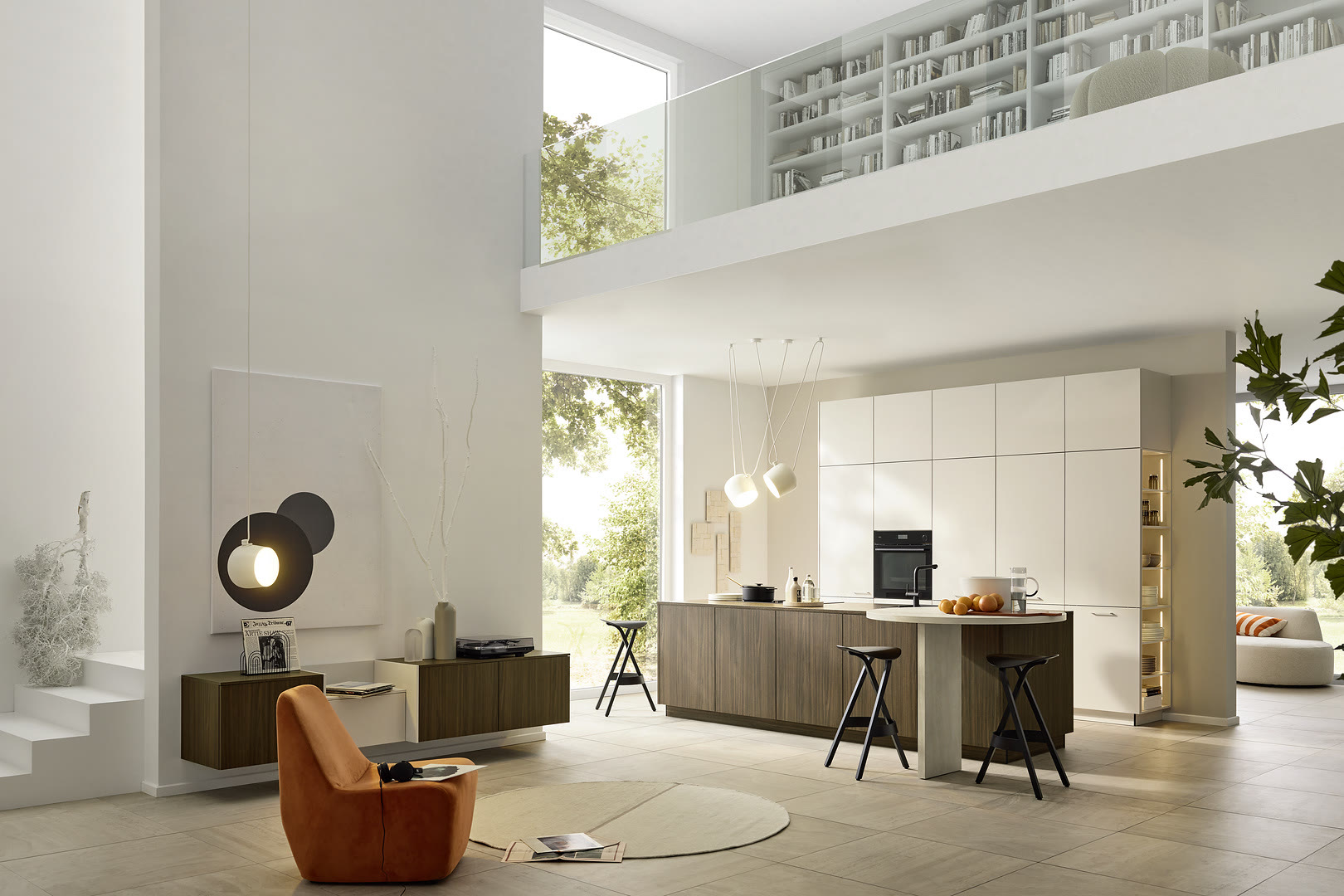
The storage gain rarely arrives as one dramatic moment. It arrives as a drawer under the cooktop that clears a wide spoon rest without hitting the sides, a tall pull-out pantry that lets trays pass through the opening without catching, and a base cabinet that accepts a stand mixer without tilting it.
That happens because there is no frame reducing the clear opening. A drawer box in a frameless cabinet can be wider than the drawer box in a framed cabinet of the same overall width. The difference is usually a couple of inches, and in a narrow kitchen a couple of inches decides whether a pot lid organizer works or not.
Tall units show the same difference more clearly. A full-height pantry or pull-out unit has no center stile to work around, so the pull-out trays can run nearly the full width of the cabinet. In a rowhouse with one long wall doing most of the work, that turns a modest cabinet run into real pantry storage.
I tell clients to think about the drawer under the cooktop first. That is where wide, shallow drawers hold the most, and where a face frame would have cut into the opening at exactly the wrong place. If a drawer can hold a full set of pots and lids without a second row, the frameless construction is doing its job.
What to check in the hardware and drawer boxes
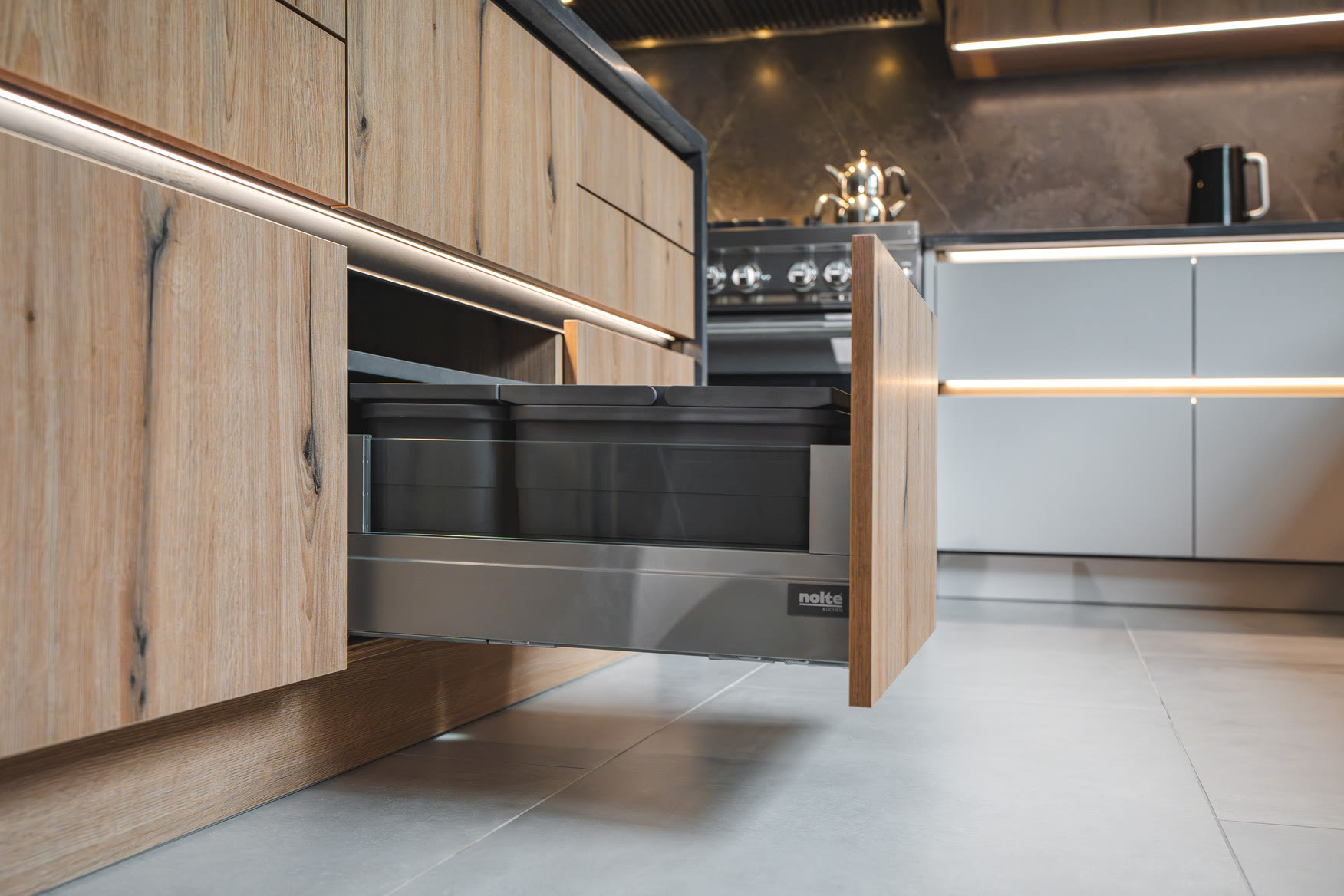
Frameless construction only holds up if the hardware is good. I tell clients to look at three things before choosing a cabinet line: the drawer box, the hinge, and the edge finish. A well-made drawer box should feel rigid at the corners. A hinge should not let the door wobble when it closes. A soft-close mechanism should catch consistently no matter how quickly the drawer is pushed.
Open the drawer
Pull a drawer out to the last few inches. It should stay square and not sag to one side. Then put your hand on a corner and press down lightly. A thin, loose drawer box will flex. A built-to-order drawer box from a German cabinet maker will feel like one fixed unit.
Close the door
Close a door slowly and then let it close on its own. The hinge should carry the weight without dropping the door out of plane. On a handleless cabinet, the release and close are part of the same system, so a poor hinge shows up immediately.
German production matters here because the tolerances are tight and the hinge and drawer engineering tend to be better than what I see in lower-cost boxes. The cabinetry we design is built to order in Germany, and some of the design directions we work in are Italian inspired, but the cabinetry itself is made in Germany.
Handleless fronts depend on the same discipline. A true handleless cabinet uses an integrated pull detail or rail at the top or back of the front, not a handle screwed through the surface. A slim bar handle can work too, but frameless cabinets do not rely on a heavy handle to carry the construction.
Do frameless cabinets fit older Washington, DC homes?
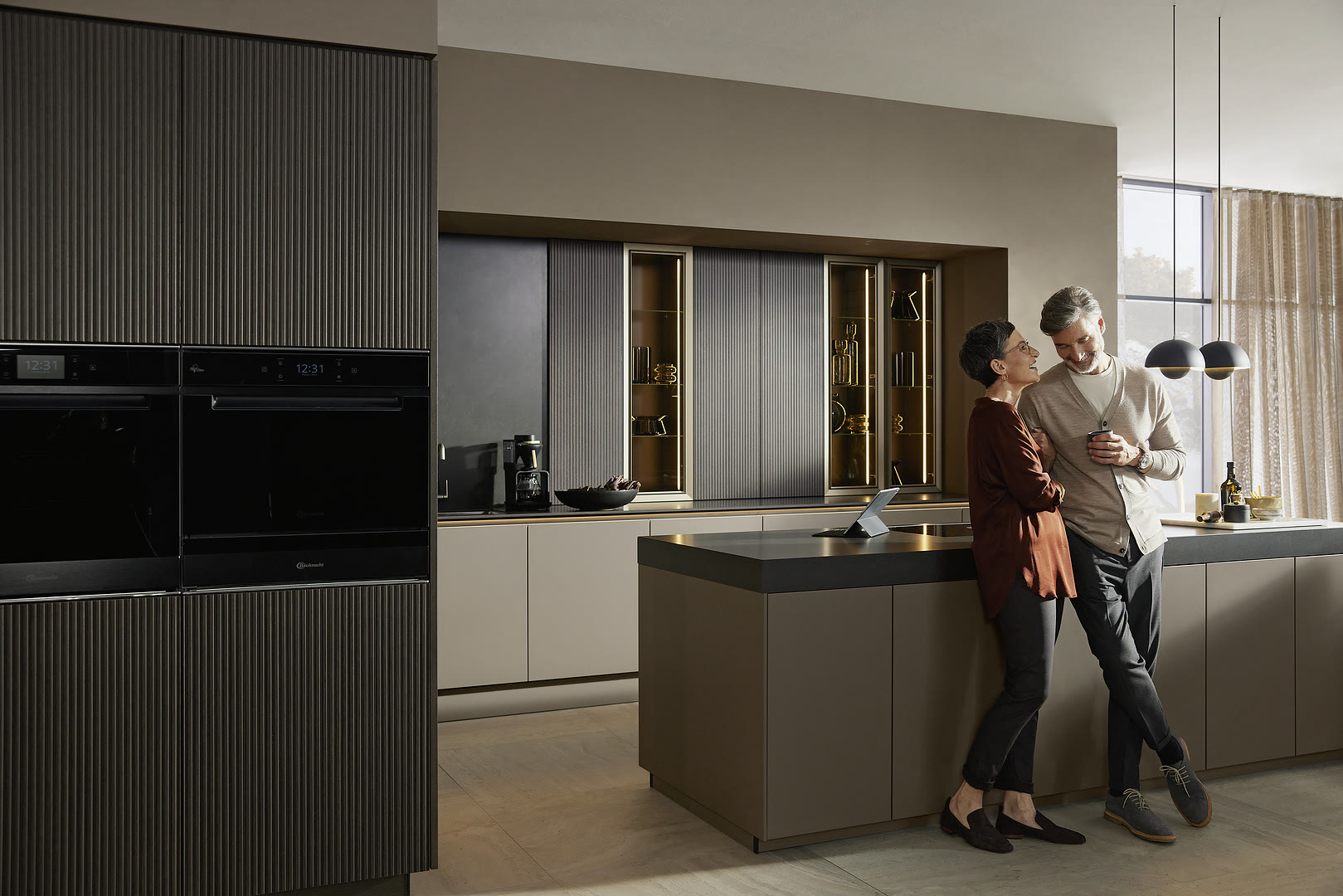
Yes, and often better than clients expect. Washington, DC rowhouses and condos tend to have narrow kitchens, and frameless construction makes every vertical inch work harder. Tall pull-out units fit the full width of their opening, so a pantry in a modest run behaves more like a proper pantry than a framed cabinet in the same spot.
I tell clients not to start with the cabinet label. Start with the room's actual measurements. Good custom cabinetry is built to the room, not adapted from stock boxes, and that is as true in a Cleveland Park rowhouse as it is in a new-build home in McLean. If the walls are out of square, as they often are in older homes, the cabinet design has to account for that before the first box is ordered.
Floor-to-ceiling runs also make more sense in frameless cabinetry because the faces sit in one plane and the handles, when there are any, do not interrupt the line. In a narrow rowhouse, that visual quiet matters as much as the storage.
For smaller spaces, the full-access opening helps more than a framed cabinet because you are not working around a face frame every time you reach the back of a base cabinet. That convenience matters in a kitchen where every pass down the aisle counts.
How to see them before you decide
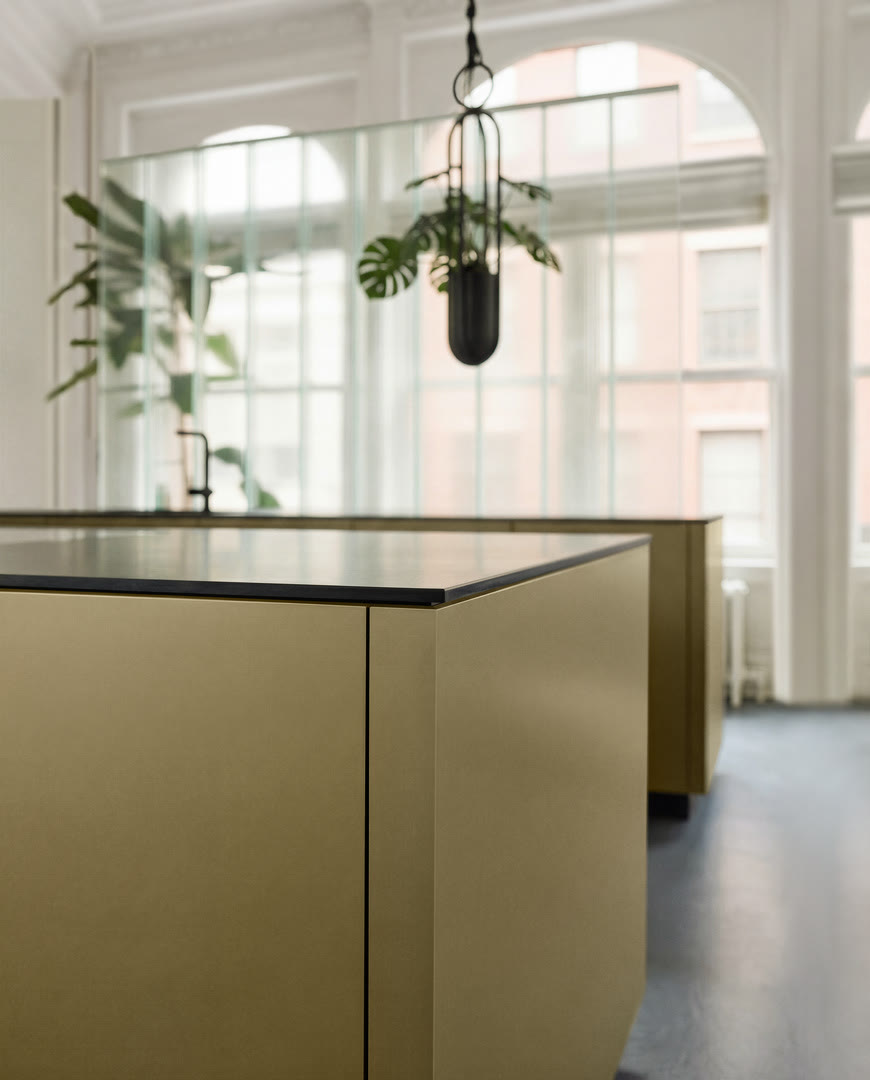
Pictures help, but frameless construction is something you feel. In our Alexandria showroom, a first visit includes a conversation about your project scope and budget, a tour of the live displays, and hands-on time with materials, finishes, and hardware from our European brand partners. You do not need to know every technical term before you come in.
Bring photos of your current space if you have them. It helps us point you toward the right direction faster. The custom kitchen cabinet process starts with that conversation, whether you are planning a full kitchen remodel or replacing a tired one.
Our completed projects include Chantilly, Arlington, Annandale and McLean in Virginia; Bethesda, Potomac and Fort Washington in Maryland; and Washington, DC. The Alexandria showroom has been at 5700 General Washington Dr unit E since 2017.
If you are in Northern Virginia, Washington, DC, or Maryland, the showroom at 5700 General Washington Dr unit E in Alexandria is the place to start. No amount of reading replaces opening a drawer on a full-size cabinet and seeing how far the tray actually pulls out.
Frequently Asked Questions
What is the difference between frameless European cabinets and framed American cabinets?
Do frameless cabinets really give you more usable space?
Where can I see European kitchen cabinets near Washington, DC?
Are frameless cabinets less durable than framed cabinets?
Keep Reading

Frameless European vs. Framed American Cabinets in 2026
The real difference between frameless European and framed American cabinets, and how each one holds up in a Northern Virginia kitchen.

Custom Cabinets for Washington DC Rowhouses and Condos
Custom cabinets for Washington DC rowhouses and condos start with the room's real dimensions, building rules, and storage needs.

Handleless Kitchen Cabinets: Opening Systems and Daily Use
How handleless kitchen cabinets open, how each system feels to use, and which one stays cleanest. Honest trade-offs from our Alexandria showroom.
Choosing kitchen cabinets?
See our custom European cabinetry, or request an estimate for your kitchen.