
48 Inch Bathroom Vanity: Single Sink vs Double Sink
What a 48-inch top can actually hold, and how to choose between one basin and two.

Sam K. · Showroom Manager
· 5 min read

If you are staring at a 48-inch wall and wondering whether to put one sink or two on the vanity, here is the short answer I give in the showroom almost every week: a single sink is usually the better choice at this width, and a double works only when two people genuinely share the counter at the same time each morning. Forty-eight inches sounds generous, but two basins eat it fast, and what you lose is counter and storage you will miss every day.
Below is how I actually walk people through it, without the sales pitch.
Should a 48-inch vanity have one or two sinks?
Most 48-inch vanities we build carry a single sink, and there is a reason for that. When you put one basin on a 48-inch top, you get real counter on both sides. A place for the soap, the toothbrush cup, the tray of things that live out. When you put two basins on the same top, that counter splits into two narrow strips and a sliver in the middle. Nobody sets anything on the middle. It just becomes a gap.
Two sinks are not wrong. They are the right call when two people are elbow to elbow at 7 a.m. and one of them will not wait. If that is your house, a double earns its place. But if the second sink is more of an idea than a habit, you are paying for it in counter and drawers you would rather have.
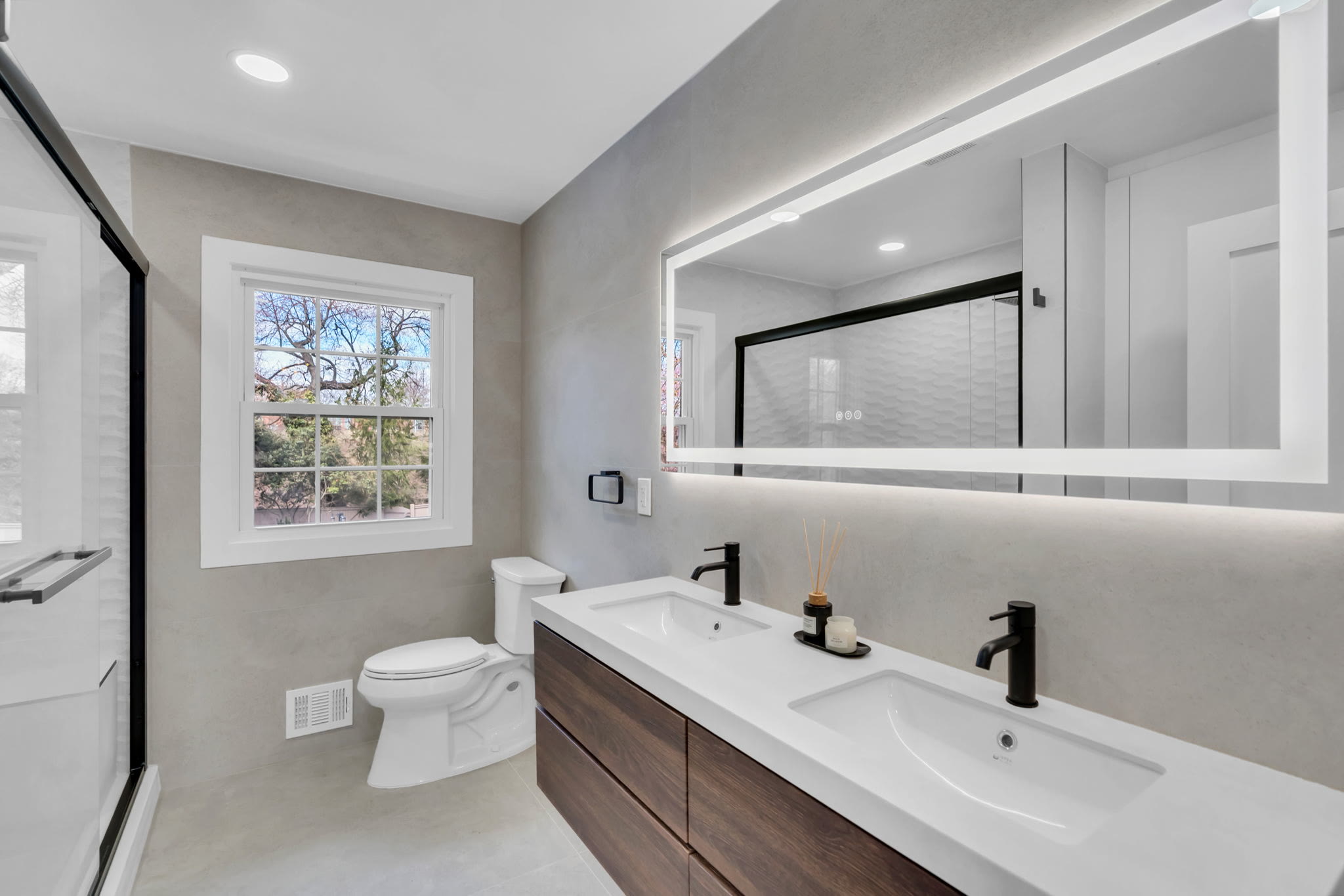
What does a double sink cost you at 48 inches?
Three things, mostly. First, the bowls get small. To fit two, each basin shrinks, and small bowls splash more and hold less. Second, the counter between the sinks shrinks to a few inches, which is not enough to be useful. Third, and this is the one people forget, the storage underneath takes a hit. Two drains mean two traps, and every trap sits where a drawer wants to be. So instead of a bank of deep drawers, you end up with doors and cut-down drawers working around the plumbing.
I am not saying don't do it. I am saying know the trade before you commit. If you want a fuller comparison of layout styles, we get into it in our piece on double sink versus floating vanity choices. The point stands: at 48 inches, a second sink is a real cost, not a free upgrade.
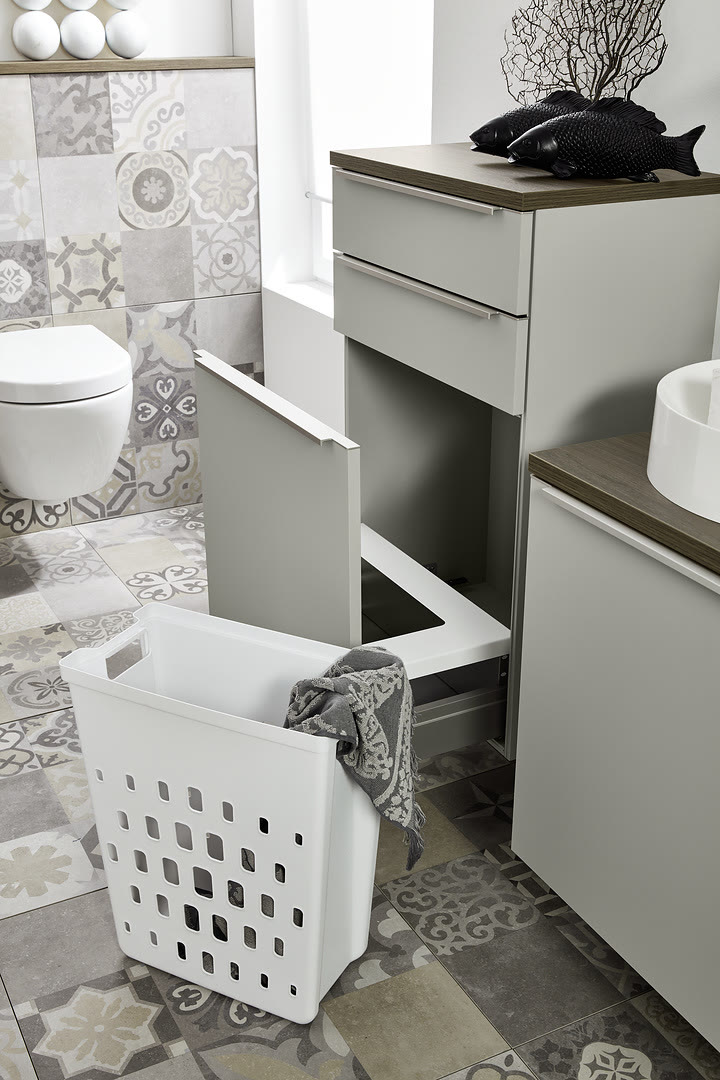
When is a single sink the better call?
More often than people expect. In a guest bath or a hall bath, a single sink at 48 inches looks calm and works hard. You get a wide, uninterrupted counter and, underneath, drawers that actually stack the way you want them. In a primary bath where one person is the early riser and the other sleeps in, a single is usually plenty, and the extra counter beats a second bowl every time.
I also steer a lot of couples toward a single when the room is snug. A clean 48-inch single with a good mirror cabinet above it can do everything a cramped double does, minus the frustration. If you are still deciding on overall size, our guide to bathroom vanity sizes lays out where 48 inches sits relative to the other common widths.
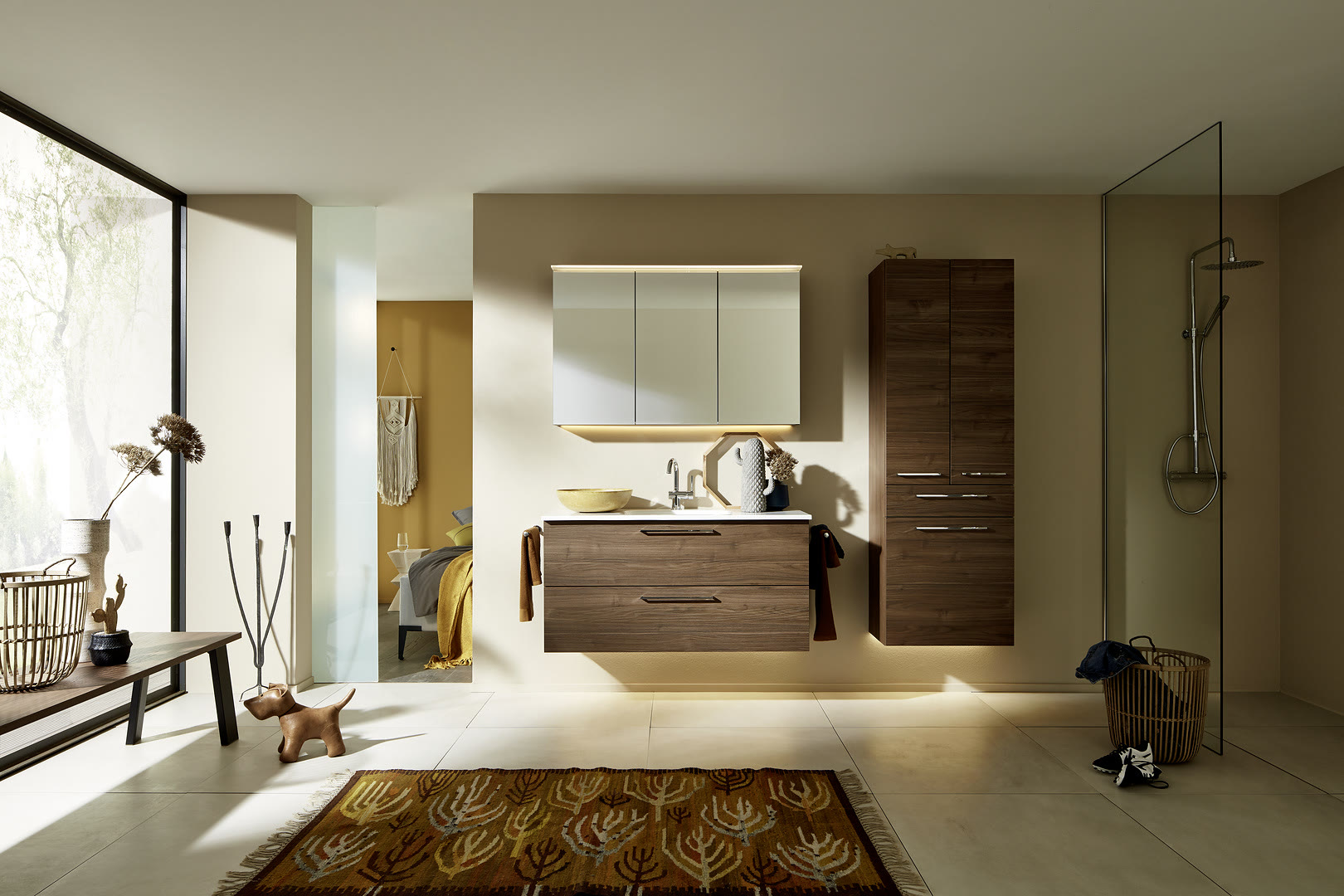
How does storage change between the layouts?
This is the part that tips most decisions once people see it. With a single sink, the drain sits in the middle, and we can run wide, deep drawers on either side. Those drawers hold the everyday clutter that otherwise lives on the counter. With a double, the two drains break the drawer runs up, so you end up storing the same things in shallower, more awkward spaces.
When a client tells me they hate a messy counter, that is usually a vote for a single sink, even if they walked in wanting two. The counter stays clear because the storage below is good. It is a quiet trade that pays off every morning. Good drawer layout is the whole game in a small bath, and a single basin simply gives you more of it.
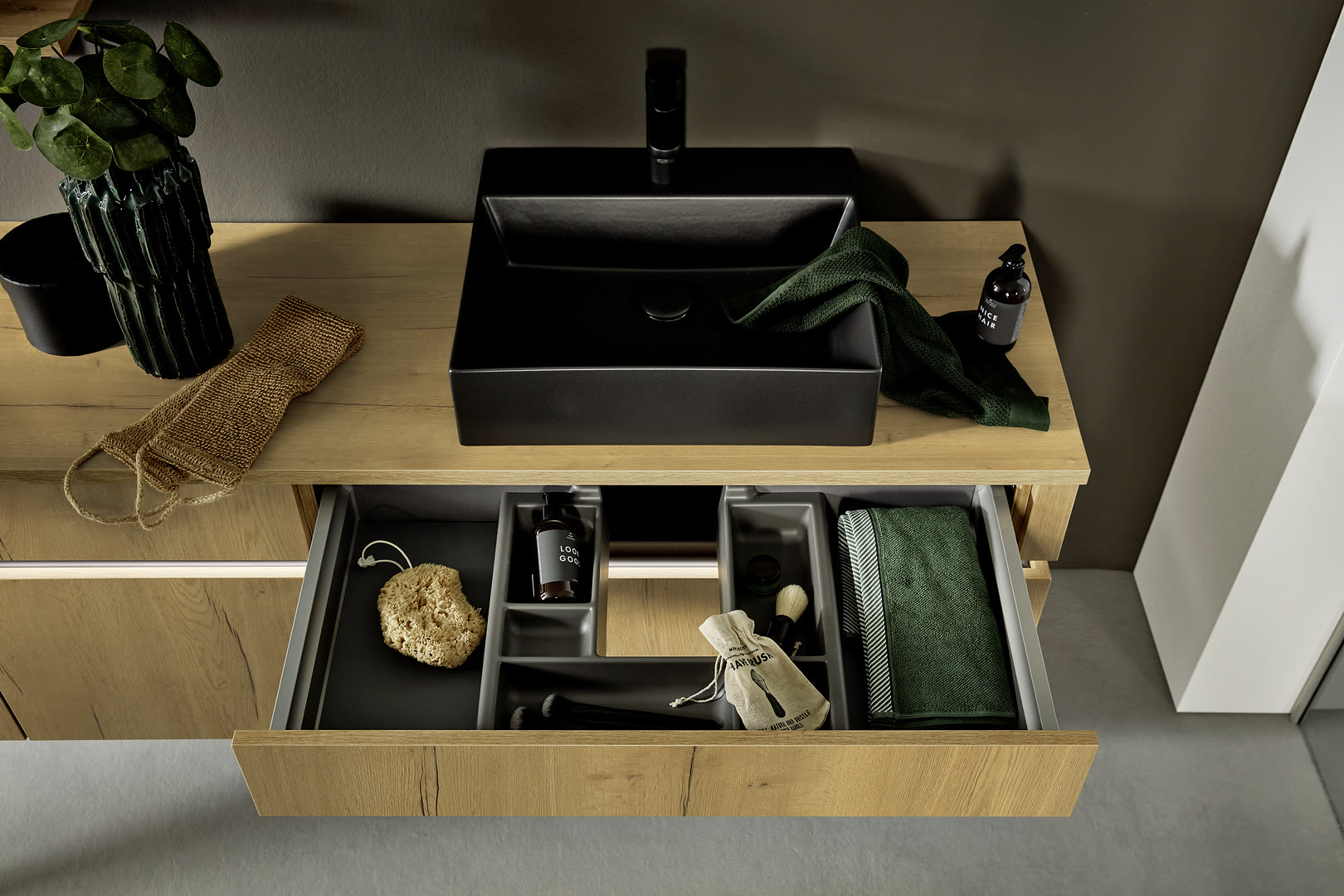
What should you settle before you decide?
A few things I ask every time. Does the plumbing already come up in the wall for one sink or two, and are you willing to move it? Moving a drain is not the end of the world, but it is money and time, so it belongs in the conversation early. How wide is the mirror going to be, and does a double vanity leave room for two mirrors or one long one? And the honest one: on a normal Tuesday, do two people really stand at this counter together, or is that a story we are telling ourselves?
Answer those and the layout usually decides itself. If two sinks win, great, we build it and make the storage as smart as the plumbing allows. If a single wins, you get a roomier counter, better drawers, and a bath that feels bigger than its footprint. Either way, we plan it around how you live, not around a number on a spec sheet. If you want a second set of eyes on your wall, come see us for a bathroom design and build conversation or get an estimate when you are ready.
The identifying details in the stories behind these choices are always changed. The pattern, though, is real: at 48 inches, the sink count is a trade, and knowing the trade is how you avoid regretting it.
Frequently Asked Questions
Can a 48-inch vanity really hold two sinks?
Is a single sink or double sink better for resale?
Where does the plumbing go with a single 48-inch sink?
What if I want two sinks but only have a 48-inch wall?
Keep Reading

Bathroom Vanity Sizes Explained: 24 to 72 Inch Widths
A plain guide to bathroom vanity widths from 24 to 72 inches, what fits, what needs clearance, and when a second sink is worth it.

Double Sink Vanities vs Floating Vanities: Which One Suits Your 2025 Remodel?
Introduction: Two Great Options, One Important Decision In 2025, bathroom renovations are getting smarter—and more stylish. Whether you’re redesigning a primary suite or refreshing a…

Why European Bathroom Vanities Come in 32 and 40 Inches
European vanities are sized in centimeters, so 80 and 100 cm read as 32 and 40 inches. Here is how we fit those widths to a US rough-in.
Ready to talk through your remodel?
Visit our showroom or request an estimate. We will walk you from first ideas to final installation.