
Oak Bathroom Vanities: Light Oak vs Dark Oak in a Modern Bath
What each one actually does in a room, and how to keep either from reading as rustic

Sam K. · Showroom Manager
· 6 min read

When a client stands in the showroom holding a light oak sample in one hand and a dark oak sample in the other, the honest answer is that neither is wrong. Light oak keeps a bathroom calm, bright, and forgiving of daily mess. Dark oak adds weight and a bit of quiet drama. The right pick depends on how much light the room gets, how big it is, and the mood you want to walk into at six in the morning. Below is how I talk it through with people before they commit to a finish they will live with for a decade.
What does light oak do in a bathroom?
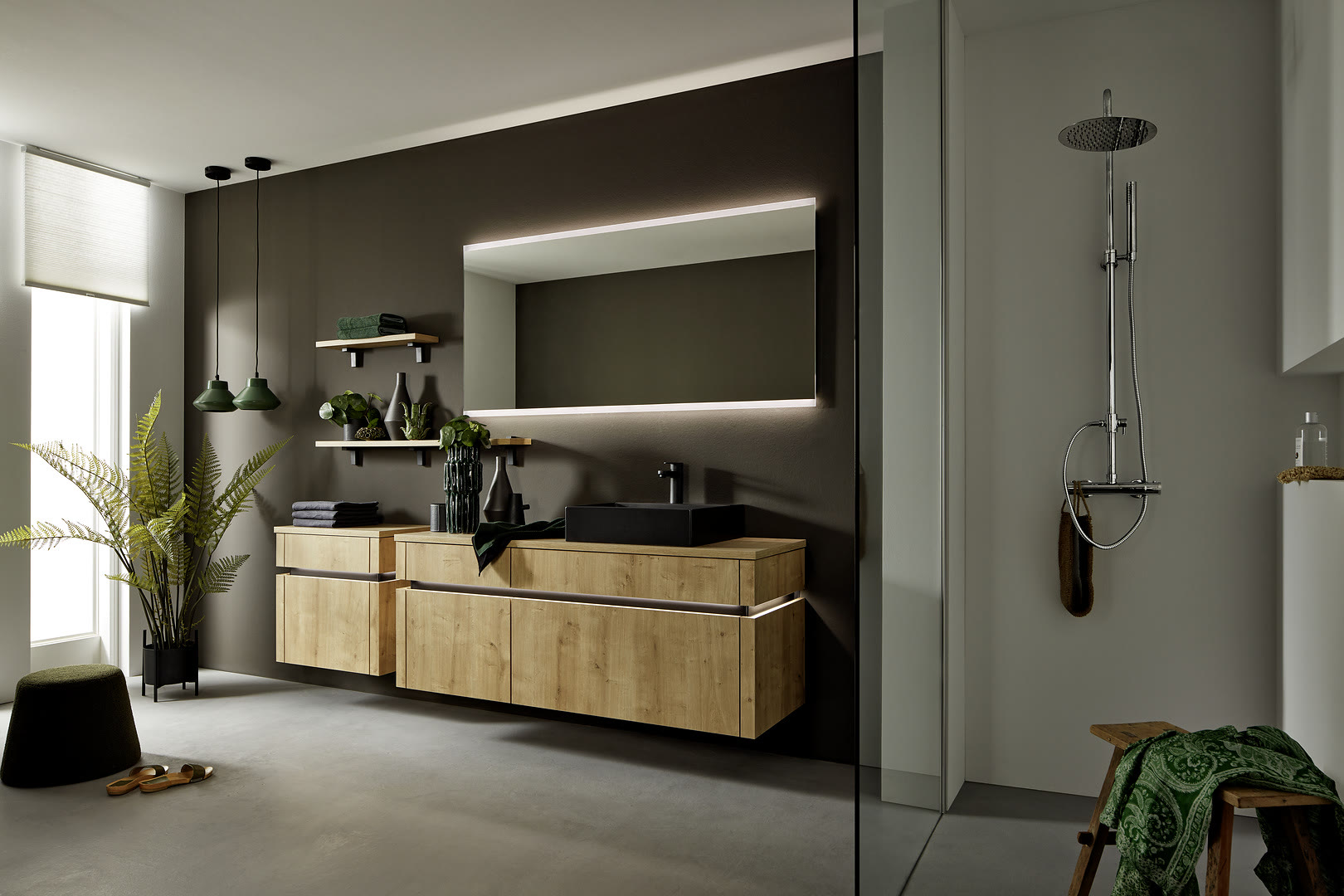
Light oak is the safe, generous choice, and I mean that as a compliment. It reflects the light you already have, keeps contrast low, and makes the whole room read as one calm space rather than a set of heavy blocks. In a small bathroom or a north-facing one that never gets direct sun, that matters more than most people expect. I have watched a cramped guest bath open up on paper the moment we swapped a dark front for a pale one, without moving a single wall.
The other thing light oak does well is hide the ordinary mess of a bathroom. Water spots, toothpaste, a smear of hand cream near the faucet, all of it shows less against a warmer, paler grain. For a family bath that gets used hard every morning, that is a real quality-of-life difference. You wipe it down when you feel like it, not because a dark surface is nagging you.
The trade-off is that light oak can drift toward soft and safe if the rest of the room is also pale. It needs a point of contrast to stay modern: a dark countertop, black tapware, a charcoal tile, something with weight. Give it one honest anchor and it looks intentional. Leave everything beige and it can read like a builder default.
What does dark oak do in a bathroom?
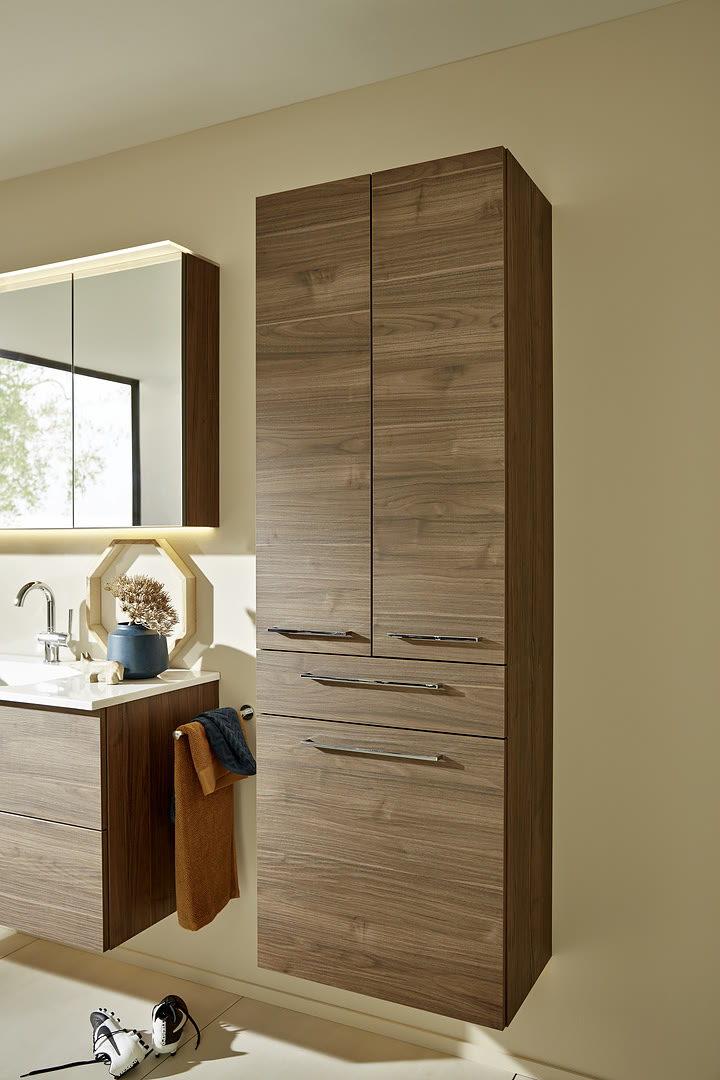
Dark oak is the opposite conversation. It adds visual weight, it grounds a room, and in the right space it looks rich in a way no pale finish can match. Think walnut-toned oak against marble or a moody painted wall, with warm light catching the grain. That combination has a quiet confidence to it. Clients who want their bathroom to feel like a small hotel usually end up leaning this direction.
But dark oak asks more of the room. It wants either good natural light or a scheme that is deliberately moody and knows it. Put a dark vanity in a small, windowless bath under a single ceiling light and it can close the space down and feel heavy. Put the same vanity in a larger primary bath with a window, and it settles in and looks expensive. So when someone falls for a dark sample, my first question is always about the room, not the wood: how big is it, and where does the light come from?
Dark oak also shows daily use more plainly. Water marks, dust, a dropped bit of toothpaste all register against a dark surface where light oak would swallow them. That is not a reason to avoid it. It just means you should be honest with yourself about how often you will wipe the vanity down. Some people find that a fair price for the look. Others realize, standing in the showroom, that they would rather not think about it.
Does oak hold up to bathroom moisture?
This is the fear that comes up most, and it is mostly solved before you choose a color. Oak is a hard, stable wood. Sealed properly, with a good factory lacquer or a quality oil finish, it handles the humidity of a normal bathroom without complaint. The vanities we build get their edges and cut surfaces sealed too, not just the faces, because that is where water actually finds its way in.
The two things that matter more than the finish color are how the vanity is built and how it is mounted. A wall-hung vanity that sits off the floor stays out of the puddle that collects at the base of every sink cabinet over time. It also lets the floor dry and gives you room to clean under it. I push clients toward floating oak vanities for exactly this reason, and you can read more about that trade-off in our piece on double sink versus floating vanity layouts.
So durability is not really where the light-versus-dark decision lives. Both finishes survive the same. Where dark shows a water ring that light would hide, that is a cleaning-habit question, not a structural one. If you want the full picture on sizing, sealing, and construction, our bathroom vanity buying guide walks through it in order.
How do you keep oak from looking rustic?
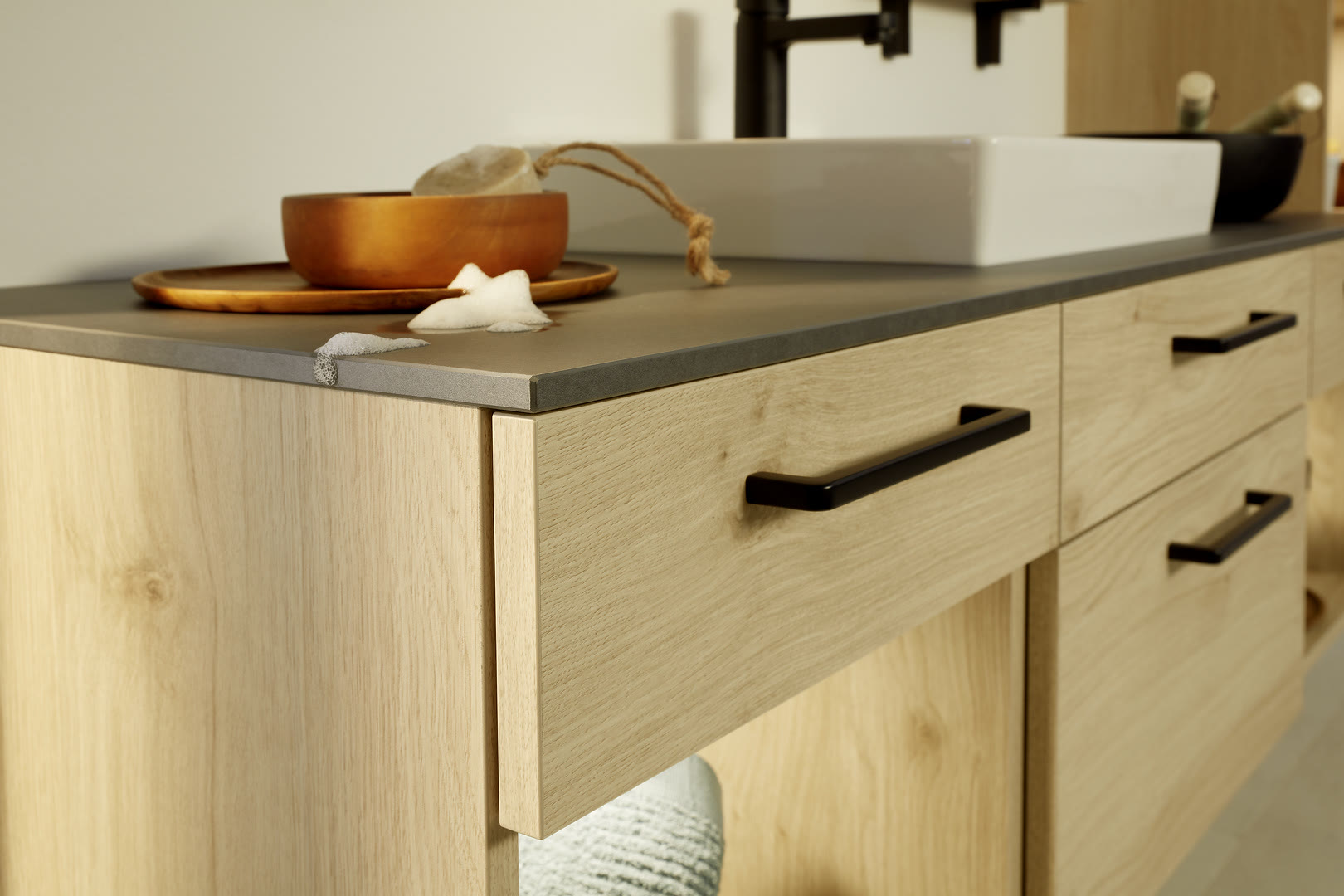
This is the part people underestimate. Oak grain is not what makes a vanity look country. Raised panels, orange-toned stain, and chunky knobs are. Keep the front flat or handleless and the same oak that would read as farmhouse suddenly reads as modern and calm. A slab door lets the grain do the talking without any period detail arguing with it.
Pair the wood with a countertop that has some weight to it: a stone, a dark solid surface, a quartz with real depth. That contrast is what keeps light oak from going soft and what keeps dark oak from going muddy. Then go easy on the hardware. A recessed pull or an integrated channel does more for a modern look than any handle you could bolt on. When we do use hardware, it is usually a thin matte black or brass line, nothing that draws attention to itself.
The last thing is restraint in the grain itself. A quieter, straighter oak reads more contemporary than a heavily figured, knotty one. Both are real oak. One just sits back and lets the room be modern while the other insists on being the star. For most bathrooms I steer toward the calmer grain and let the tile or the faucet be the personality. You can see the same logic playing out with painted and lacquered fronts in our note on high-gloss versus matte white vanities.
So which should you choose?
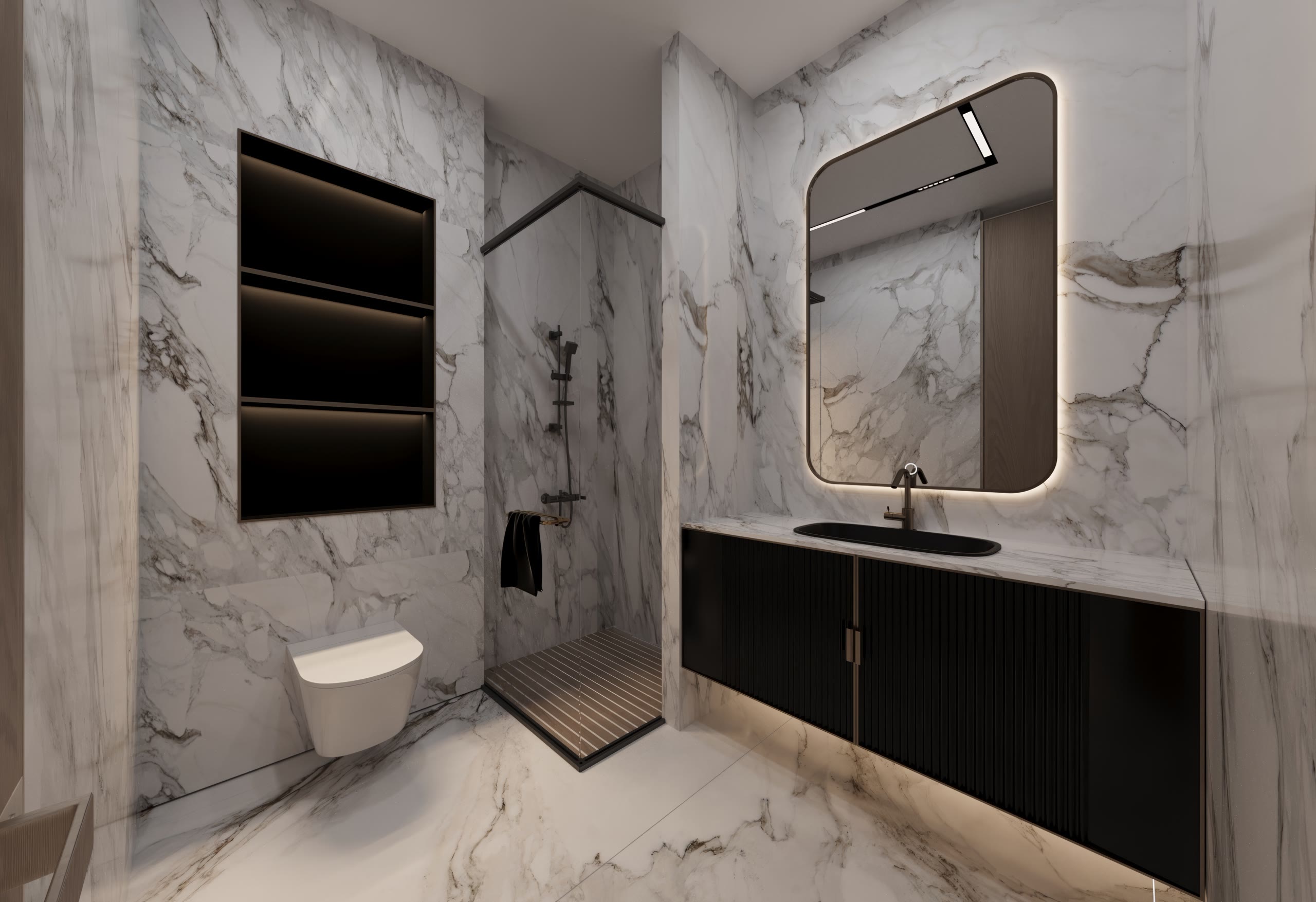
Here is the short version I give at the end of most of these conversations. If your bathroom is small, dim, or gets used hard by a family, light oak will serve you better and forgive more. If you have a larger room, decent light, and you want it to feel grounded and a little dramatic, dark oak earns its place. Either way, the finish quality, the flat front, and a countertop with some weight matter more than the color you circle first.
The best move is to bring the actual samples into your actual room and look at them at the times of day you really use the space. A chip that looks perfect under showroom lights can shift once it is sitting where your bathroom light hits it. If you want a hand thinking it through, that is what we do every day. Come see the ranges in person and we will hold them up against your plan. Learn more about our bathroom design and build work when you are ready.
Frequently Asked Questions
Is oak a good choice for a bathroom vanity at all?
Does light oak make a small bathroom look bigger?
Will dark oak feel too heavy in a modern bathroom?
How do I keep an oak vanity from looking rustic?
Which hides water marks and daily use better?
Keep Reading

White Bathroom Vanities: High-Gloss vs Matte Finish
High-gloss white reflects light and shows smudges; matte white hides them but reads softer. Here is how to choose between them.

Bathroom Vanity Buying Guide for Northern Virginia Homes
A plain guide to picking a bathroom vanity: size, wall-mounted vs floor-standing, storage that earns its space, and finishes that survive Virginia humidity.

Double Sink Vanities vs Floating Vanities: Which One Suits Your 2025 Remodel?
Introduction: Two Great Options, One Important Decision In 2025, bathroom renovations are getting smarter—and more stylish. Whether you’re redesigning a primary suite or refreshing a…
Ready to talk through your remodel?
Visit our showroom or request an estimate. We will walk you from first ideas to final installation.