
White Bathroom Vanities: High-Gloss vs Matte Finish
How the two white finishes actually differ, and how to pick the one you will be happy to clean.

Sam K. · Showroom Manager
· 5 min read

Here is the short version I give people at the showroom. High-gloss white reflects light and looks crisp and clean, but it shows fingerprints, water spots, and dust more than you would think. Matte white hides all of that and feels calmer in the room, but it can read a little flatter and is trickier to touch up if it ever gets scratched. Neither is better. The right one depends on your bathroom's light, how often you want to wipe the front, and how the door itself is built.
A white vanity is one of the most common things people ask me about, and almost every time the real question hiding underneath is the finish, not the color. So let me walk through what actually changes between the two.
What actually changes between high-gloss and matte white?
Both are lacquer over a panel. The difference is how the surface handles light. A high-gloss front is polished so it reflects, almost like glass. It gives you that sharp, mirror-like face that feels very clean and very modern. A matte, or soft-matt, front scatters the light instead of bouncing it back, so the surface looks and feels soft, closer to a painted wall than to glass.
That one difference drives everything else. Gloss makes white look brighter and cooler. Matte makes the same white look warmer and quieter. Run your hand across each and you feel it too: gloss is slick, matte has a faint velvet drag to it. People usually have a gut reaction the moment they touch both, and I trust that reaction more than any spec sheet.
Which finish is easier to live with day to day?
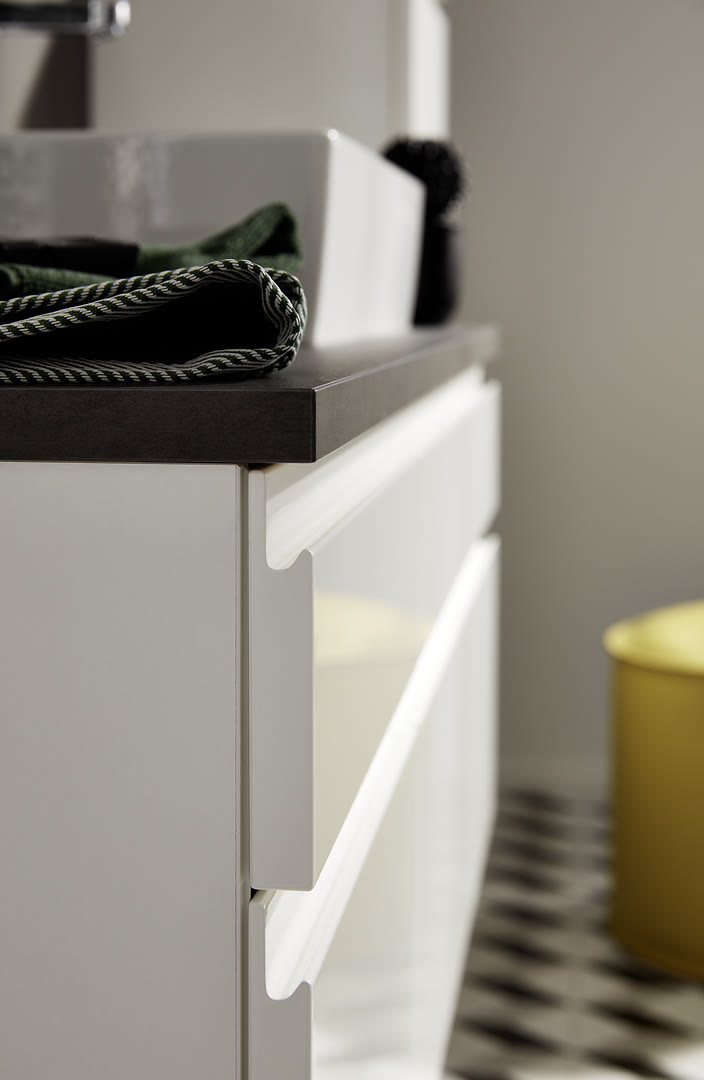
This is where I try to be honest with people, because the sample in the showroom is spotless and your bathroom will not be. High-gloss shows fingerprints. It shows the water that flicks off your hands, the toothpaste splash, the dust that settles on a horizontal surface near a window. None of it is hard to clean. A damp cloth takes it right off. But you will notice it more, and you will reach for that cloth more often. If you are the kind of person who is soothed by a wiped-down surface, gloss is fine. If little smudges will nag at you, they will nag at you every morning.
Matte is the forgiving one. It hides fingerprints and spots so well that most people clean it far less often. The trade-off is on the rare occasion something does mark it, a matte surface can hold onto a greasy smear a bit more stubbornly, so you clean less frequently but a touch more thoroughly. The other honest point: a deep scratch is easier to hide on matte, but a gloss chip can sometimes be polished, while matte is harder to touch up invisibly. In a bathroom, neither finish takes much abuse, so I would not lose sleep over scratches either way.
How does your bathroom's light change a white vanity?
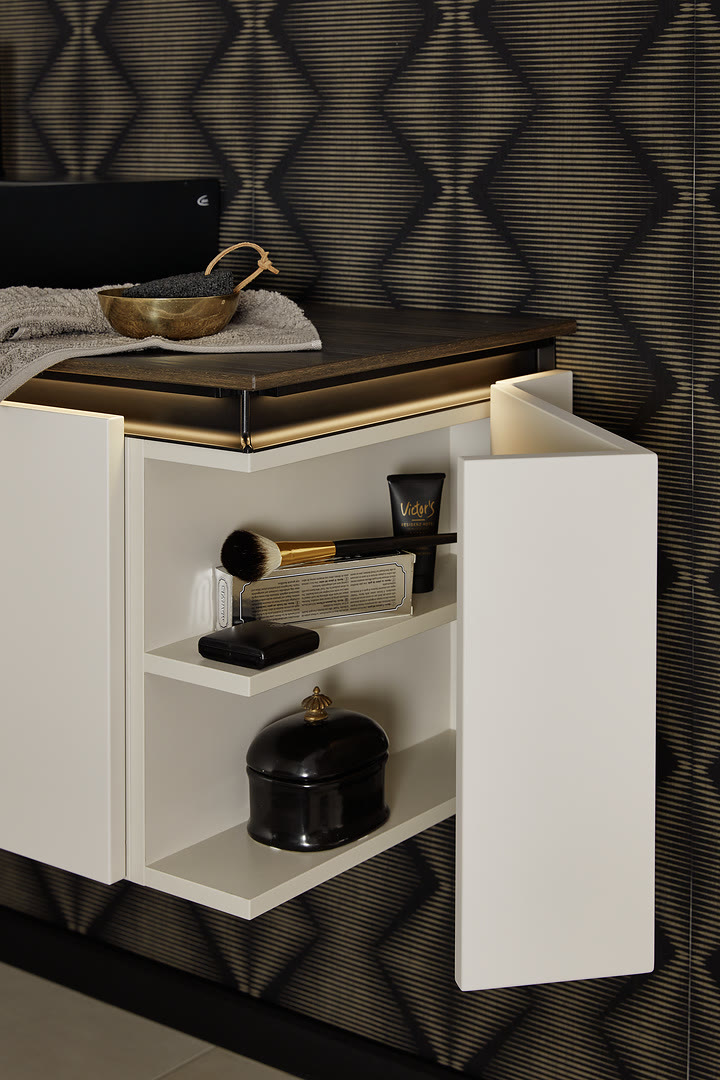
Light matters more than the finish name, and it is the thing people forget to check. Stand in the actual room at the times of day you use it. A north-facing bathroom with one small window is a different world from a sunny primary bath with a wall of glass.
In a dim or windowless bathroom, high-gloss earns its place. It grabs whatever light you have, from the window or the fixtures, and throws it back into the room, so the space feels brighter and a bit larger. That reflective quality is genuinely useful in a powder room or a small guest bath. In a bright, sunny bathroom, that same gloss can get busy, catching every reflection and every smudge in strong light. Matte behaves better there. It settles the room down and lets the light stay even.
White is also not one color. A gloss white can lean cool and slightly blue, while a matte white in the same room often reads warmer and creamier, even when the base color is close. That is why I never let anyone choose from a chip alone. Bring the door into your light. If you are still weighing layout and size alongside finish, our bathroom vanity buying guide is a good place to sort the rest of it out, and for a tight space the notes in our floating vanity guide pair naturally with the gloss-for-brightness point.
So which finish should you choose?
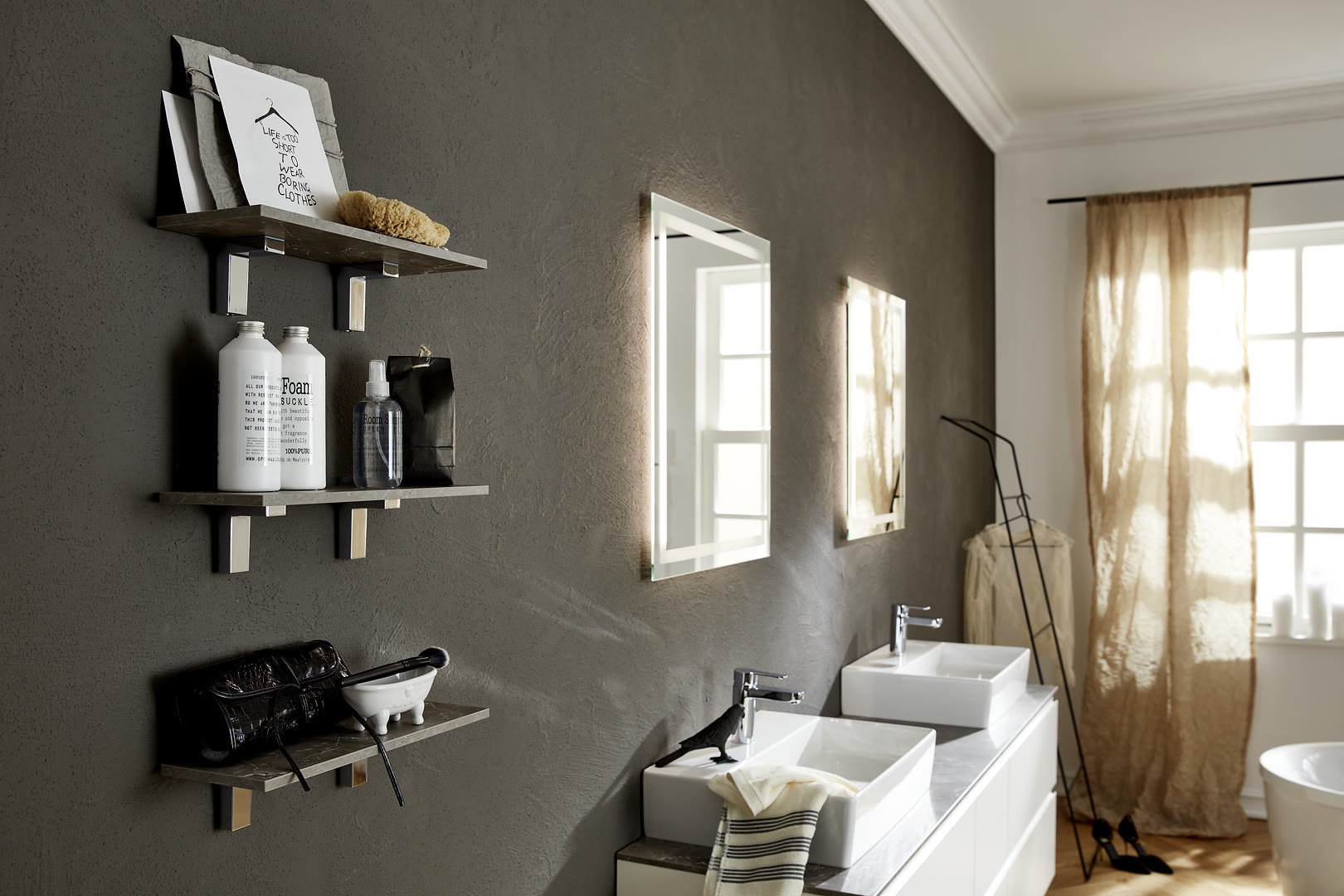
Start with your light and your temperament, not with a trend. If your bathroom is on the darker side, or small, or you love a crisp modern look and you do not mind a quick wipe, high-gloss white is a good call. If your bathroom already gets plenty of light, or you want a softer, quieter room, or the idea of chasing fingerprints wears you out, go matte. Both are timeless. I have never had someone regret white itself. When there is regret, it is almost always about picking a finish that fought their light or their habits.
One more thing I tell every client: the finish is the part you see, but the box behind it is the part that lasts. A beautiful white lacquer over a poorly built cabinet in a wet room is a short-term win. Solid construction, proper edge banding so moisture cannot creep in, good hinges and runners, a substrate that will not swell: that is what keeps a white vanity looking new in year eight, whichever finish you chose. We build to that standard on every bathroom project, because the finish debate only matters if the cabinet under it is going to be there to hold it.
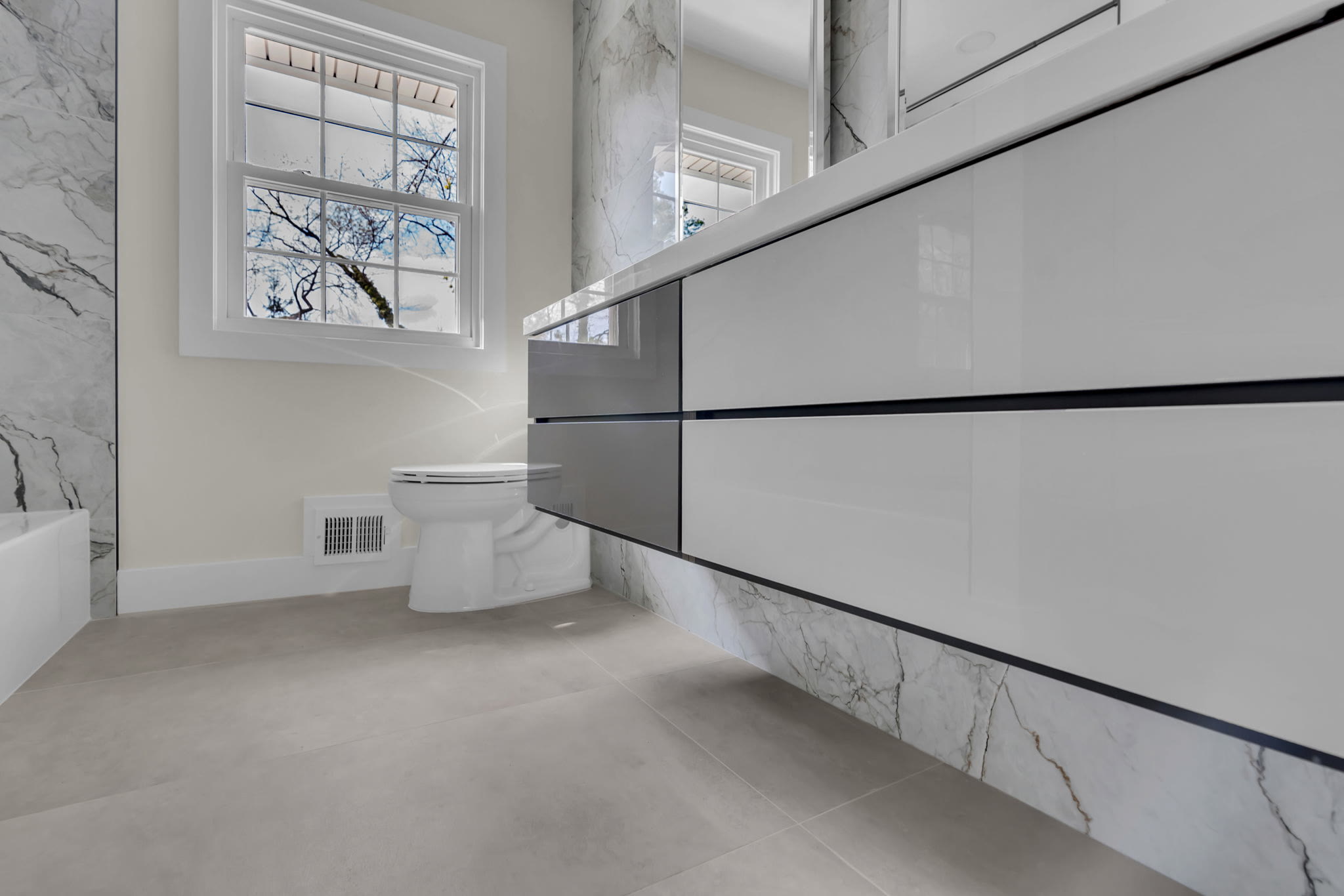
My honest advice is to come see both. Put a fingerprint on a gloss door and a matte door, stand them side by side under real light, and hold each one. Five minutes of that will settle the question better than anything I can write. And once you have decided, the finish stops being a worry and just becomes the thing you like looking at every morning.
Frequently Asked Questions
Does high-gloss white really show more fingerprints?
Is matte white harder to keep clean?
Which finish makes a small bathroom feel bigger?
Will white cabinets yellow over time?
Can I see both finishes before deciding?
Keep Reading

Floating Bathroom Vanity: A Complete Buyer's Guide
A floating bathroom vanity mounts to the wall with open floor beneath it. Here is how to choose one, what it costs you in planning, and where it goes wrong.

36 Inch Bathroom Vanity vs 40 Inch: Which Fits Your Wall
A 36 inch vanity is the American standard and a 40 inch is the European one. Here is how to measure your wall and pick the right one.

30 Inch Bathroom Vanity: Fit, Sizes, and When 32 Works
A 30 inch vanity fits most guest and secondary baths, but the European 32 inch often uses the wall better. Here is how I help clients choose.
Ready to talk through your remodel?
Visit our showroom or request an estimate. We will walk you from first ideas to final installation.