
Bathroom Vanity Buying Guide for Northern Virginia Homes
How to choose size, mount, storage, and finish without regret

Sam K. · Showroom Manager
· 6 min read

If you want the short version: pick your vanity by the room, not the picture. Measure the space, decide whether it hangs on the wall or sits on the floor, choose storage you will actually use, and then pick a finish that can live next to a sink for years. Everything else is taste, and taste is the easy part. I talk to people in our showroom every week who fell in love with a vanity online and then found out it blocked their door, or that the finish they liked was the one we tell clients not to buy. This guide is the conversation I have with them, written down.
How big should a bathroom vanity be?
Start with the room, then work backward. I ask people to measure the full wall, then subtract for the door swing, the toilet clearance, and the path someone walks to the shower. What is left is where a vanity can go. Only then do we talk about width.
For a single sink, most Northern Virginia bathrooms take something between 30 and 48 inches without a fight. A shared primary bath that has the room can carry a 60 to 72 inch double. The mistake I see is choosing the widest vanity that fits the wall and forgetting the floor in front of it. You want roughly 30 inches of clear space to stand and open a drawer. A vanity that looks generous on paper can make the room feel tight the moment two people are in it.
Height is the other number people skip. The old standard was low, around 32 inches. Most adults are more comfortable at 34 to 36. If everyone using the bathroom is tall, go taller. If a child uses it daily, that changes things too. We would rather set the height to the people than to the catalog.
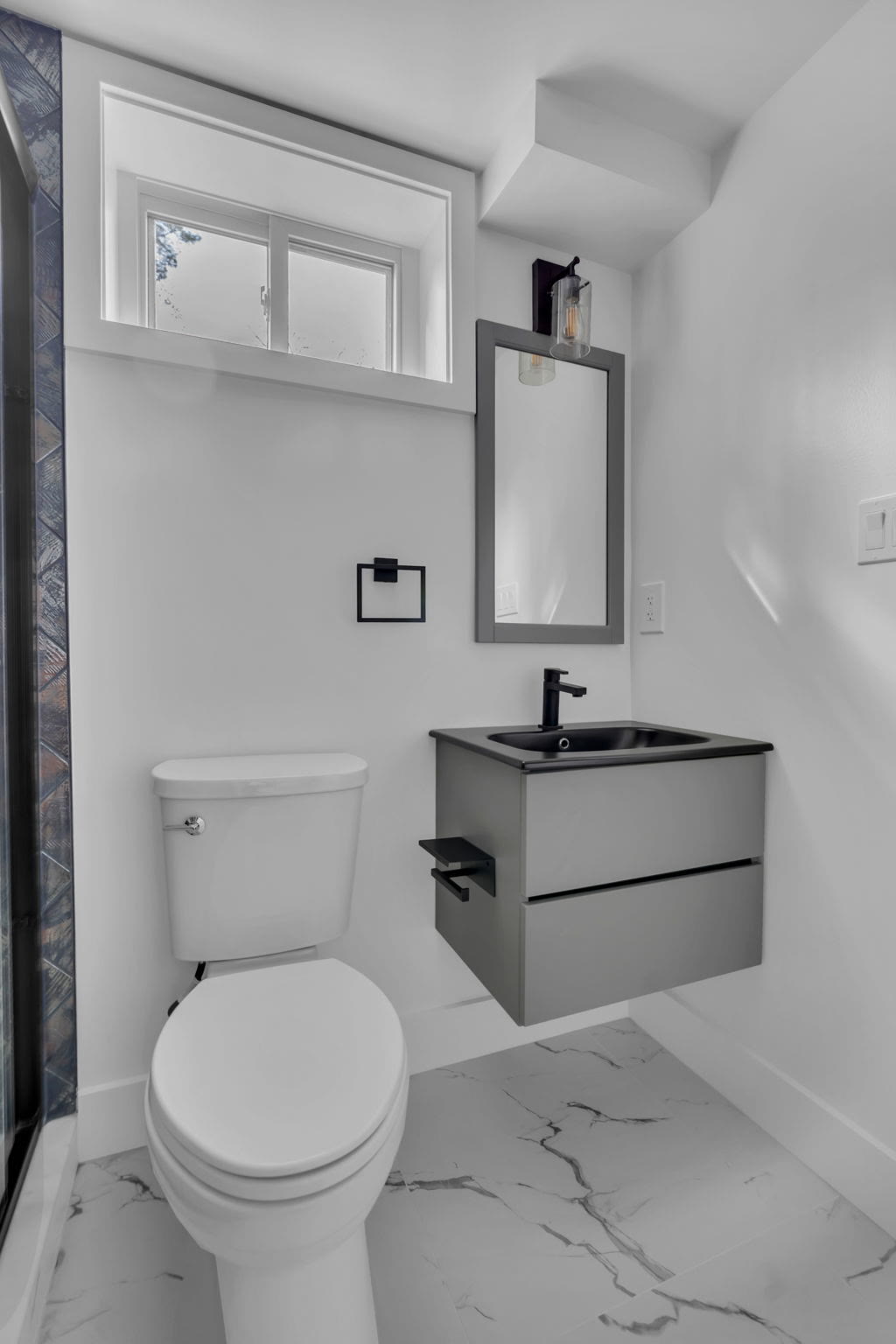
Should you choose a wall-mounted or floor-standing vanity?
A wall-mounted, or floating, vanity has real advantages. It shows more floor, which makes a small bathroom read as larger, and you can clean under it without a fight. In a tight powder room it can be the difference between cramped and calm. We have written more about that in our piece on floating vanities in small bathrooms if you want the longer look.
The trade-off is honesty about the wall. A floating unit hangs off blocking built into the framing, so it is far easier to add when the wall is already open during a remodel. If your walls are staying closed, a floor-standing vanity is the simpler and often smarter choice. A floating vanity also locks in your sink height, because you cannot nudge it up or down later the way you can shim a cabinet on the floor. We measure and confirm the wall before anyone gets attached to the floating look.
Floor-standing has its own case. It hides plumbing without extra panels, it feels solid, and it does not depend on the framing behind it. Neither choice is wrong. It is a question of your room, your walls, and whether the light, open feeling is worth the extra planning.
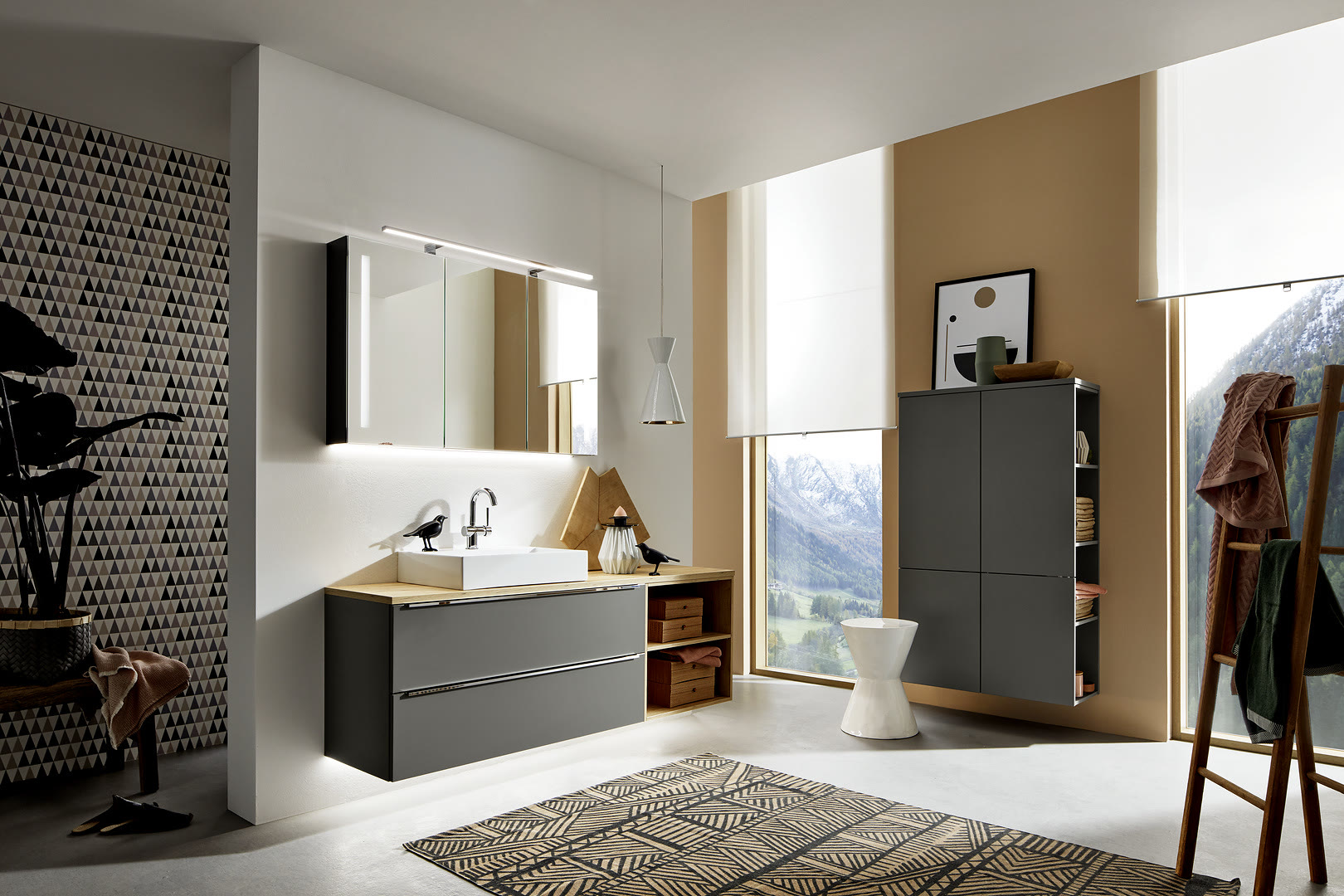
What kind of storage actually helps in a vanity?
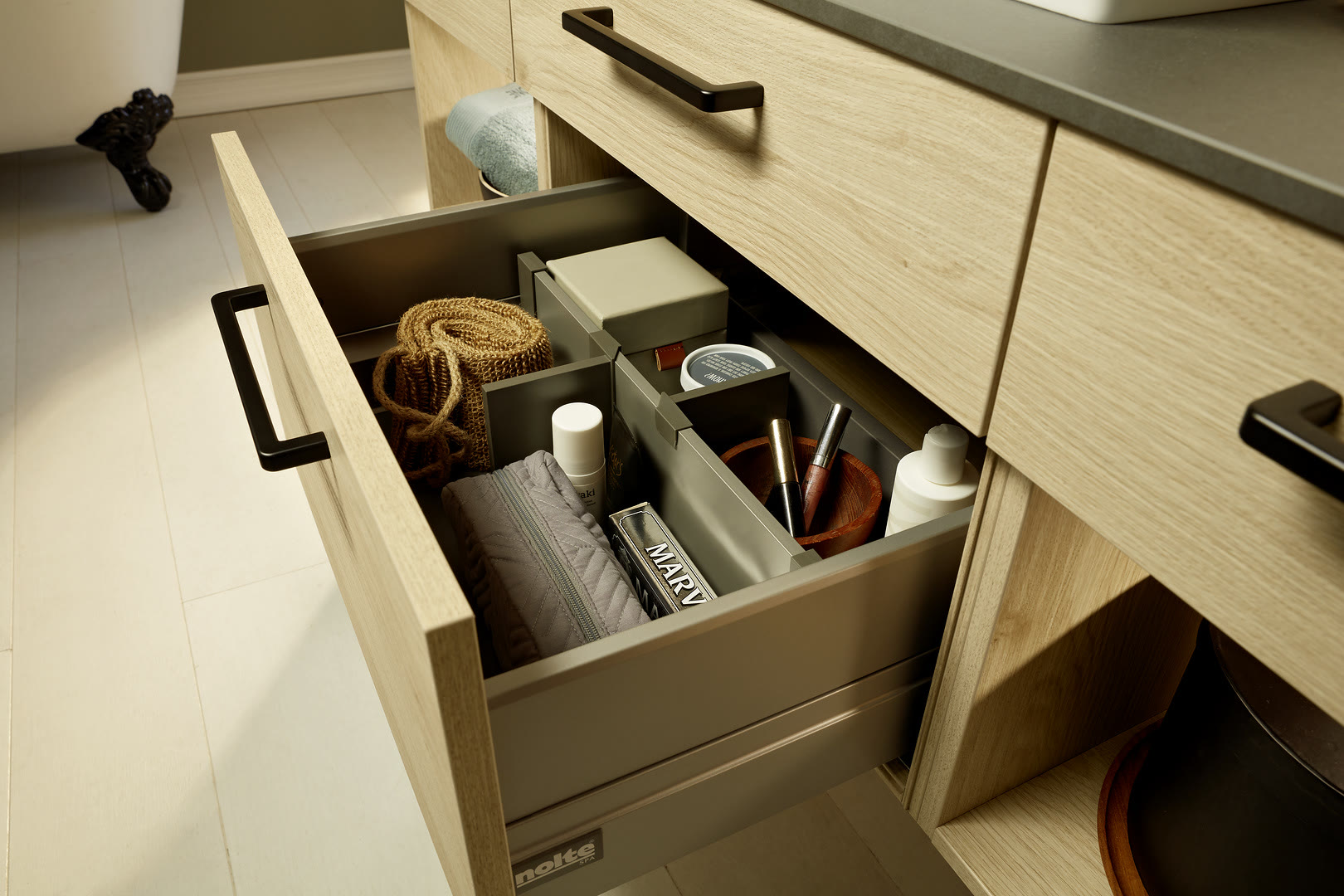
Here is where the money is well spent or wasted. A vanity with two big cabinet doors looks like a lot of storage. In daily life you end up kneeling and reaching into a dark box, and half of it is dead space behind the plumbing. Drawers change that. A drawer brings everything to you, you see it all at once, and a good drawer is built to notch around the trap so you keep the space.
I steer most people toward drawers with dividers for the things they touch every day, and one taller pull-out or an open shelf for the bulky items like a hair dryer or extra towels. If a couple shares the vanity, giving each person their own drawer stack cuts down the small daily friction more than any single feature. The insert is what makes it work: a plain deep drawer becomes a jumble, a divided one stays sorted for years.
Do not over-buy. A vanity is not the only storage in the room. A slim tall cabinet or a mirrored cabinet often holds more than making the vanity oversized, and it keeps the floor open. Storage should match what you own, not fill the wall for its own sake.
Which finishes hold up in a bathroom?
A bathroom is a hard place for a cabinet. Steam, splashes, and the humidity we get here all year test the finish. The failures I see almost always start at an edge, not the face. Water finds an unsealed seam, creeps into the core, and the panel swells. Once that happens there is no fixing it, only replacing it.
What holds up: a properly sealed lacquer, which wipes clean and shrugs off splashes, and a real wood veneer with clean, tight edge banding. Both can take daily use for years. What I tell people to walk away from is the cheapest laminate with a thin or open edge near the sink. It looks fine in the store and fails first at the corners.
Color is the fun part and the least risky. A bathroom is small and personal, so it can carry a deeper tone or a warmer wood than you would put across a whole kitchen. High-gloss white keeps a small room bright. A matte graphite or a soft green feels calmer and hides water spots better. Pick the finish quality first, then the color. You can love any color that is built to last, and you will regret a beautiful one that is not.
Single or double sink: which is right for your bathroom?
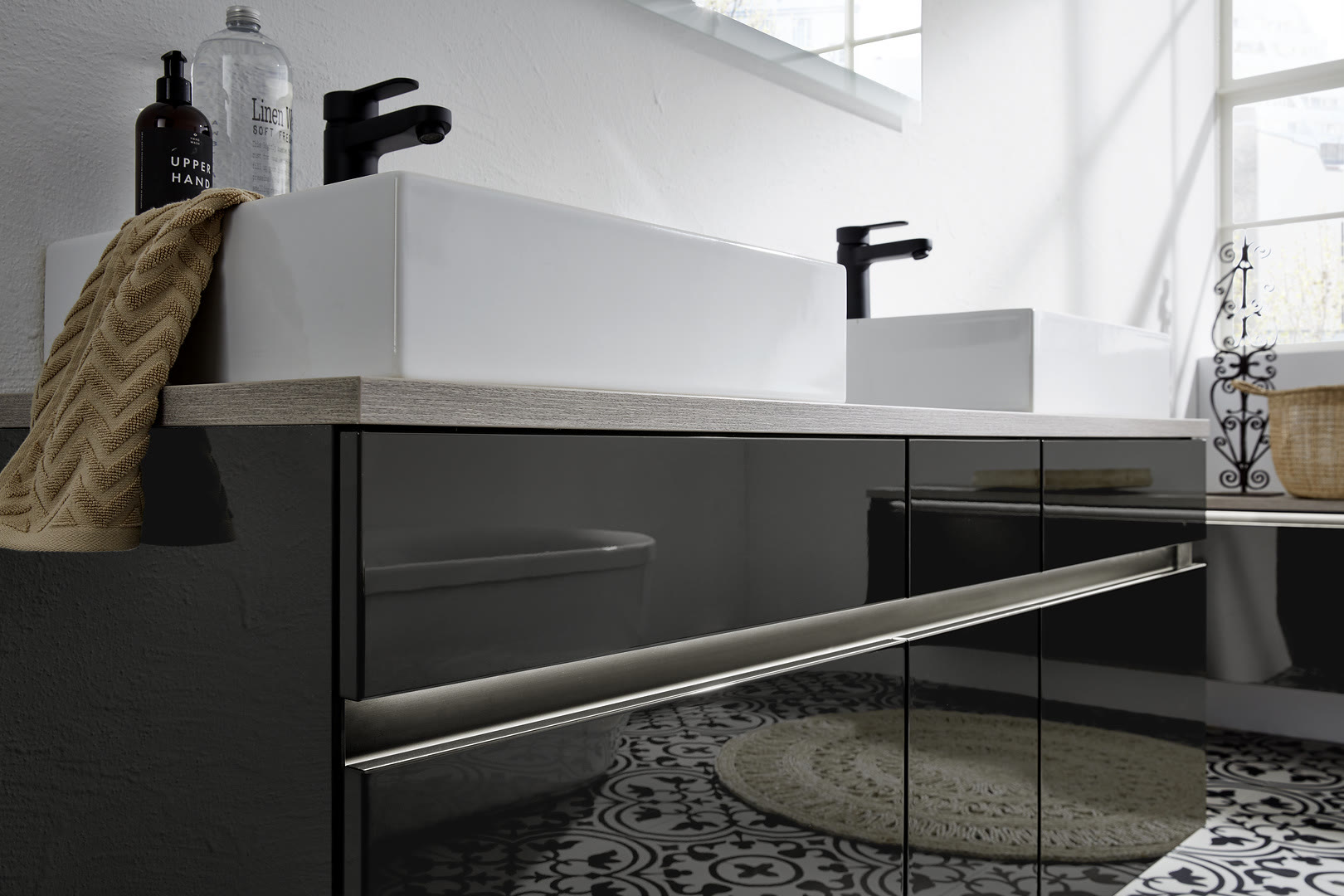
Two sinks are wonderful when two people get ready at the same time. But a double vanity eats space, and a cramped double often serves people worse than a generous single. My rule of thumb: if you cannot fit a real 60 inch double with usable counter beside each basin, you are usually better off with one good sink and more drawers. We laid out the fuller comparison in our note on double sinks versus floating vanities.
Think about how the room is really used. A primary bath where a couple overlaps every morning earns its second sink. A guest bath or a bathroom one person uses does not, and the counter space and storage you gain from a single is worth more than a basin that sits dry most days. Plumbing for a second sink also adds cost, so it should buy you something real.
If you are not sure, we sketch it both ways at full scale before anyone commits. Seeing it drawn to size settles the question faster than any list. When you are ready to plan the room around the vanity instead of the other way around, that is what our bathroom design-build work is for.
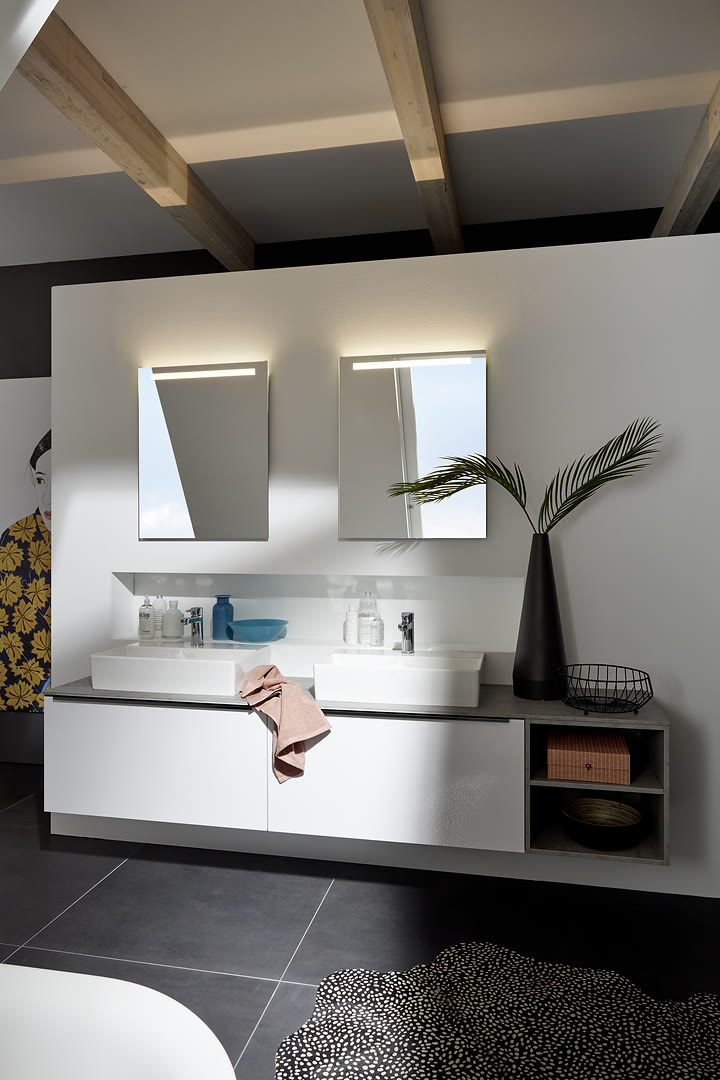
None of this is complicated once you take it in order: room, mount, storage, finish. Get those four right and the vanity will still feel right in ten years, which is the only test that matters. If you want a second set of eyes on your bathroom before you buy anything, come talk to us. We would rather help you plan it once than fix it later.
Frequently Asked Questions
What is a good vanity width for a standard Northern Virginia bathroom?
Is a wall-mounted vanity a bad idea in an older home?
Which vanity finish holds up best near a sink?
Should I match my vanity to my kitchen cabinets?
Keep Reading

Floating Bathroom Vanity: A Complete Buyer's Guide
A floating bathroom vanity mounts to the wall with open floor beneath it. Here is how to choose one, what it costs you in planning, and where it goes wrong.

36 Inch Bathroom Vanity vs 40 Inch: Which Fits Your Wall
A 36 inch vanity is the American standard and a 40 inch is the European one. Here is how to measure your wall and pick the right one.

30 Inch Bathroom Vanity: Fit, Sizes, and When 32 Works
A 30 inch vanity fits most guest and secondary baths, but the European 32 inch often uses the wall better. Here is how I help clients choose.
Ready to talk through your remodel?
Visit our showroom or request an estimate. We will walk you from first ideas to final installation.