
Appliance Garage Ideas: Door Styles, Storage and Layout
How to plan a countertop appliance cabinet that stays clear, powered, and easy to use

Sam K. · Showroom Manager
· 6 min read

An appliance garage is a dedicated cabinet that keeps small countertop appliances, a toaster, a coffee maker, a blender, plugged in and ready to use while staying out of sight behind a door. It gives you back the counter they usually occupy. Done well, it is one of the most useful things we build into a kitchen. Done without thinking through power and clearance, it becomes a cabinet nobody opens.
I talk to homeowners about this almost every week in our Alexandria showroom, and the questions are always the same: what kind of door, where does it go, and how do I plug things in. Here is how we work through it.
What is an appliance garage, and do you actually need one?
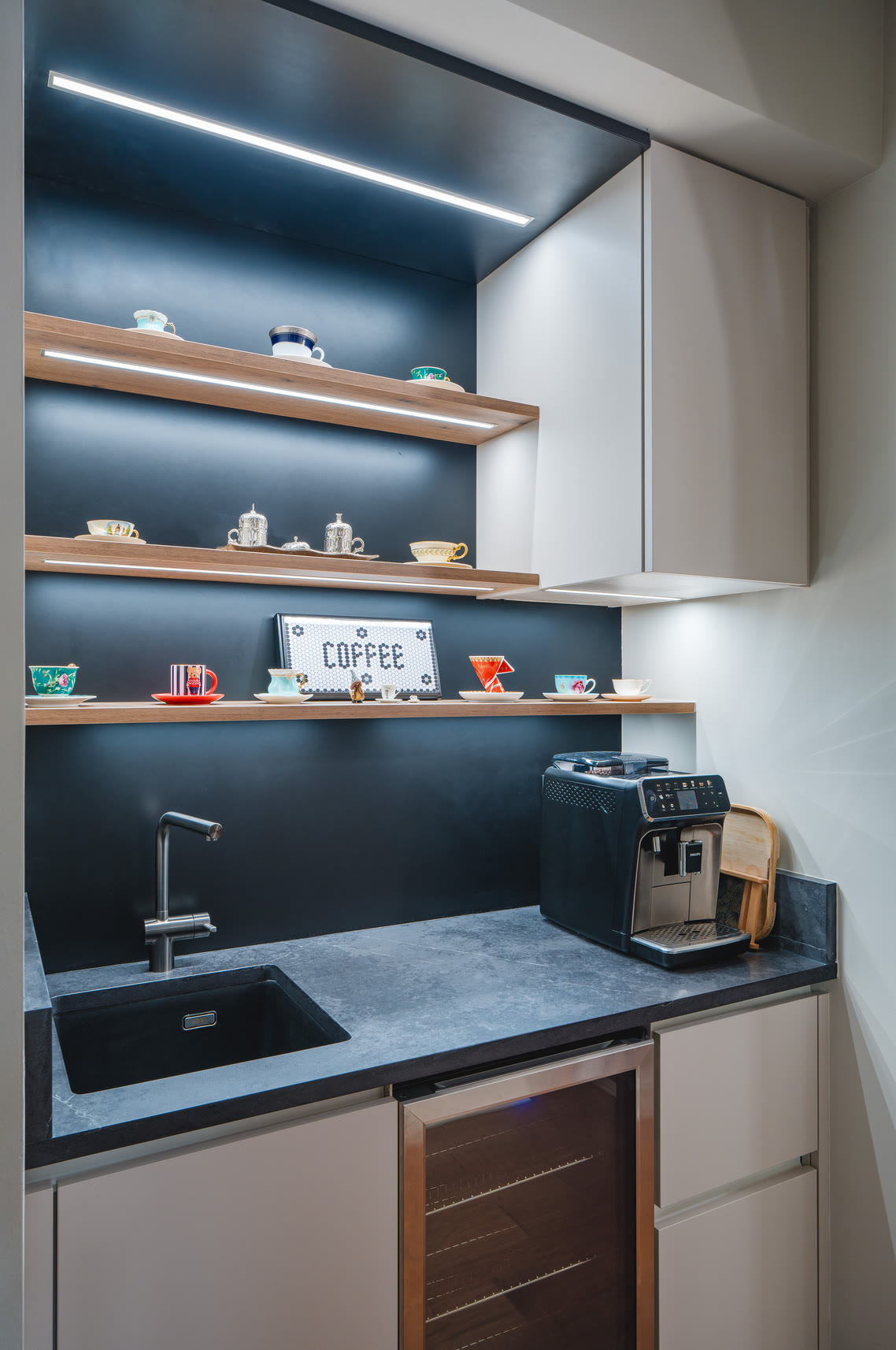
The idea is simple. Instead of a toaster and a coffee maker living on the counter all day, they live in a cabinet with its own power, and you lift or slide a door to use them. The counter underneath stays clear for everything else.
Not every kitchen needs one. I had a couple in Falls Church who thought they wanted a full appliance garage and really just needed one deep drawer for a stand mixer they used twice a month. We built the drawer. Their counter cleared up, and they saved the cost of a more complicated cabinet.
The honest test is this: which appliances do you use often enough that you hate putting them away, but dislike looking at all day? If that list is three or four items, a garage earns its space. If it is one, a drawer or a tall pull-out usually does the same job.
Which door styles work for an appliance garage?
The door is what you interact with every morning, so it matters more than people expect. A few general options come up again and again:
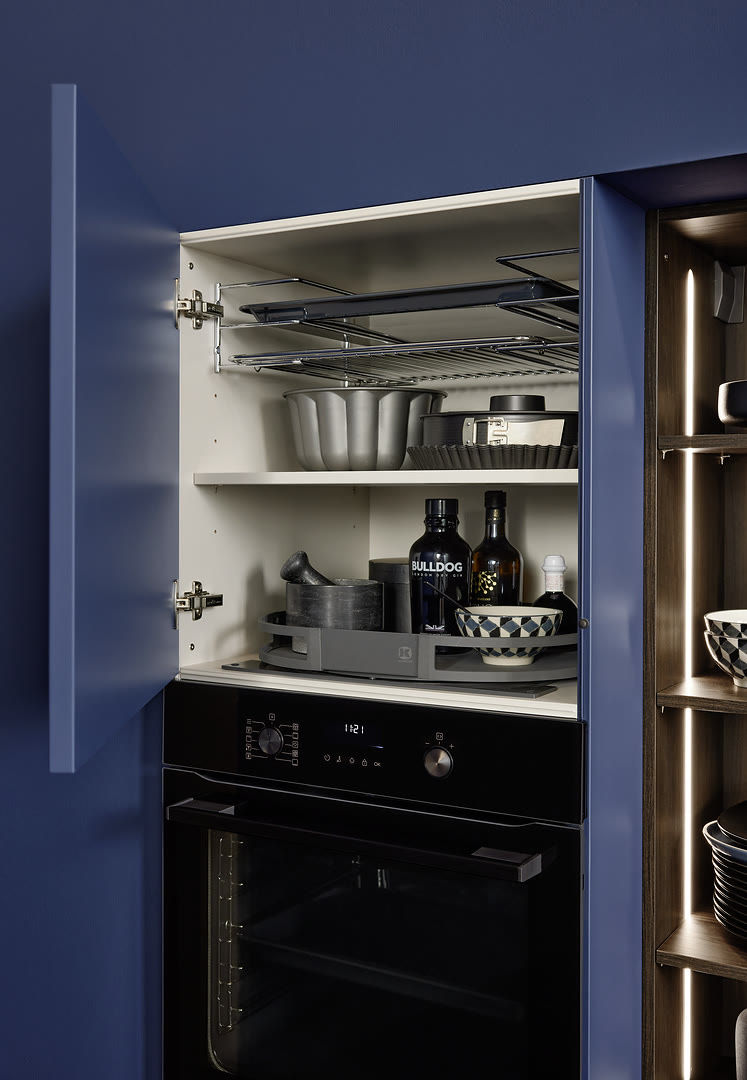
- Lift-up doors that swing up and stay open overhead. They keep the opening fully clear, but you need room above for the door to sit.
- Pocket or retractable doors that open and slide back into the cabinet sides. Clean look, nothing hanging in your face, but they take up a little interior room.
- Roll-up or tambour fronts that curl up out of the way. They have a nice workshop feel and suit a corner, though the mechanism adds depth.
- Standard hinged or bi-fold doors, the simplest and least expensive, as long as you have clearance for them to swing.
Before you fall for a specific mechanism, confirm it is something your cabinet maker actually offers and can service later. We go through what is available on real cabinets in the showroom rather than from a catalog photo, because the feel of a roll-up versus a lift-up is the kind of thing you want to try with your own hand. If you like a door that disappears entirely, it is worth reading how handleless cabinet opening systems work day to day, since the same logic applies.
How do you plan power, ventilation, and clearance?
This is the part people skip, and it is the part that decides whether the garage actually works. Three things have to be planned together.
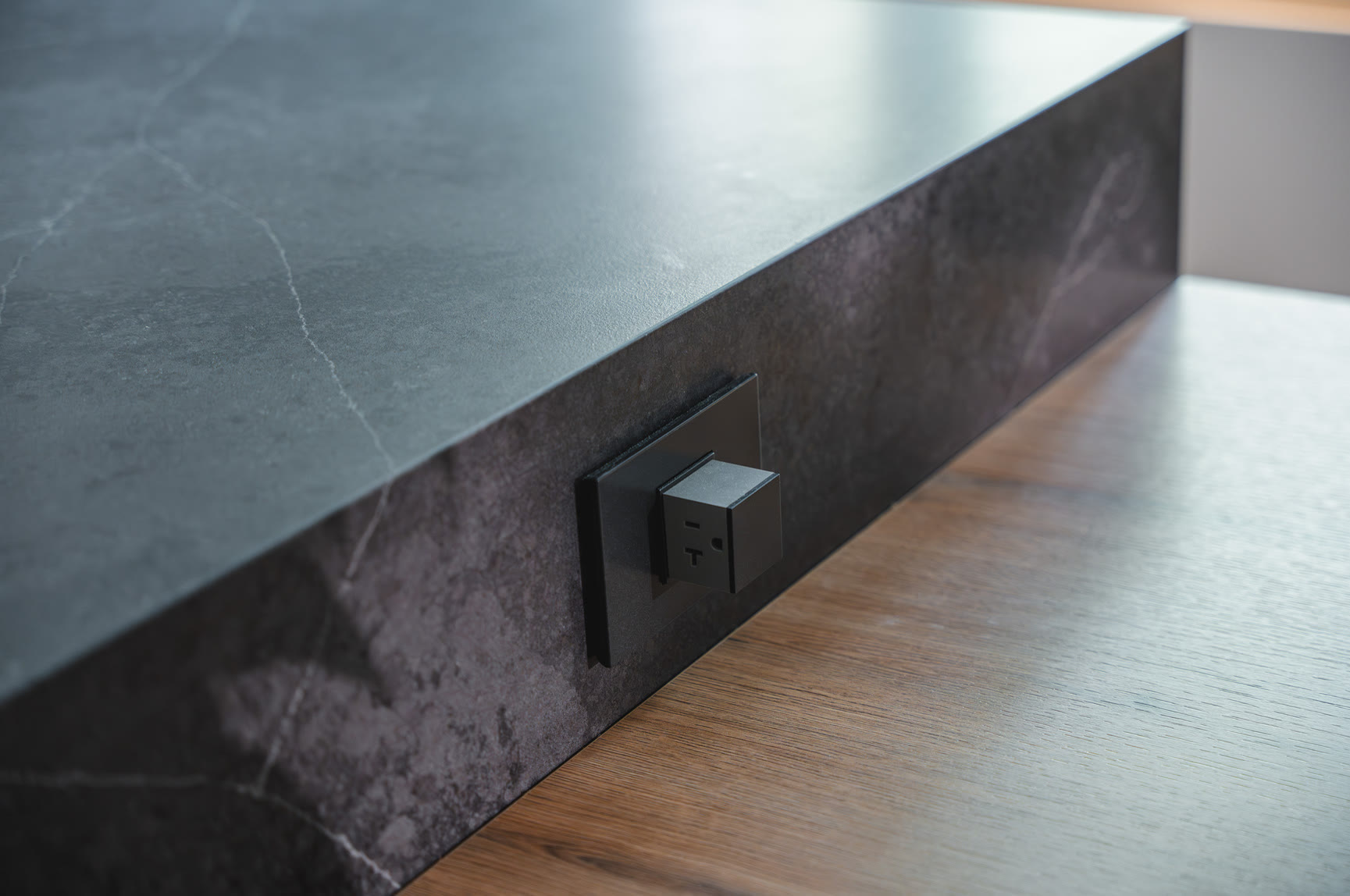
Power. Outlets go inside the cabinet, placed so a coffee maker or toaster cord reaches without stretching across the opening. We mark those locations during design, and a qualified electrician handles the wiring as part of the project.
Ventilation and heat. Some appliances throw off steam or heat. A coffee maker or a kettle can be fine with the door open while it runs and a problem if it is enclosed. The rule we follow is boring but it keeps people safe: follow the appliance instructions, and plan clearances around how you will actually use the thing. Tell your designer if you want to brew with the door shut, because that changes the plan.
Clearance. Leave room for the door to move and for your hands to work. A pop-up toaster needs headroom. A pull-out shelf needs to clear the cabinet above. We dry-fit these so you are not finding out after installation that the door hits the upper cabinet.
How much storage and counter space should you give it?
A garage that is too shallow becomes a shelf you fight with. Measure your actual appliances, add a little room for cords and for pulling things out, and size the interior to that. A coffee setup with a grinder and a canister of beans needs more depth than a single toaster.
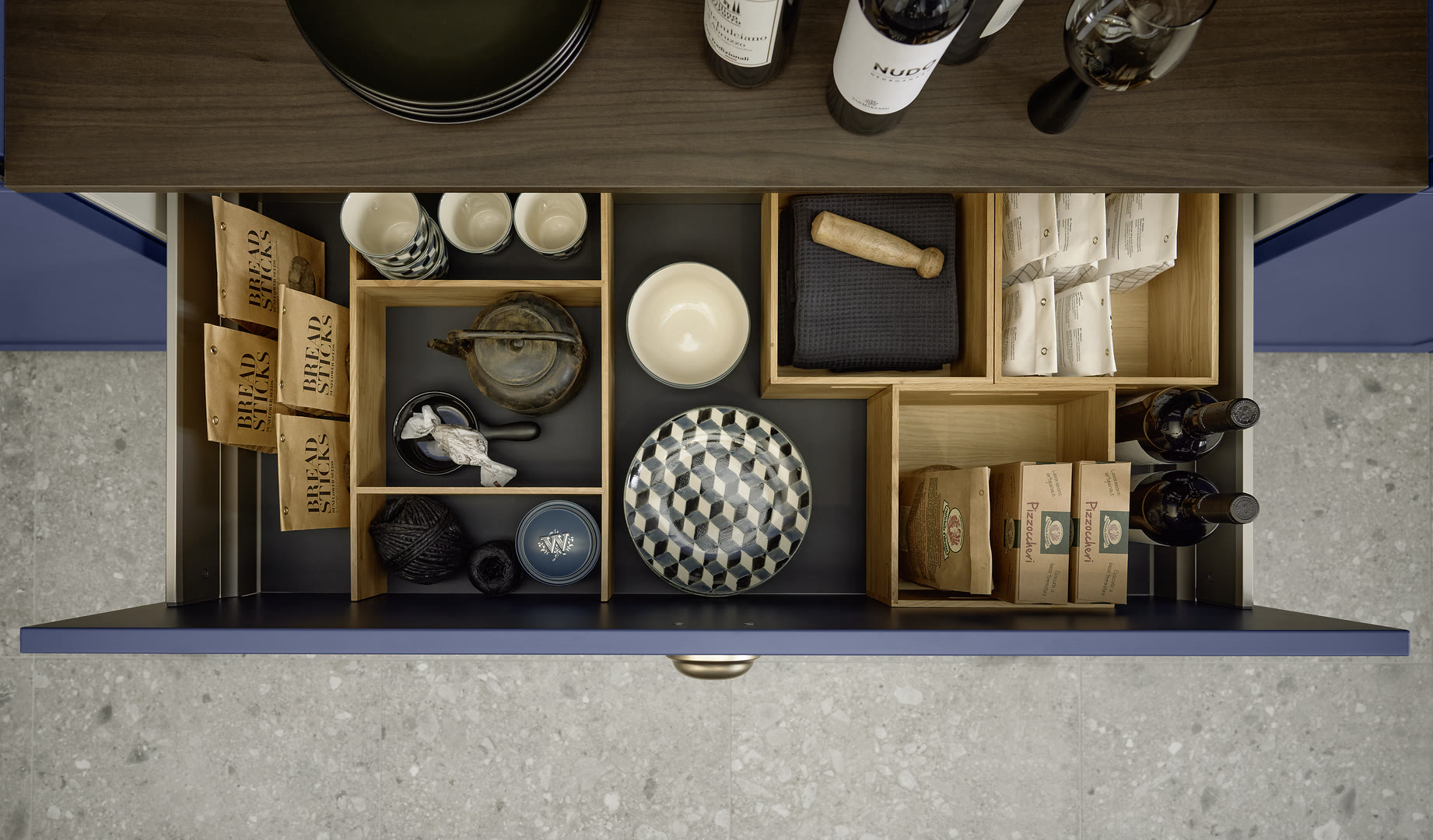
The best versions I have built pair the garage with a pull-out shelf so the appliance slides forward into the light instead of making you reach into a dark box. In a Chantilly kitchen we ran a bank of pull-outs beside a beverage station, and the owners told me later the pull-outs were the detail they used most. Drawer organizers help too: when the small stuff has a home, the counter stays clear for good.
On layout, put the garage where you will use the appliance. Coffee near the mugs and the sink. Toaster near the plates. A garage in the wrong corner is just a nice cabinet you walk past. If counter space is the whole reason you are remodeling, our notes on small kitchen remodel ideas cover how we claw back usable surface.
What do we tell clients to skip?
I will talk people out of things that will not earn their keep. A tall, fully enclosed garage for a single appliance is usually overkill: a drawer does it cheaper. A roll-up front in a spot with no clearance above is a recipe for a door that sticks. And putting the garage far from where the appliance gets used guarantees you will leave the toaster on the counter anyway.
I also steer people away from cramming too much in. A garage meant for the coffee station should not also hold the blender, the stand mixer, and a bread machine. Pick the two or three things you reach for daily, give them a proper home, and store the occasional appliances elsewhere. The kitchen remodeling trends we tracked for 2025 touched on appliance garages only briefly, which is part of why I wanted to write this out in full.
An appliance garage is one piece of a cabinetry plan, not a bolt-on. When we design custom kitchen cabinetry, the garage, the outlets, the door swing, and the counter zone all get drawn together so they actually fit your routine. If you want to open a few door styles with your own hands and see what suits your morning, come by the Alexandria showroom and we will walk through it with your measurements.
Frequently Asked Questions
Do appliance garages make a small kitchen feel bigger?
Can I run the coffee maker inside the cabinet with the door closed?
Where should the outlets go?
Is an appliance garage worth it if I only have one or two small appliances?
Keep Reading

Handleless Kitchen Cabinets: Opening Systems and Daily Use
How handleless kitchen cabinets open, how each system feels to use, and which one stays cleanest. Honest trade-offs from our Alexandria showroom.

Chevron vs Herringbone Wood Floors: Pattern and Layout
Chevron meets at a point, herringbone meets at a right angle. Here is how the two wood-floor patterns read in a real Northern Virginia kitchen.

Slab Cabinet Doors: Surface, Edge and Finish Options
A slab cabinet door is a flat, frameless front. Here is how surface material, edge detail, and finish decide how it looks and how it wears.
Ready to talk through your remodel?
Visit our showroom or request an estimate. We will walk you from first ideas to final installation.