
Fluted Kitchen Cabinets: Where to Use Them and Maintain Them
A kitchen-front guide for Northern Virginia homeowners who like the texture but worry about the upkeep

Sam K. · Showroom Manager
· 6 min read

Fluted kitchen cabinets work best as an accent, not as the whole room. The spots that carry it are the island face, a tall run of cabinetry, or the wall around the cooktop. Keep flat slab doors in the zones your hands touch all day, and clean the grooves with a soft dry brush and a barely damp cloth. That is the short version. Here is how I explain the rest to people standing in our showroom holding a sample and trying to decide how far to take it.
What are fluted cabinets, and where do they actually work?
Fluting is just vertical grooves milled into the door front, so light catches the ridges and the surface stops reading as flat. It is an old detail. You see it on columns and on old furniture, which is part of why I trust it to age well.
In a kitchen it does one job very well: it adds texture and shadow without adding color or clutter. That makes it a good tool for a room that is otherwise calm. A client in Vienna came in last year set on an all-fluted kitchen, and we ended up putting the fluting on a single tall run and leaving everything else flat. She told me later that was the thing visitors kept touching.
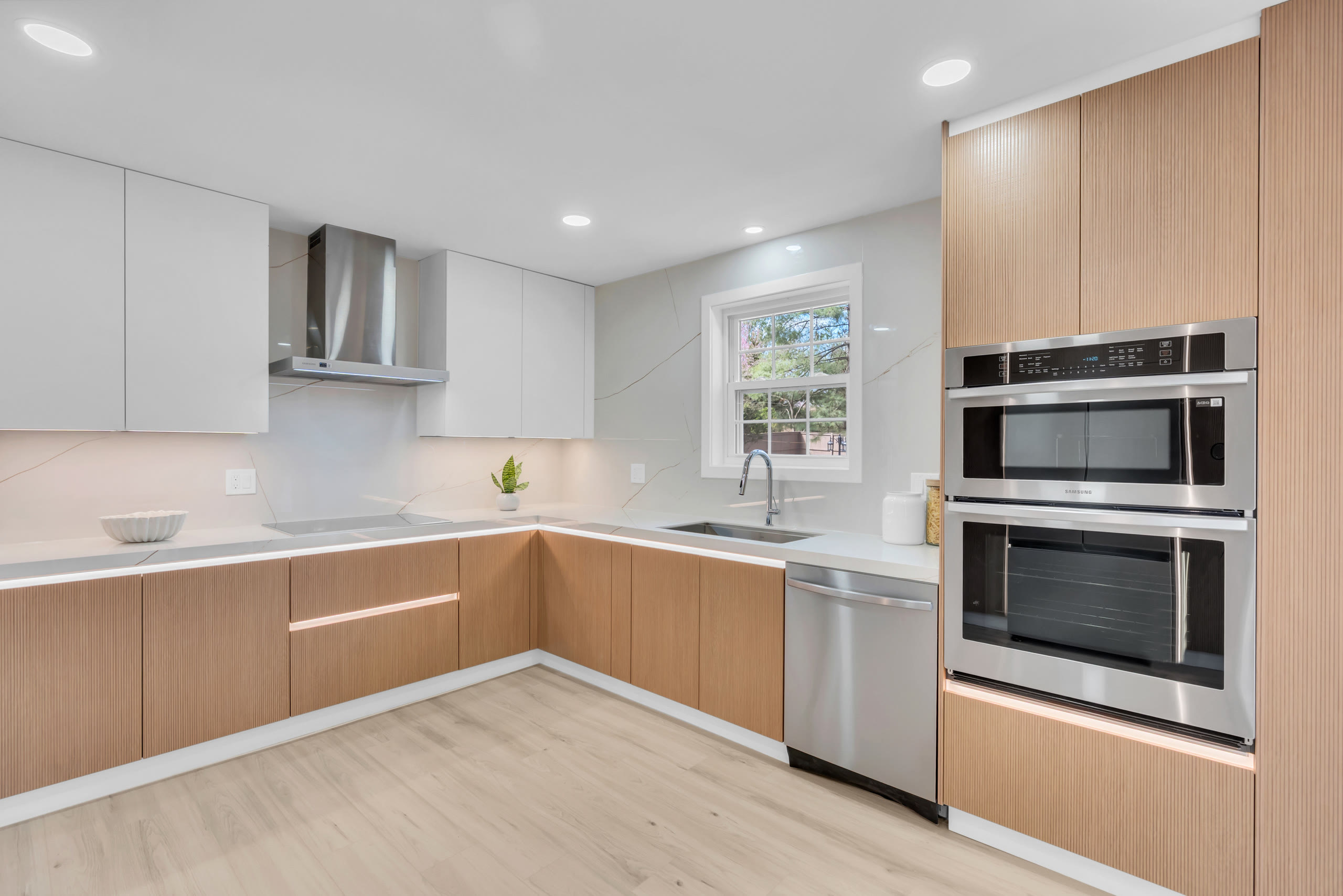
Where it works: an island, a tall pantry or appliance run, the stretch of wall behind the cooktop, and sometimes a bank of lower cabinets under a long counter. Where it tends not to: every cabinet in the room at once. Too much and the grooves start competing with each other and the eye has nowhere to rest.
Should the fluting go on the island or a full wall?
This is the question most people are really asking. An island and a full wall are two different jobs.
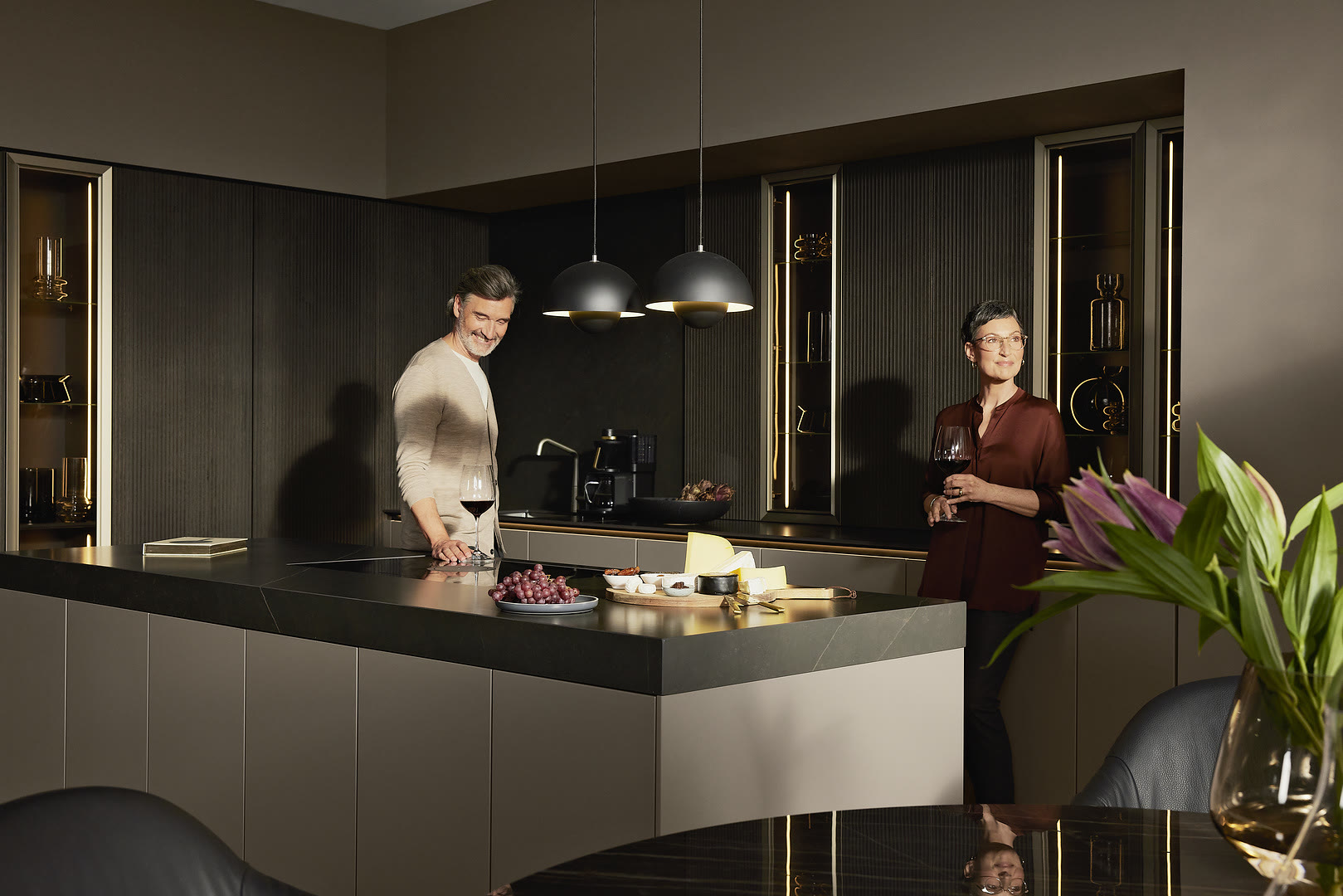
On an island, the fluting faces out into the room. You see it from the sofa, from the dining table, from the doorway. It becomes the piece of furniture in the middle of the space, and texture reads beautifully from across a room. It also stays away from your main prep zone, so you are not dragging a sponge through the grooves every time you cook. For most open-plan kitchens in Arlington and McLean, the island is the easiest place to use fluting and the hardest to get wrong.
A full wall of fluting is a bigger commitment. A tall run, floor to ceiling, can look like paneling and gives a kitchen real presence, especially in a blackened oak or a warm wood tone. But a wall gets close to appliances, sinks, and splatter, so you have to be honest about how that wall gets used. If it is a quiet storage wall away from the cooking, go ahead. If it wraps the cooktop and the sink, I would think twice, or at least keep the busy section flat.
How do you balance fluted fronts with flat doors?
The trick with fluting is restraint, and the way you get restraint is by pairing it with flat slab doors. The flat doors do the hard work. The fluted fronts do the talking.
A layout I come back to often: flat lower cabinets where you prep, flat drawers under the cooktop, and fluting on the island or on the tall units that frame the room. The flat surfaces are easy to wipe and take the daily abuse. The fluted pieces sit a step back from the action, so they stay clean and stay special. If you want to see how two finishes read together, the same thinking applies to a two-tone kitchen, where the goal is also to let one element lead and the other support.
Finish matters here. Fluting in a wood grain, where the grain runs with the grooves, feels organic and quiet. Fluting in a high-gloss lacquer is louder and shows every fingerprint along the ridges, so I use it more sparingly. If you want the cleanest possible flat doors next to your fluting, it is worth reading up on slab door surfaces and edges before you commit, because the flat and the fluted have to feel like they belong to the same kitchen.
One more thing I tell clients: decide where the fluting goes early, not late. It changes how door and drawer lines meet, and retrofitting it after the layout is set never looks as deliberate.
How do you clean and maintain fluted cabinets?
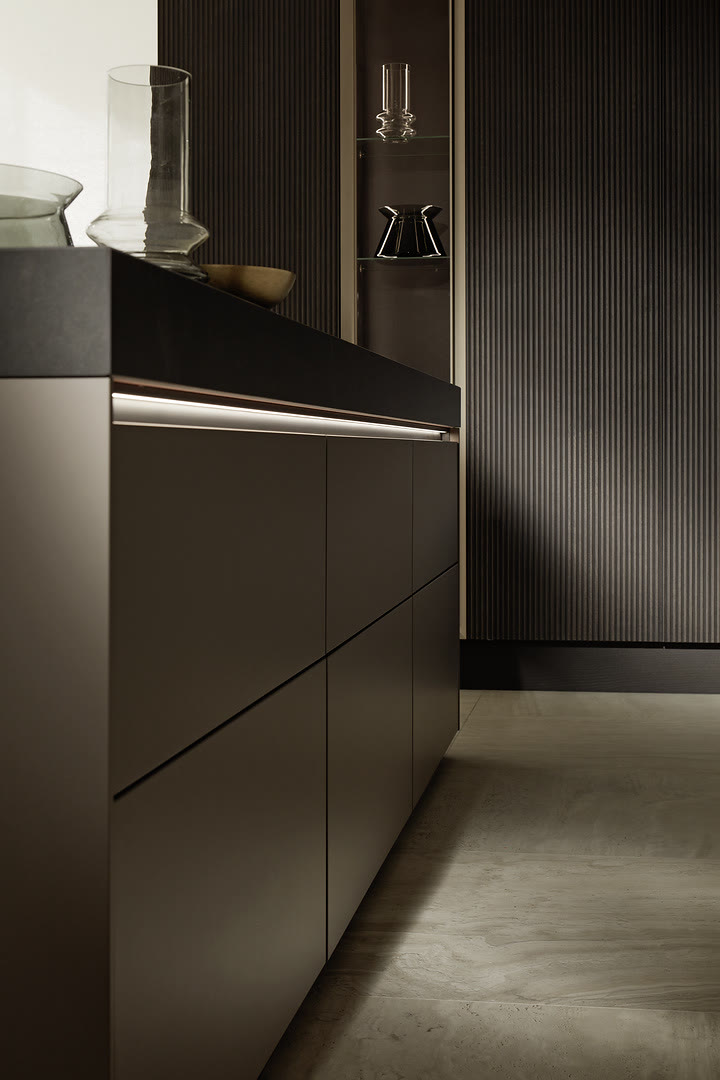
Here is the honest trade-off: fluting has grooves, and grooves collect dust. That is the whole maintenance story. It is not hard, it is just one extra motion.
My routine is simple. A soft dry brush, the kind you would use on a nice jacket, run down the channels to pull out dust. Then a microfiber cloth, barely damp, wiped in the direction of the fluting, not across it. Then a dry cloth to finish. The mistake I see people make is spraying cleaner directly onto a fluted door. The liquid pools in the grooves, sits there, and over time that is what dulls or damages a finish. Spray the cloth, not the cabinet.
Beyond that, match the care to the finish, because this is where things go sideways. A matt wood front, a soft-matt lacquer, and a high-gloss door all want slightly different handling, and the care instructions arrive with the product. Confirm the exact finish and follow what the manufacturer says rather than guessing. For the ranges we use most, the fluted wood fronts are low-drama: regular dusting and the occasional damp wipe keep them looking right for years. We build these with textured wood fronts from ranges like neoLODGE and neoLINE, and the fact that the texture is milled into real wood, not printed, is why it holds up.
If you cook hard and splatter a lot, keep the fluting off the splash zone and this whole section becomes a non-issue. That is the real maintenance tip: good placement does more for upkeep than any cleaning product.
If you are weighing fluting for your own kitchen, come see it in person. Texture is almost impossible to judge from a photo, and standing in front of a full-height fluted panel tells you in ten seconds whether it is for you. You can start with our kitchen design-build process or just walk through the Alexandria showroom and run your hand along a few doors. That is usually all it takes to decide.
Frequently Asked Questions
Are fluted cabinets hard to keep clean?
Should I do a whole fluted kitchen?
Do fluted fronts come in wood and in paint?
Will fluted cabinets look dated in ten years?
Keep Reading

Handleless Kitchen Cabinets: Opening Systems and Daily Use
How handleless kitchen cabinets open, how each system feels to use, and which one stays cleanest. Honest trade-offs from our Alexandria showroom.

Appliance Garage Ideas: Door Styles, Storage and Layout
An appliance garage hides small countertop appliances while keeping them plugged in and ready. Here is how we plan doors, power, and layout for DMV kitchens.

Chevron vs Herringbone Wood Floors: Pattern and Layout
Chevron meets at a point, herringbone meets at a right angle. Here is how the two wood-floor patterns read in a real Northern Virginia kitchen.
Ready to talk through your remodel?
Visit our showroom or request an estimate. We will walk you from first ideas to final installation.