
Handleless Kitchen Cabinets: Opening Systems and Daily Use
Grip rails, integrated J-profiles and push-to-open, and how each one behaves when you actually cook

Sam K. · Showroom Manager
· 6 min read

Handleless kitchen cabinets open three main ways. There is a continuous grip rail or lip you hook your fingers behind, an integrated J-profile milled into the top edge of the door, and a push-to-open mechanism with no groove at all. They can all look the same from across the room, so the real decision is about how the kitchen feels when you are cooking in it and wiping it down at the end of the night. That is the part people rarely get to test before they buy, and it is the part I spend the most time on with clients.
I want to keep this to the opening systems and everyday use. The door itself, the surface material and the edge detail, I cover in our piece on slab cabinet doors, so here I am only talking about how the cabinet opens and how that plays out over the years you own it.
What does handleless actually mean day to day?
Handleless does not mean there is nothing to grab. It means there is no hardware sticking out past the face of the door. Instead the grip is built into the cabinet, the door, or both. A couple from Falls Church told me they expected handleless to feel like pressing on a wall, and they were surprised how much of a real edge a grip rail gives you. Your hand knows where to go within a day.
The flat look is the obvious appeal. No knobs to snag a dish towel, no bar handles that collect grime at the base, nothing to bark your hip on in a narrow galley. But every handleless system makes a different trade to get that clean face, and that is what you are really choosing between.
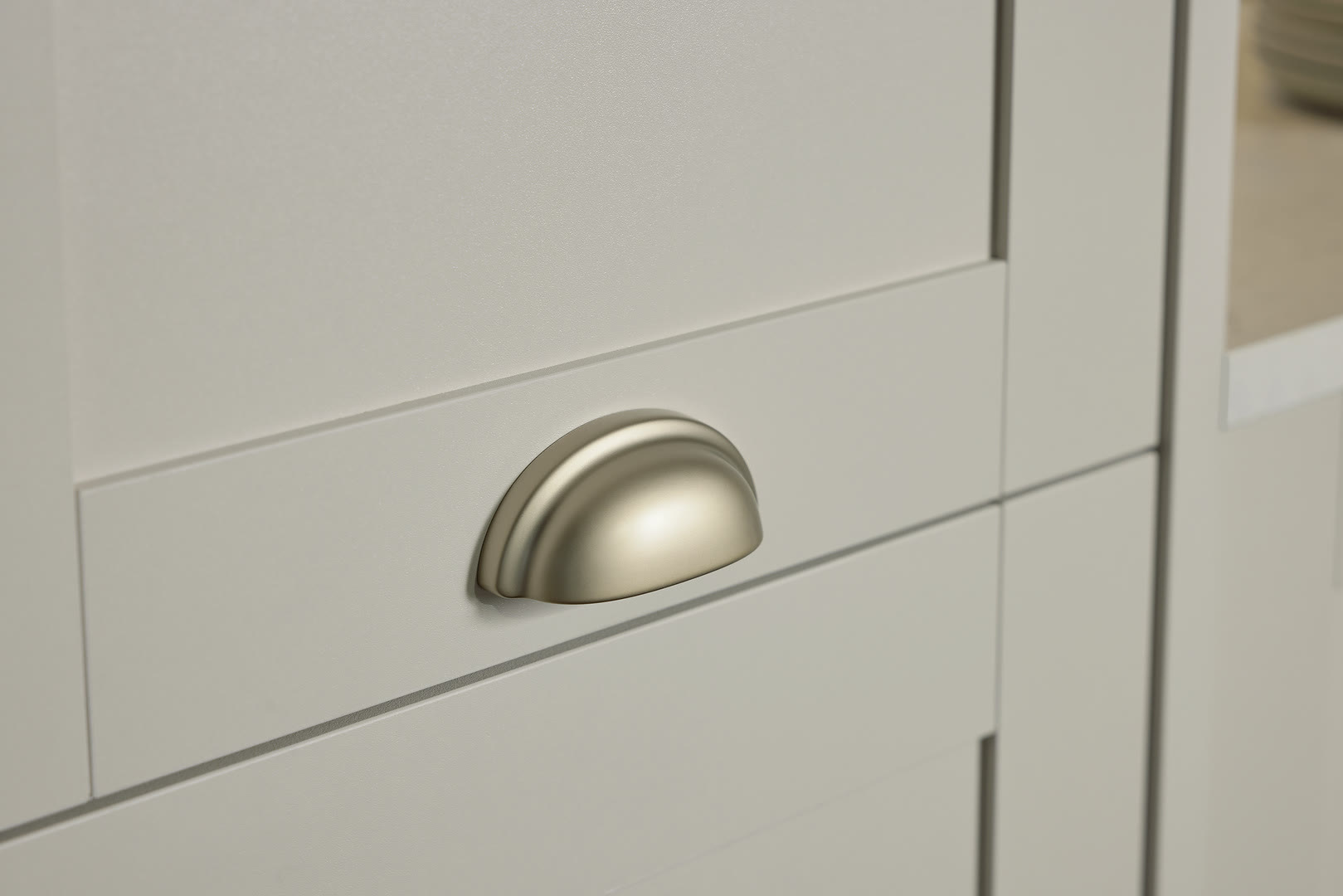
How does a recessed grip rail work, and who is it for?
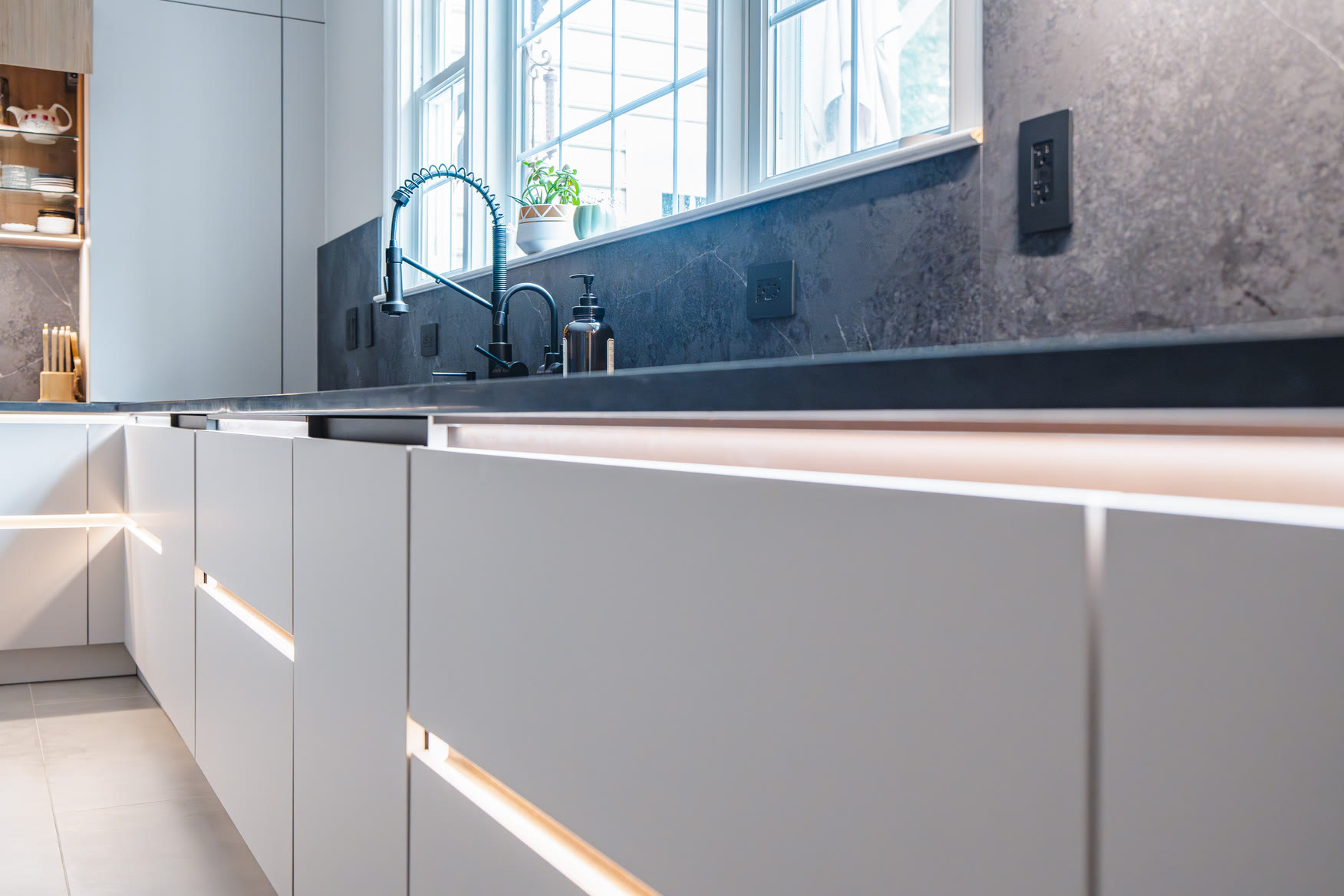
A grip rail, sometimes called a gola or a recessed channel, runs horizontally between your cabinet rows. You reach into the channel and pull. It is the most forgiving system I know. There is a generous edge for your fingers, it works the same whether the drawer is empty or packed with cast iron, and it does not depend on a mechanism that can wear out.
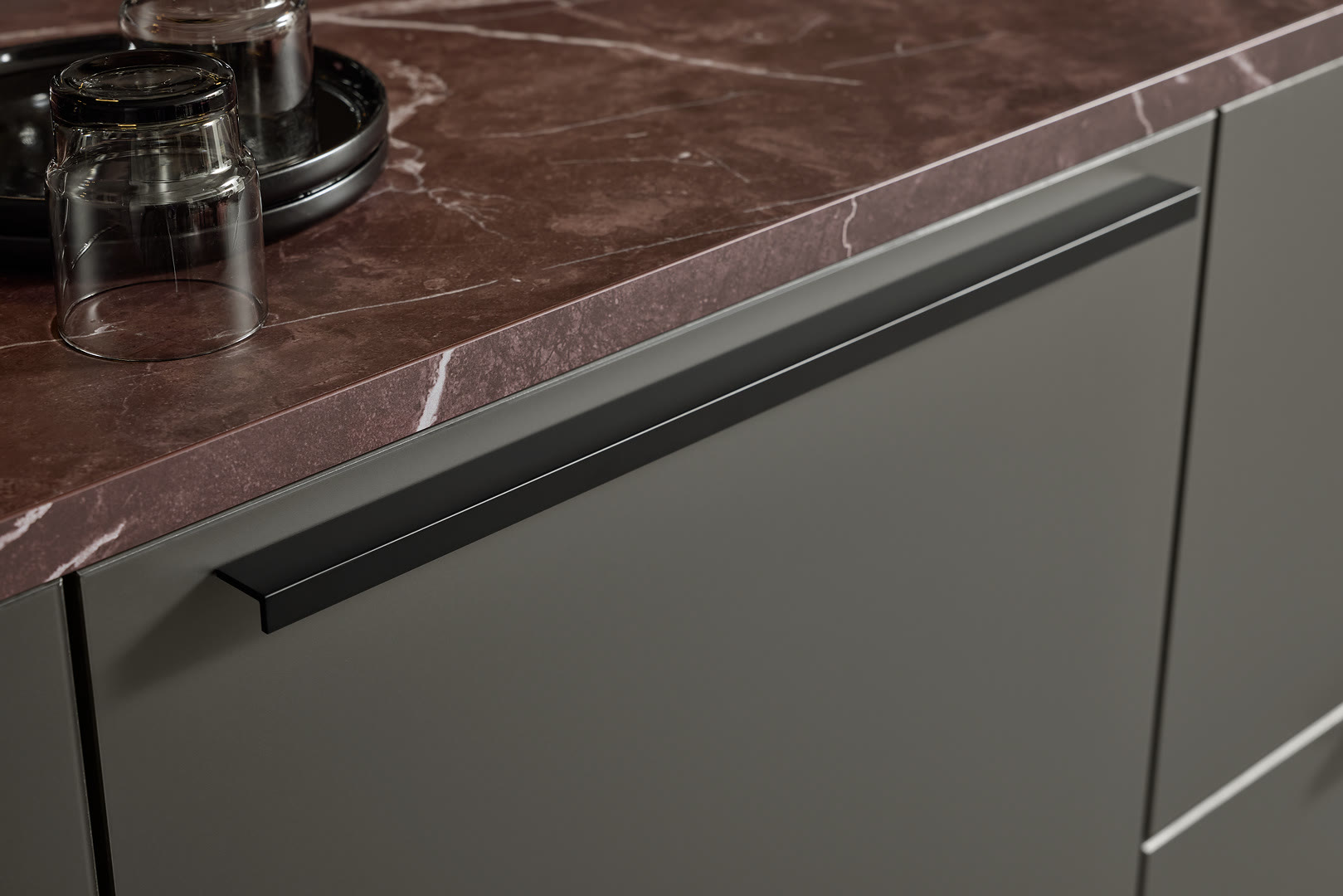
The integrated J-profile is a close cousin. Instead of a separate channel, the grip is shaped into the top edge of the door or drawer front itself. It reads even flatter because there is no visible rail line, just a shadow gap. Functionally it feels very similar to a grip rail once you are used to it.
I steer most families toward one of these two for the hardest-working cabinets, the ones under the cooktop and around the sink. They are the closest thing to foolproof. The honest downside is that the channel faces up, so it catches crumbs and the fine mist of cooking splatter. It wipes clean in seconds, but it is not maintenance-free, and anyone who tells you otherwise has not cooked over one.
Are push-to-open cabinets worth it?
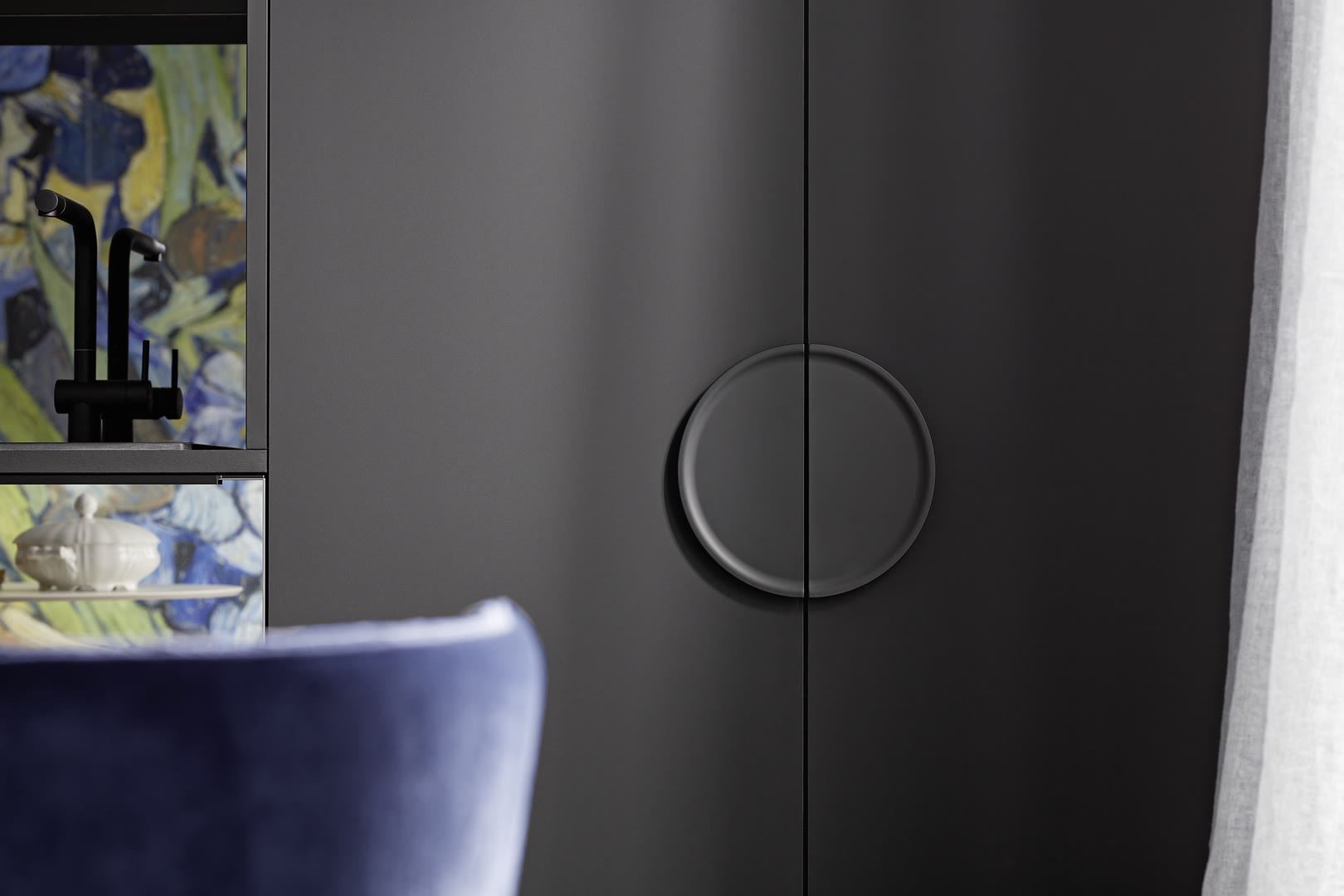
Push-to-open is the one that makes people lean in at the showroom. There is no rail and no J-profile, just an uninterrupted flat front. You press, a spring mechanism releases the door or drawer, and it pops out enough to grab. It is the purest version of the handleless look.
It is also the system I ask the most questions about before I let someone commit to it everywhere. On a busy base cabinet, a push mechanism has to be stronger to push past a heavy load, and a loaded drawer can bounce back if you do not catch it. If you have a dog that leans on cabinets or a kid who uses the lower doors as handholds, you will get doors opening on their own. And on a dark matte or high-gloss front, the spot where you press shows fingerprints.
None of that makes it a bad choice. It makes it a specific one. The setup I like most is push-to-open on tall pantry units, upper cabinets and display pieces you open less often, with a grip rail or J-profile on the hardworking lower run. A client in Vienna, Virginia did exactly that, and two years later she told me she never thinks about it, which is the goal. Details here are changed, but that split is one we spec constantly.
Which handleless system is easiest to clean?
This is where honesty matters, because the marketing word for all of them is seamless, and none of them are.
The grip rail collects the most. It is an upward-facing channel near where you cook, so crumbs and splatter land in it. The payoff is that it is open and shallow, so a damp cloth clears it in one pass. The J-profile catches a bit less because there is no separate trough, just a lip. Push-to-open catches the least of anything, since there is nothing to catch with, but you pay for that with fingerprints at the press point, and on dark finishes those show.
So the cleaning question is not which one stays spotless. It is which kind of cleaning you would rather do. Wiping out a channel once a week, or buffing fingerprints off a flat door. I tell people to picture their own habits honestly. If you cook heavy and often, a channel that wipes fast beats a flat front that shows every touch.
How we spec handleless cabinets at Aksesuar
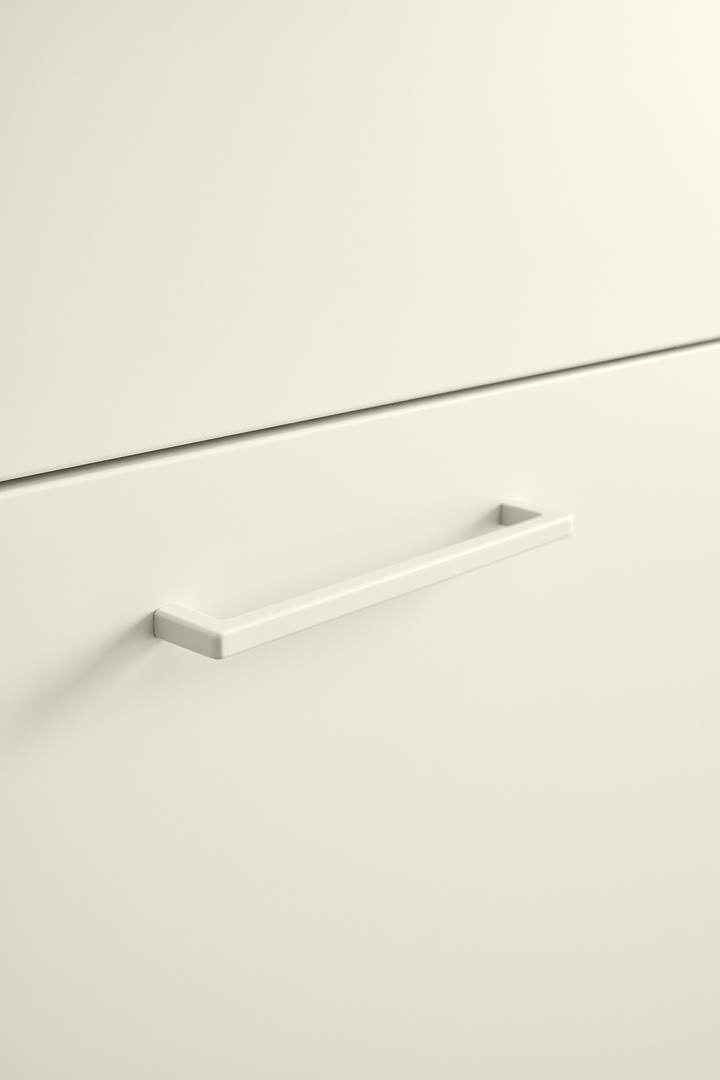
Because the opening system is built into the cabinet and the door, it is one of the few decisions in a kitchen that is genuinely hard to reverse. You can repaint a wall and swap a faucet. You cannot casually convert a push-to-open run to a grip rail later. That is why we put a real sample door in your hands in the showroom and have you open it a dozen times before anything is ordered.
Availability also varies by cabinet range, so I verify the exact mechanism against the specific line we are using rather than promising something the product cannot do. Some ranges carry a grip rail and push-to-open across the whole system, others do not, and I would rather find that out at the drawing stage than on delivery day. If you are weighing the construction underneath all this, our notes on frameless European versus framed American cabinets explain why handleless lives so naturally on the frameless side.
In our own Northern Virginia and DC projects, the pattern that holds up best is a mix. We pair a clean grip on the daily cabinets with push-to-open where the look matters more than the traffic. You can see that logic in how we approach kitchen design and build, and in the installed work on our projects page. The flat front is the easy part to fall for. The part that makes you happy for a decade is choosing the opening system around how you actually live.
If you want to feel the difference between a grip rail, a J-profile and a push-to-open drawer in person, that is exactly what the showroom is for. Open a few, pick the one your hand likes, and build the kitchen around it.
Frequently Asked Questions
Do handleless cabinets open as easily as ones with handles?
Are push-to-open drawers a problem if you have kids or pets?
Which handleless system is hardest to keep clean?
Can I mix opening systems in one kitchen?
Does handleless mean I cannot change my mind later?
Keep Reading

Appliance Garage Ideas: Door Styles, Storage and Layout
An appliance garage hides small countertop appliances while keeping them plugged in and ready. Here is how we plan doors, power, and layout for DMV kitchens.

Chevron vs Herringbone Wood Floors: Pattern and Layout
Chevron meets at a point, herringbone meets at a right angle. Here is how the two wood-floor patterns read in a real Northern Virginia kitchen.

Slab Cabinet Doors: Surface, Edge and Finish Options
A slab cabinet door is a flat, frameless front. Here is how surface material, edge detail, and finish decide how it looks and how it wears.
Ready to talk through your remodel?
Visit our showroom or request an estimate. We will walk you from first ideas to final installation.