
Modern Kitchen Cabinets: Handleless, Slab and Framed Fronts
A Northern Virginia designer's take on what each front style does well and which home each one suits.

Sam K. · Showroom Manager
· 6 min read

When a homeowner in Northern Virginia asks me to compare handleless, slab and framed cabinet fronts, the first thing I say is that we are talking about the face of the door, not the cabinet box behind it. On the frameless European cabinets we use, the front changes how a kitchen feels first, but the box and hardware behind it are built to order in Germany. You can see the full range in our modern kitchen cabinets collection. This article lays out what each front does well, where it gets annoying, and how to choose between them before you commit.
What do handleless, slab and framed actually mean?
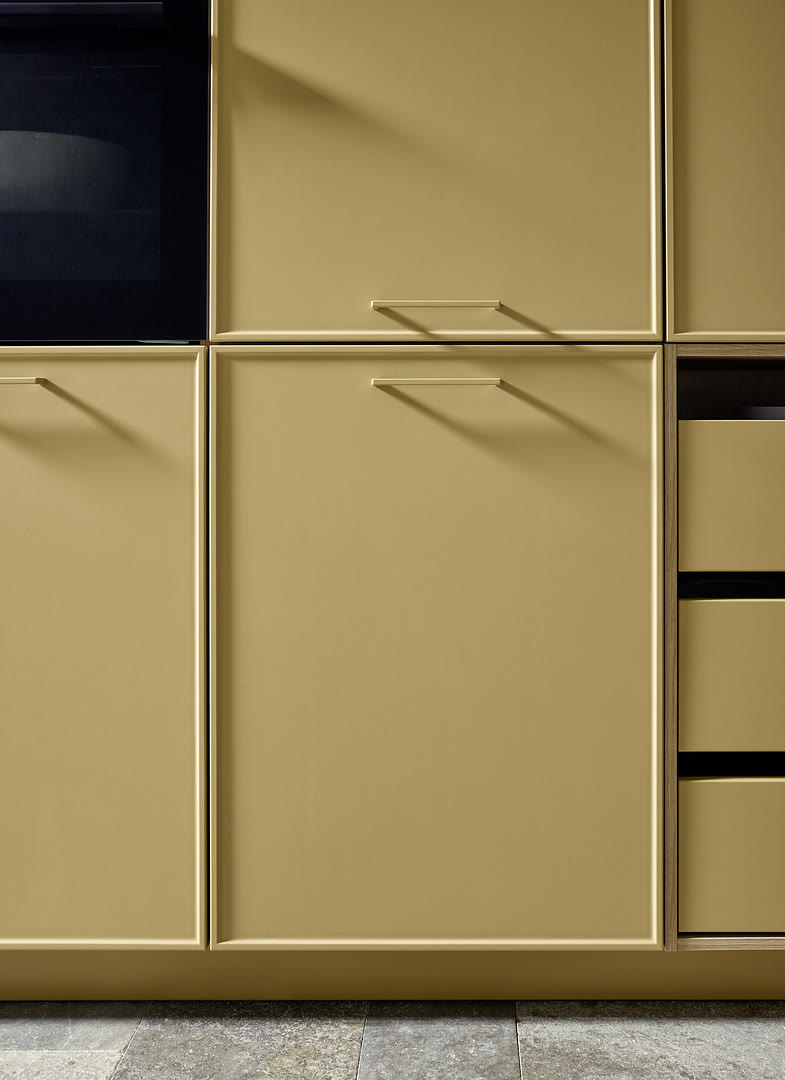
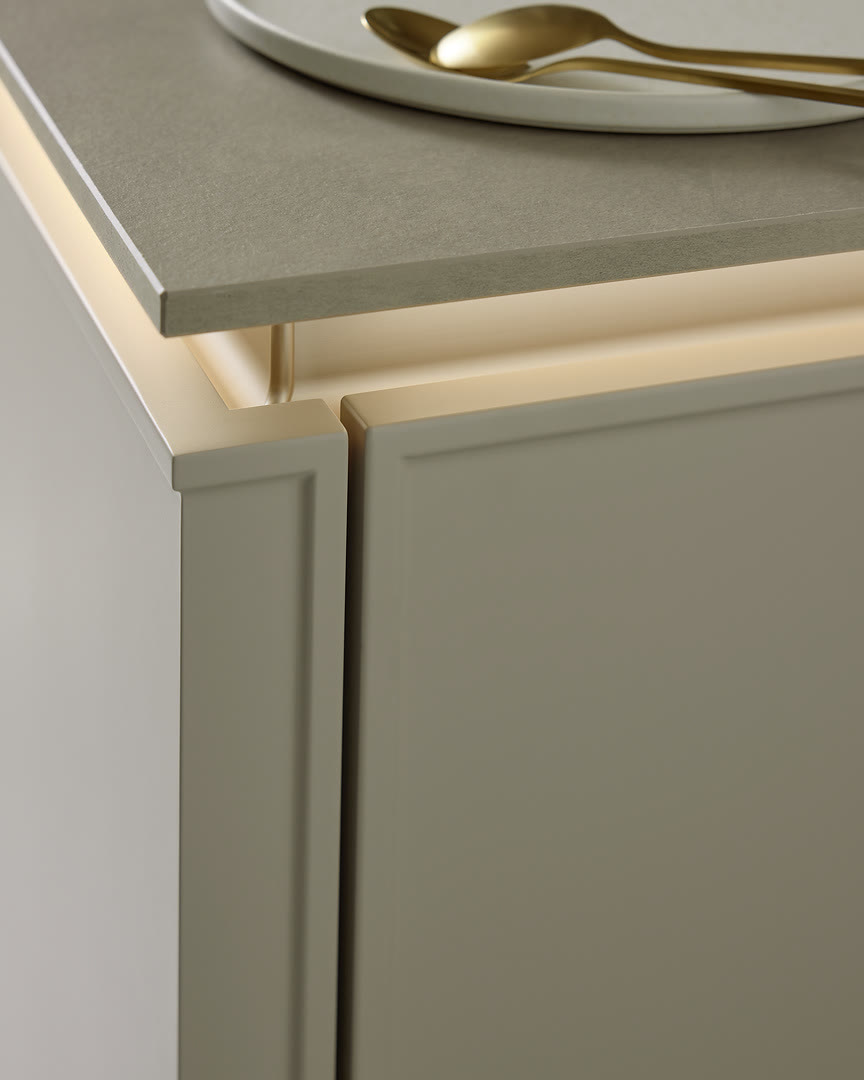
Handleless is the one people picture when they say modern. The door is flat, with a routed grip channel along the top edge of a drawer or the side of a door, so there is no knob or bar. Slab fronts are flat doors without a raised center panel; they can be handleless or carry a small handle, and they appear across the handleless ranges such as neoFLAT, neoLODGE, neoPURE, neoLINE and Manhattan. Framed fronts are different: the door has a visible frame around the panel or a metal or lacquer frame set into the front, which gives the cabinet a more furniture-like face. In Nolte's full program, framed fronts can also be made with a solid wood frame, not a wood-look finish.
Most people use slab and handleless interchangeably, but slab is the shape and handleless is the opening method. A slab door can carry a handle; a framed door can be handleless. This is not the same thing as American face-frame cabinet construction. Those cabinets have a wooden frame fixed to the front of the box. European cabinets are frameless, meaning the door covers the whole carcass and the fronts sit flush in one plane. I point clients to our frameless versus framed construction comparison when that question comes up, because the two words sound the same and confuse everyone.
Which front style is easiest to live with?
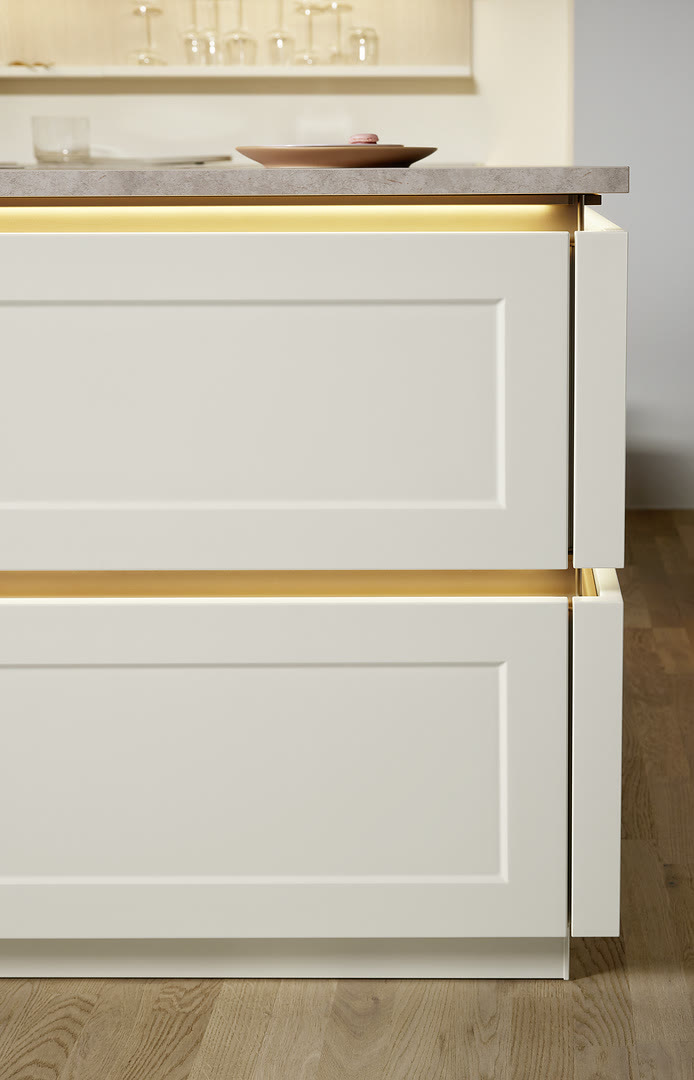
For daily use, handleless fronts ask the least of you visually but the most of your habits. There is no hardware to snag a jacket or catch crumbs, which is why so many clients with young children or open-plan kitchens choose them. The trade-off is that the grip channel is the first place oils and flour land, so you wipe the edge rather than a handle. If that sounds like more work than you want, a slab front with a small handle or a short rail gives you most of the clean look with harder points to grab.
Framed fronts add a ledge or reveal. That edge is easier to grab in some designs, but it is also another surface to dust. When I show clients a handleless drawer, I have them open it with wet fingers. The grip channel is cut into the top edge, so it needs a wipe along that groove. With a framed front, the frame catches less kitchen oil but more dust on the ledge. I tell clients that none of these is high maintenance in a normal kitchen; it just matters where the dirt collects and whether you will actually wipe it. The finish matters more than the shape for fingerprints, especially on soft-matt lacquer, which hides them better than high gloss.
Which front style suits a modern Northern Virginia kitchen?
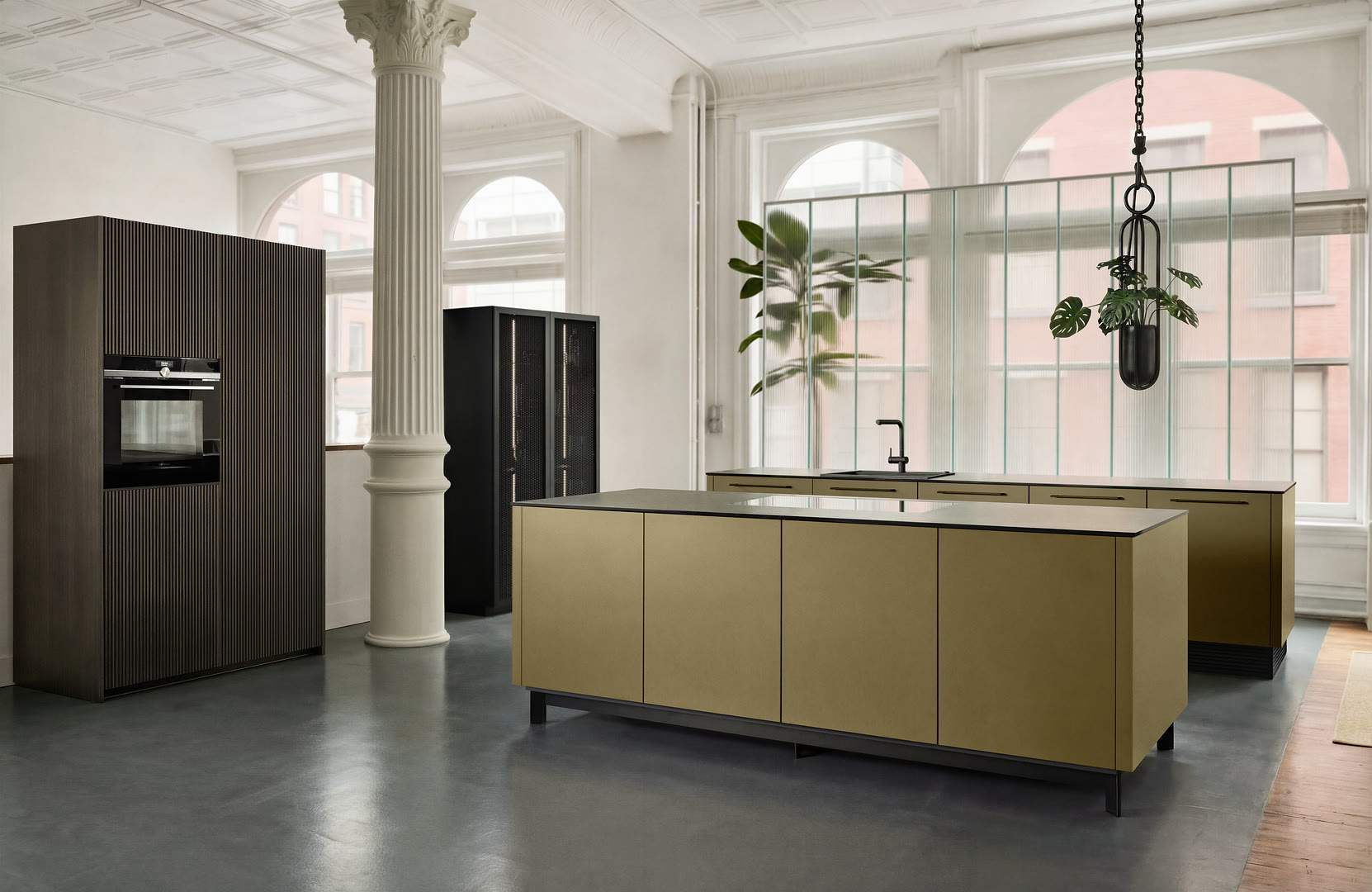
Handleless slab fronts keep the run of cabinets quiet, so the island, the stone and the light do more of the talking. A flat door also makes a small kitchen feel less busy, because there are no visible handles breaking the line. In an open-plan townhouse or a new build in McLean or Arlington, handleless is the easiest way to get that calm European look without adding decoration.
We do not push everyone into handleless. If a client cooks heavily and wants a visible point to pull, we might use a slab front with an integrated or slim handle, or keep handleless on uppers and add a handled door in a mudroom or laundry zone. The front style should fit how the room is used, not just how it photographs.
A common approach is to keep handleless on the main run, then use a framed or fluted front on an island or hutch so the room has one moment of texture. That works because the flat fronts recede and the texture reads as furniture.
When we design these kitchens at our Alexandria showroom, our own team installs them across Northern Virginia, Washington DC and Maryland.
Which front style suits a more traditional or transitional home?
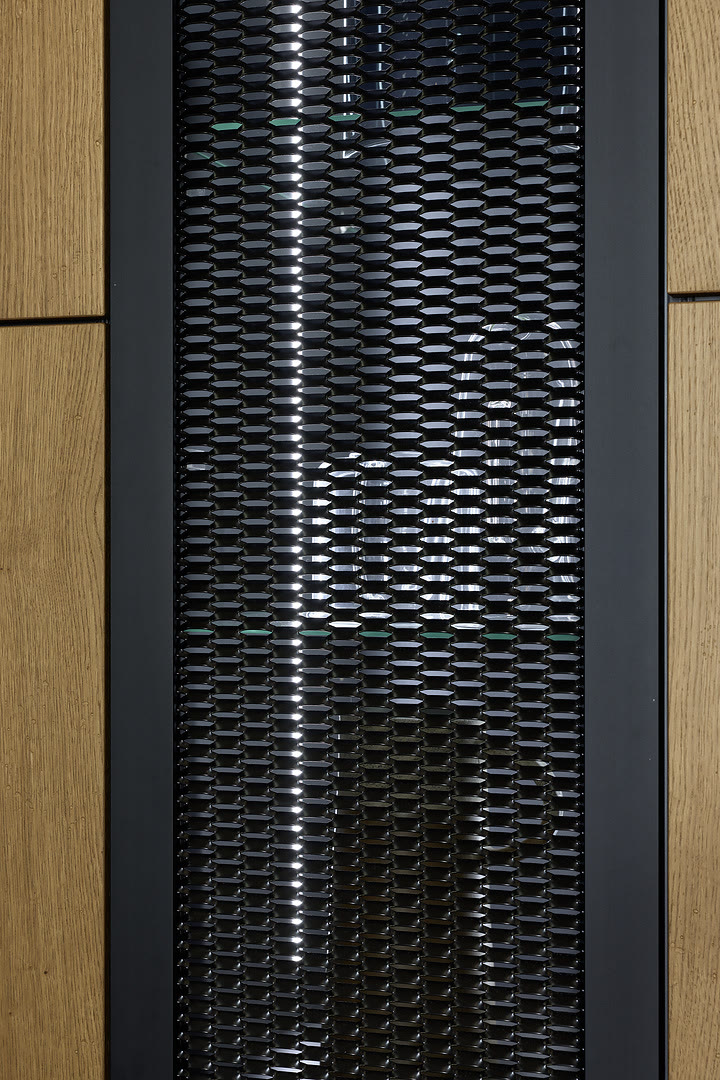
Framed fronts are where I send homeowners in Alexandria, Falls Church or Vienna when the architecture has trim, wainscoting or a more formal dining room. The visible frame gives the kitchen a furniture quality that sits better with a colonial or center-hall home than a completely flat door. We can pair a cottage oak frame within a slim black- or neutral-lacquer frame, or use a real solid wood frame from Nolte's full program. That is the distinction that matters: some framed fronts are a wood look, and others are solid wood, and we say which is which before you choose.
You do not lose the European build when you choose a framed front. The door still sits on a frameless carcass, so you keep the wider drawers and full-access openings. It is purely the face that changes. If you want the warmth but not the ornament, a grooved real wood slab gives you texture without a defined frame. See our modern wood cabinet front options for that direction.
What should you ask before choosing a front?
I ask every client the same first question: when you open a drawer, do you want your fingers to touch a handle, an edge, or nothing at all? Most people know after ten seconds in the showroom. Then I ask how they clean, whether small children will be pulling on corners, and which rooms are visible from the kitchen. Those answers narrow the choice faster than any photo board.
If you are comparing samples at home, check the edge of a handleless drawer with slightly wet hands, open a framed door a few times, and look at the finish under your kitchen lights, not just the showroom spotlights. Ask specifically whether a wood finish is a real veneer, a wood look, or a solid wood frame, because those are three different things with different costs and different repair stories. And check the carcass behind the front: a flat door on a cheap box is still a cheap cabinet, which is why the earlier link on German-made cabinets is worth reading.
The showroom is useful here because the difference between a real wood frame and a printed wood look is hard to judge from a photo. You want to run a fingernail along the edge, look at the grain under daylight, and ask how the front will take a knock near the dishwasher.
When you are ready to compare these fronts in person, the place to start is our custom kitchen cabinets service or a visit to the Alexandria showroom.
Frequently Asked Questions
Are handleless cabinets hard to open?
What is the difference between slab and framed fronts?
Are framed fronts the same as traditional American face-frame cabinets?
Which front style is easiest to keep clean?
Can I mix handleless and framed fronts in one kitchen?
Keep Reading

Handleless Kitchen Cabinets: Opening Systems and Daily Use
How handleless kitchen cabinets open, how each system feels to use, and which one stays cleanest. Honest trade-offs from our Alexandria showroom.

Frameless European vs. Framed American Cabinets in 2026
The real difference between frameless European and framed American cabinets, and how each one holds up in a Northern Virginia kitchen.

Modern Kitchen Design in Traditional Home
Modern Kitchen Design in Traditional Home Blending modern kitchen design in a traditional home may sound contradictory, but it’s an increasingly popular trend that celebrates both…
Choosing kitchen cabinets?
See our custom European cabinetry, or request an estimate for your kitchen.