
36 Inch Bathroom Vanity vs 40 Inch: Which Fits Your Wall
How four inches changes the whole layout, and how to know which size your wall can take

Sam K. · Showroom Manager
· 5 min read

Short answer: a 36 inch vanity is the standard American width and a 40 inch is a European one, so a lot of the time the choice is really about which cabinet line you like. If both sizes are on the table, the 36 inch protects clearance in a tight room and the 40 inch gives you real countertop and drawer space in a room that can spare it. The number that decides it is not the cabinet width. It is the finished length of your wall and the clearances around it.
I have this conversation in the showroom most weeks. Someone comes in with a size in their head, and we end up on the floor with a tape measure sorting out what the wall will actually take. Here is how I walk people through it.
How do you measure the wall for a 36 or 40 inch vanity?
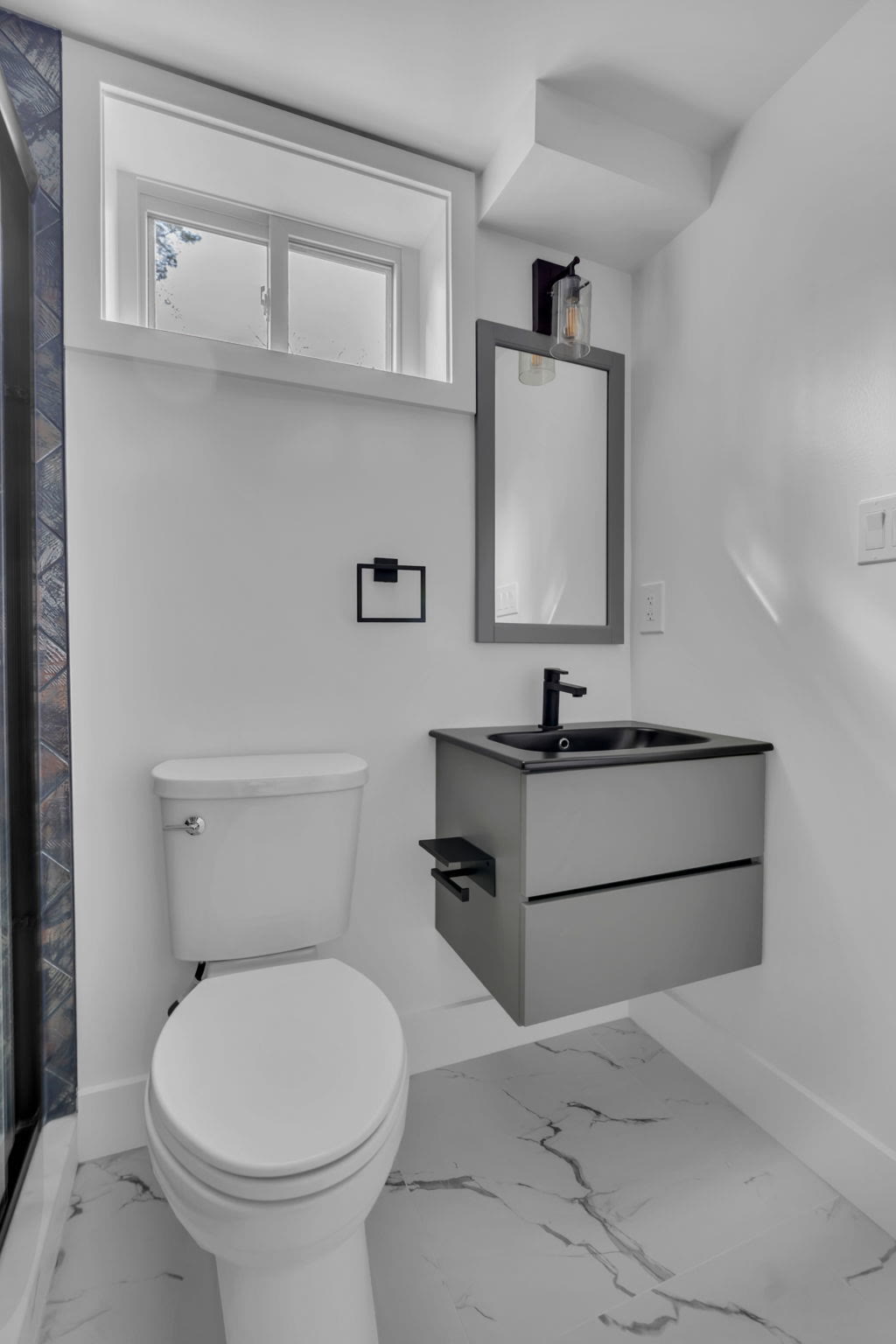
Measure the finished wall, corner to corner, at the height the vanity will sit. Not the framing, not the old cabinet. Tile, baseboard, and out of square corners all eat into the number, and an older bathroom is almost never square. Measure at the floor and again at counter height, because they can differ by half an inch or more.
Then mark where the toilet centerline lands and where the door swings. A vanity that fits the wall on paper can still crowd the toilet or catch the door. I tell clients to leave breathing room on the side that shares space with the toilet, and to open and close the door in their mind before they commit to a width. The vanity is the easy part. The clearances are what make the room livable.
What actually changes between 36 and 40 inches?
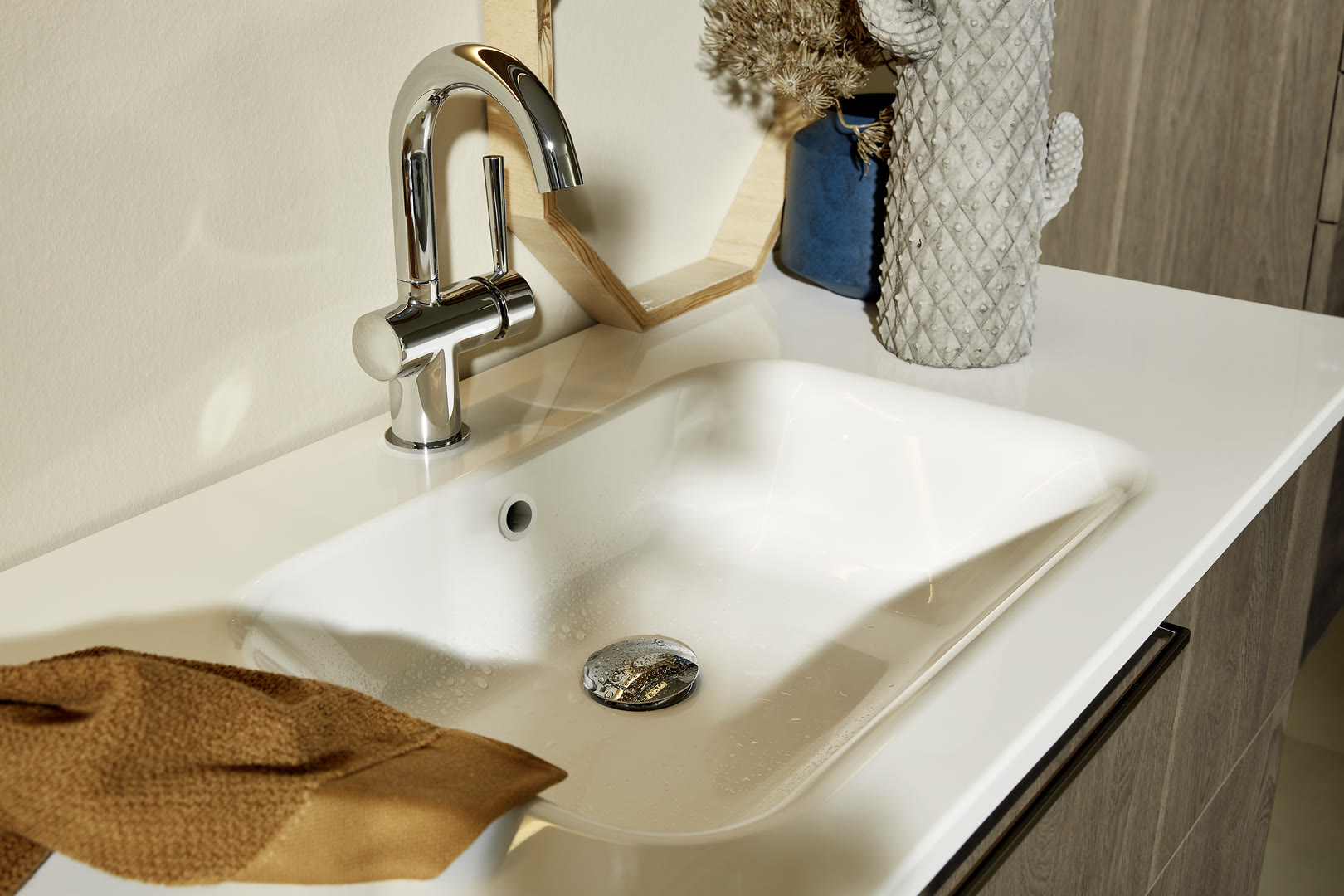
Four inches. That is the whole difference, and it is more meaningful than it sounds. On a 40 inch cabinet those four inches usually go into the countertop beside the basin and into wider drawers underneath. The bowl itself is often the same. So you are not buying a bigger sink, you are buying a place to set things down and drawers that hold more without getting deeper.
The other thing that changes is where the sizes come from. The 36 inch belongs to the American cabinet tradition. The 40 inch is a European width, a round metric number that lands near 40 when you convert it. If you are drawn to a particular European front, you may find the menu offers 32 and 40 but not 36. I wrote more about that in why European bathroom vanities come in 32 and 40 inches, because it trips people up constantly.
When does the 36 inch win?
When the room is tight, the 36 inch is often the better cabinet, not the compromise. In a small bathroom every inch on the wall is an inch you take from the walkway, the toilet clearance, or the door swing. I have watched a 40 inch cabinet look perfect on the drawing and then leave a hallway you have to turn sideways to pass through.
The 36 inch also plays nicely with a single basin centered on the cabinet. You get a clean, balanced front, drawers that work, and enough counter for daily use. If your bathroom is a secondary or guest bath, this is very often where I land people. There is no prize for the widest vanity in a room that cannot hold it comfortably.

When is the 40 inch the better call?
When the wall can take it and you actually use the counter. The extra four inches show up every morning: somewhere to keep a soap dish and a plant out of the sink zone, a wider top drawer, a front that reads a little more generous. In a primary bathroom with room to spare, the 40 inch usually feels right where the 36 inch can feel slightly undersized against a long wall.
It is also the natural choice if you are already committed to a European line for the fronts and finish. Rather than force a 36 inch that the line does not make, you take the 40 and build the layout around it. Just confirm the room supports it first, because a European width in an American bathroom sometimes needs the plumbing re-centered.
What should you check before you order?
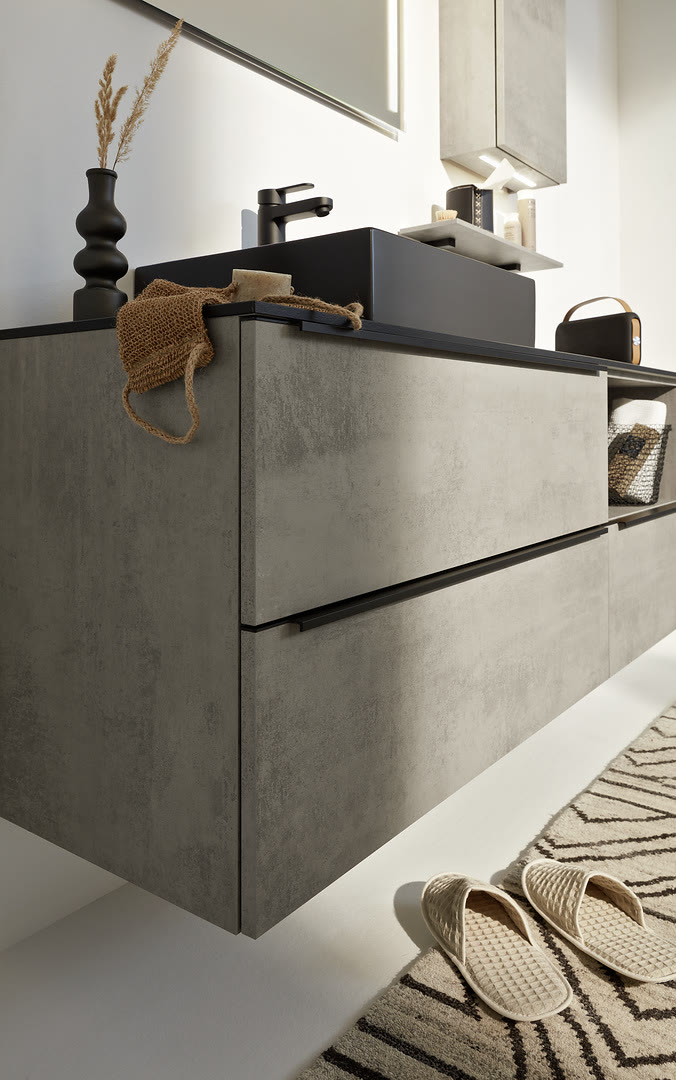
Three things, in this order. First, the finished wall length with tile and trim accounted for. Second, the clearances: toilet, door swing, and walkway. Third, the plumbing. The drain and the faucet supply lines rarely sit exactly where a new cabinet wants them, and moving the drain a few inches is easy to plan and annoying to discover after demolition.
I also ask clients to think about the basin position. On a single vanity, centering the bowl and the faucet on the cabinet matters more than the raw width. A well centered 36 inch looks intentional. An off center 40 inch looks like something went wrong. If you want the full size map, our bathroom vanity sizes explained guide lays out every common width, and if you would rather have us measure and draw it with you, that is what our bathroom design and build team does.

So the honest answer to 36 versus 40 is that the wall decides, not the catalog. Measure first, protect your clearances, and let the size follow the room. When you do it that way, both sizes are good, and only one of them fits.
Frequently Asked Questions
Is a 36 inch or 40 inch vanity better for a small bathroom?
Why do some vanities only come in 40 inches and not 36?
Can I fit a 40 inch vanity where a 36 inch used to be?
Does the bigger vanity always mean a bigger sink?
Keep Reading

Floating Bathroom Vanity: A Complete Buyer's Guide
A floating bathroom vanity mounts to the wall with open floor beneath it. Here is how to choose one, what it costs you in planning, and where it goes wrong.

30 Inch Bathroom Vanity: Fit, Sizes, and When 32 Works
A 30 inch vanity fits most guest and secondary baths, but the European 32 inch often uses the wall better. Here is how I help clients choose.

Antique, Classic and Italian Classic Bathroom Vanities in 2026
Antique, classic, and Italian classic are styling terms, not quality grades. Here is what each one means for a bathroom vanity in 2026.
Ready to talk through your remodel?
Visit our showroom or request an estimate. We will walk you from first ideas to final installation.