
Floating Bathroom Vanity: A Complete Buyer's Guide
What to know before you hang a vanity on the wall, from someone who sells them

Sam K. · Showroom Manager
· 5 min read

A floating bathroom vanity is a cabinet mounted to the wall with open floor underneath, so nothing touches the ground. People search this because they like the look and want to know what they are signing up for. The short answer: it makes a room feel larger, it is easier to clean around, and it asks for real planning inside the wall before anything shows on the outside. Get the wall and the plumbing right and the rest is choosing a finish.
What exactly is a floating vanity?
It is a vanity that hangs. The cabinet fixes to the wall with brackets or a rail, and the floor keeps going underneath it. That is the whole idea, and it is also the whole difference. A standard vanity sits on the floor and hides everything below it. A floating one shows you the floor, which is why the room reads more open, and why the tile you paid for keeps working all the way to the wall.
Most clients come in liking the photos and leave understanding the mechanics. The look is not paint deep. Everything that makes it float is behind the drywall, and that is the part worth your attention.
Will it work in a small bathroom?
Usually, yes, and often it is the better call. When you can see the floor run under the cabinet, the eye reads the room as bigger than it is. That is not a trick as much as it is honesty about the floor space you already have. It also means a mop or a robot vacuum goes straight under, and the grime that collects at the base of a floor-standing cabinet has nowhere to gather.
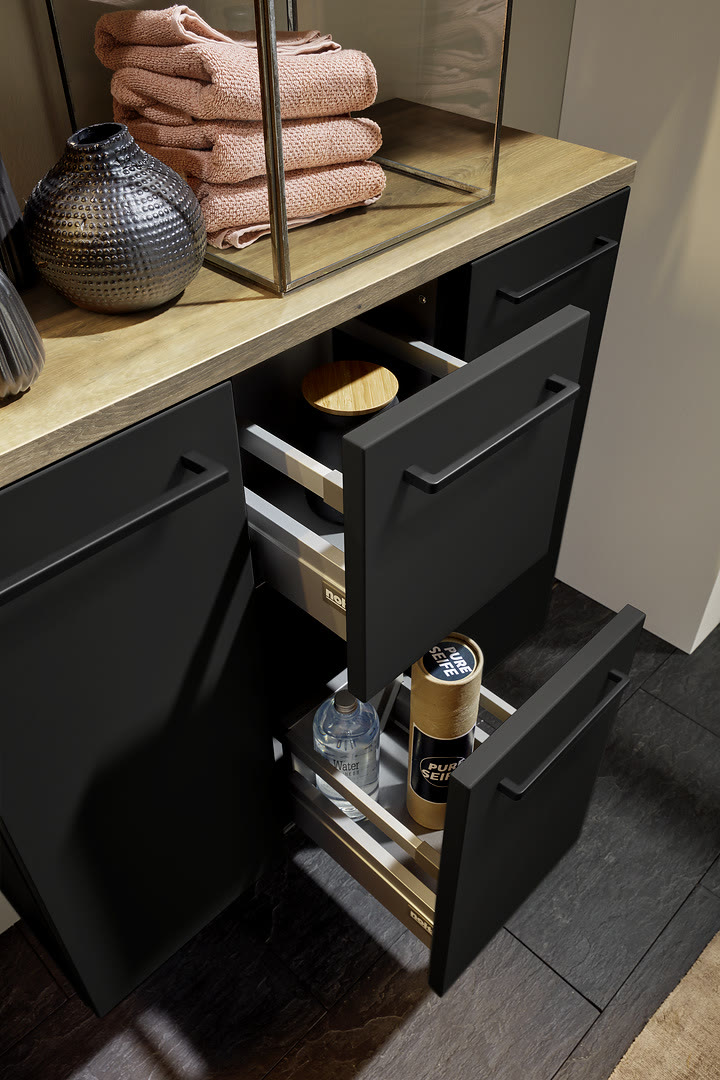
What you give up is the floor of the cabinet. A floor-standing vanity lets you stand tall bottles inside the base. A floating one is shallower on the bottom, so we make the storage back up in drawers instead. A couple of well-planned drawers hold more usefully than one deep open cabinet ever did. If your bathroom is genuinely tight, this is the direction I point people. We wrote more about that in our guide to floating vanities in small bathrooms.
What has to happen behind the wall?
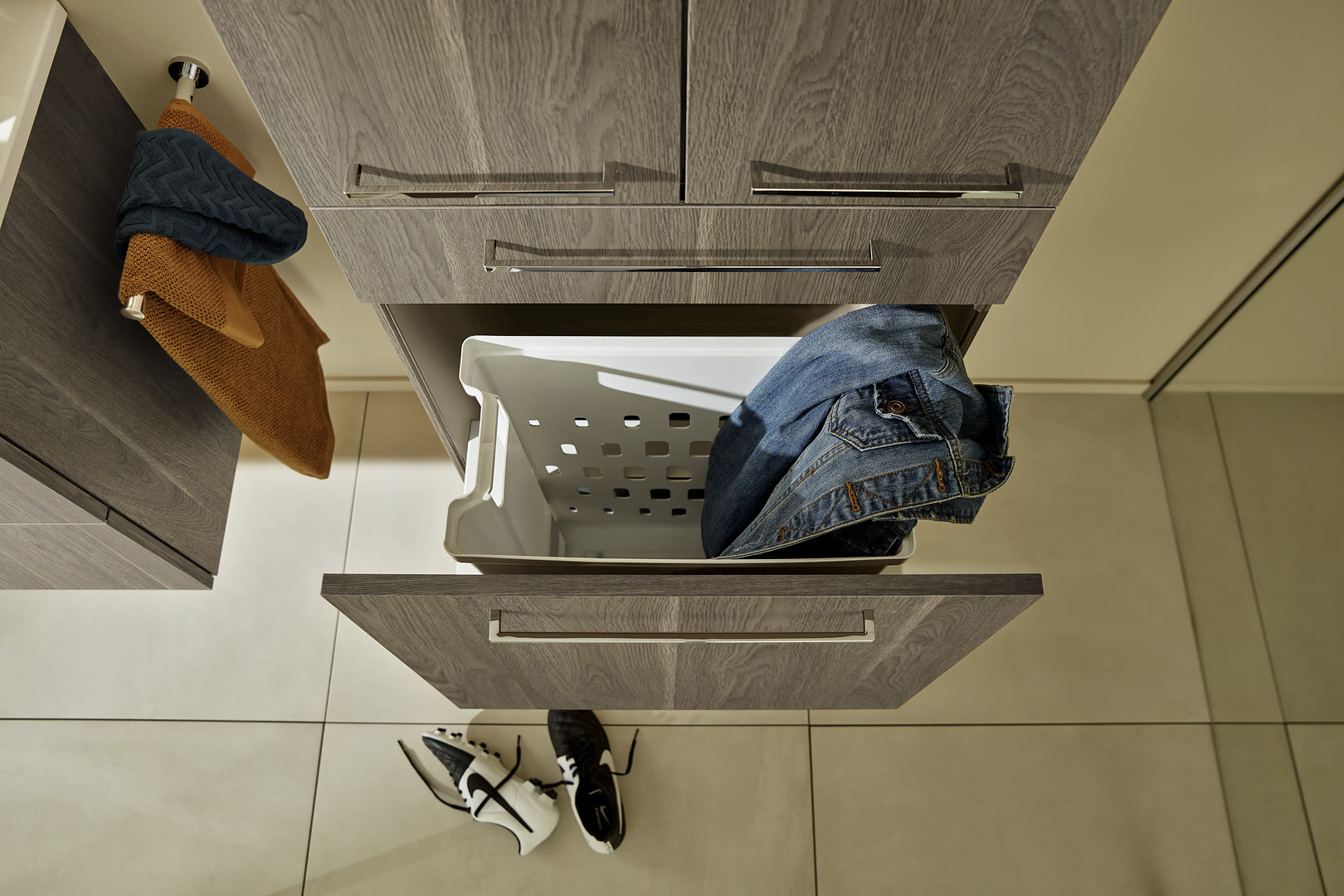
This is where the guide earns its keep. A floating vanity does not hang from drywall. It hangs from blocking, which is solid wood or steel we build into the wall so the bracket has something real to hold. Skip the blocking and the cabinet loosens, sags, and eventually pulls out. That is the single most common way these go wrong, and it is always avoidable.
The height matters too, and it matters early. Because the vanity floats, you can set the countertop wherever the people using the room are comfortable. Tall household, taller mount. That is a nice freedom, but it is a decision you make before the wall closes, because the blocking and the plumbing get set to that number. Once the drywall is up and the tile is on, moving a floating vanity up or down is not a small change.
Then there is the plumbing. Supply and drain lines usually need to arrive higher than they would for a floor cabinet, and sometimes they shift sideways to clear the drawers. On new construction that is easy to plan. On a remodel it can mean opening the wall, which is worth knowing before you commit. If you want the full detail, we keep a separate piece on rough-in height, blocking, and plumbing.
How do you choose the finish and material?
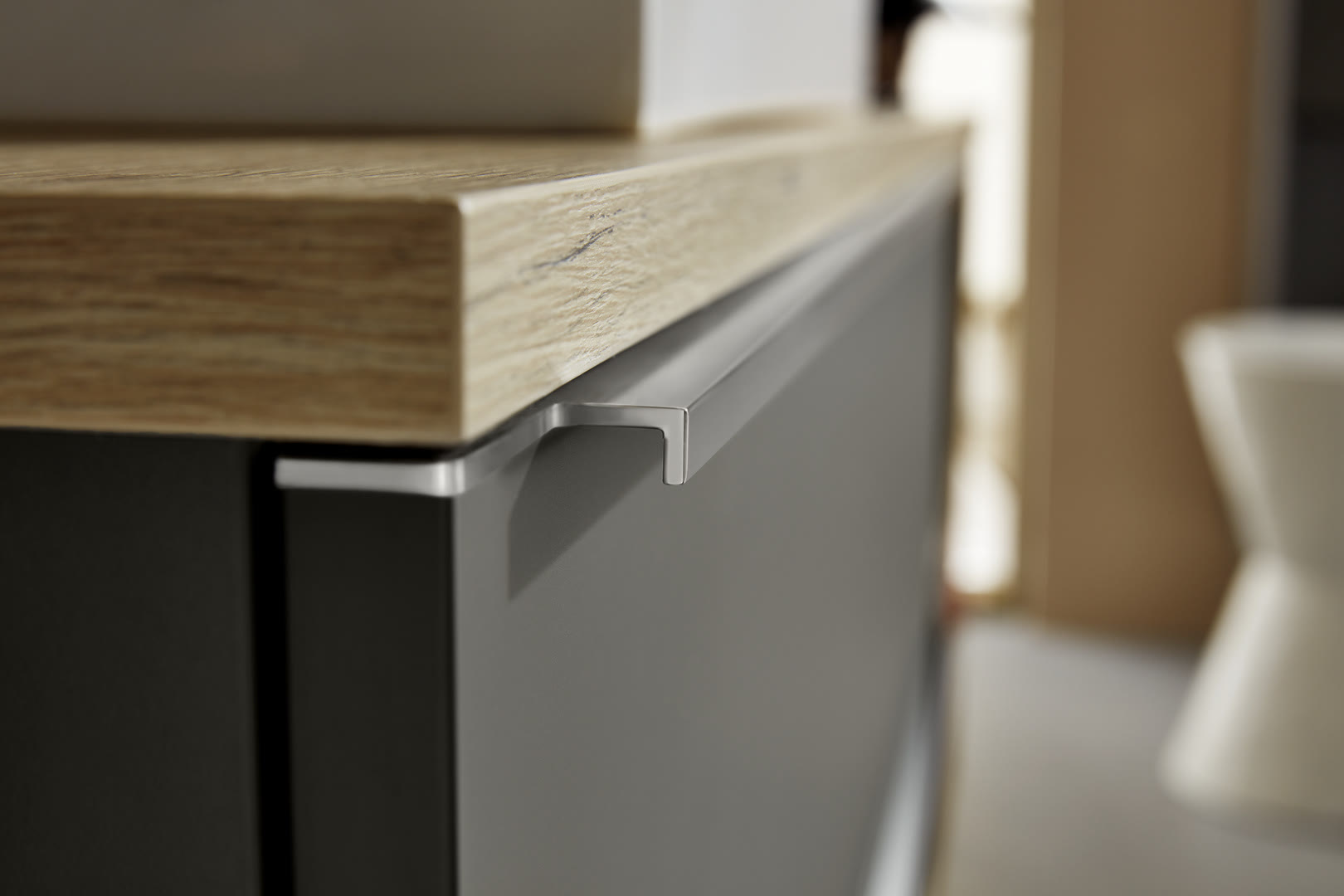
A bathroom is a wet, warm, temperature-swinging room, so I steer people toward finishes that live with that well. Handleless slab fronts keep the floating shape clean and give you nothing to catch a towel on. Soft matte lacquers hide fingerprints and water spots better than high gloss, though gloss has its fans and reflects light in a dark room. Real wood veneers and wood-look fronts warm the space up and pair nicely with a stone top.
Whatever the front, the carcass and the hardware are what you are really buying. Soft-close runners, moisture-tolerant construction, and a solid bracket system are the difference between a vanity that still feels tight in ten years and one that does not. I would rather a client pick a simpler front on a better-built box than the reverse. If you are weighing gloss against matte, our note on high-gloss versus matte white vanities lays out the honest differences.
What are the honest trade-offs?
Every good option costs something. With a floating vanity you trade a little storage and a bit more up-front planning for a lighter, cleaner room. You cannot overload the cabinet, so it is not the place for a stack of heavy stone offcuts or a client who wants to hang from it. The install is less forgiving than a floor cabinet you can shim level in ten minutes. And on a remodel, the plumbing work can add to the job.
None of that is a reason to avoid it. It is a reason to decide early and build the wall correctly. When a couple asks me whether to go floating or keep two feet on the floor, we usually talk it through against their actual room rather than the photo. If you are still weighing the two, our comparison of a double sink versus a floating vanity is a good next read, and if you want a set of eyes on your own bathroom, that is what our bathroom design-build team does every day.
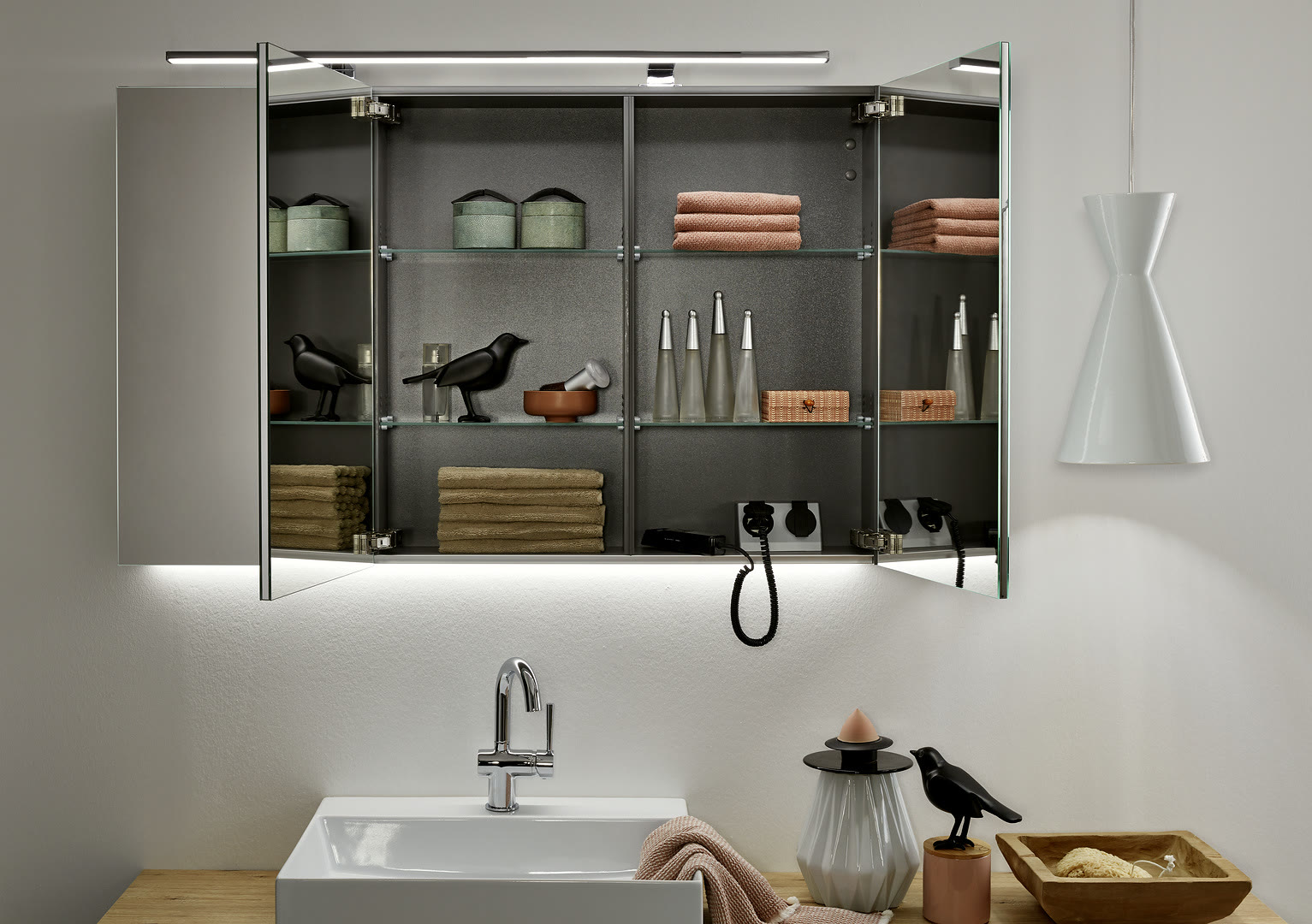
If you take one thing from this: the floating look is decided inside the wall, not on the showroom floor. Sort the blocking, the height, and the plumbing before drywall closes, choose a finish that lives well with water, and the vanity will still feel right years later. That is the whole guide.
Frequently Asked Questions
How high should a floating vanity be mounted?
Can a floating vanity hold a stone countertop and a heavy basin?
Is a floating vanity a good idea in a small bathroom?
Does a floating vanity work with any plumbing?
Keep Reading

36 Inch Bathroom Vanity vs 40 Inch: Which Fits Your Wall
A 36 inch vanity is the American standard and a 40 inch is the European one. Here is how to measure your wall and pick the right one.

30 Inch Bathroom Vanity: Fit, Sizes, and When 32 Works
A 30 inch vanity fits most guest and secondary baths, but the European 32 inch often uses the wall better. Here is how I help clients choose.

Antique, Classic and Italian Classic Bathroom Vanities in 2026
Antique, classic, and Italian classic are styling terms, not quality grades. Here is what each one means for a bathroom vanity in 2026.
Ready to talk through your remodel?
Visit our showroom or request an estimate. We will walk you from first ideas to final installation.