
Navy and Green Bathroom Vanities: Color Pairings That Work
How to use a colored vanity without the room going dark or dated

Sam K. · Showroom Manager
· 6 min read

A navy or green bathroom vanity works when you treat it as the one strong note in the room and let everything else stay calm. Light walls, a warm counter, and a single metal finish do most of the work. The mistake I see is people falling for the color online, then surrounding it with three other loud finishes, and the whole bathroom starts to feel like a box. Get the pairings right and a colored vanity is one of the easiest ways to make a bathroom feel designed instead of assembled.
I talk to homeowners about this almost every week in the showroom. They have seen a deep green vanity on a screen, they love it, and they are nervous it will be too much in their own house. It usually is not. It just needs the right company.
Do navy and green vanities actually work in a bathroom?
Yes, and they have for a long time. Navy and green are not new to bathrooms. What is new is how many people are willing to put color on the biggest cabinet in the room instead of playing it safe with white. When a client asks if it is a risk, I tell them the truth: the color is the easy part. The risk is everything around it.
A colored vanity gives a bathroom a center of gravity. It tells your eye where to land. White vanities are lovely and they are also everywhere, so the room leans on tile and fixtures to have any character. A navy or green front does that job on its own, which means you can keep the rest of the space quiet and still end up with a room that feels like a choice was made.
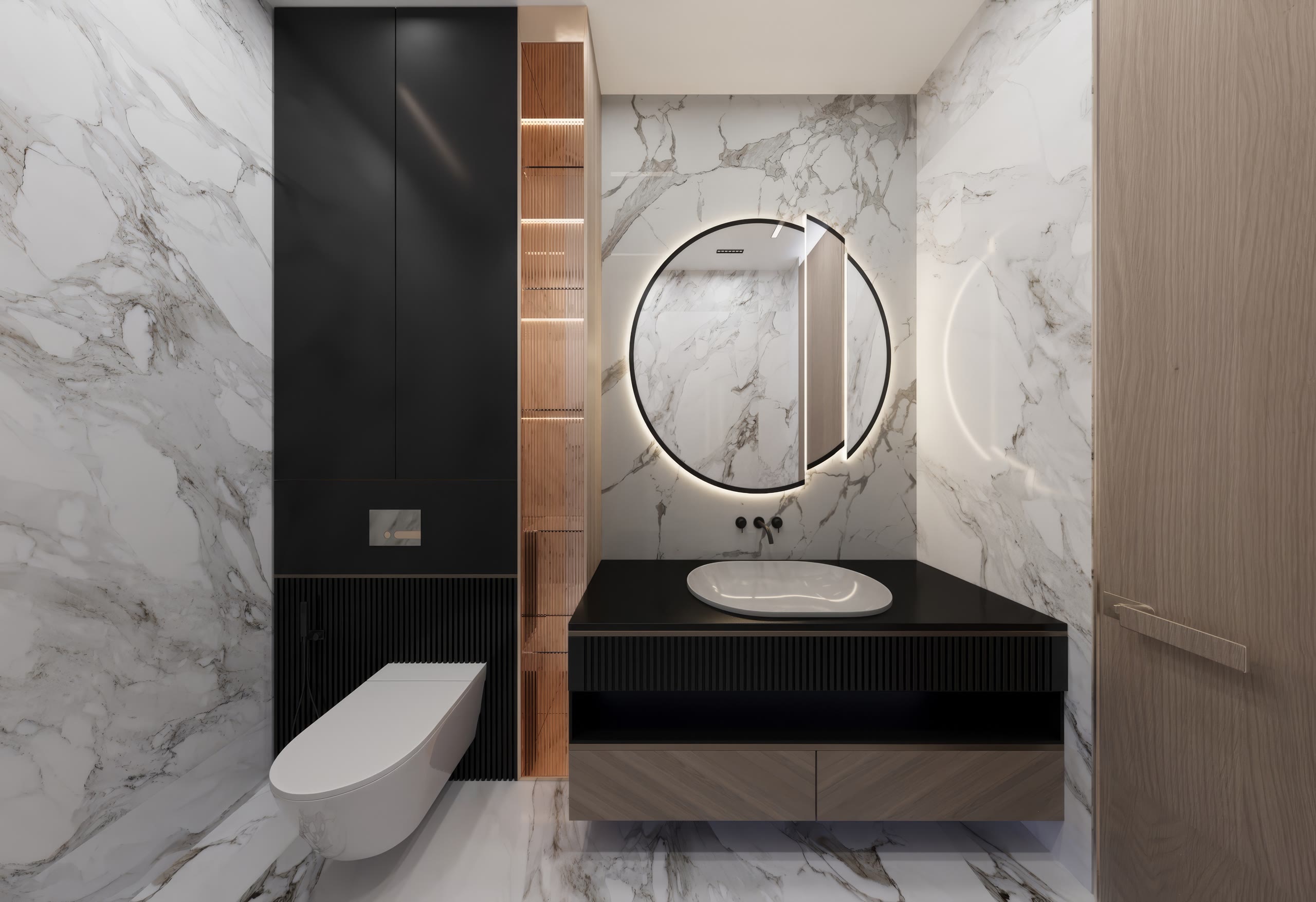
What pairs with a navy blue vanity?
Navy leans crisp and cool, so I pair it with warmth to keep it from feeling like a uniform. A warm white or a lightly veined stone counter is the first move. Very cold, stark white can look clinical against navy, almost corporate, so I steer toward a counter with a little warmth in it.
For metal, brass and warm brushed golds are the classic partner. They soften navy and give it a bit of glow. If you want something quieter, a brushed nickel keeps things cooler and more restrained. What I ask clients to avoid is mixing two competing metals on a navy vanity, because the color is already doing a lot and the eye needs one story on the hardware.
Walls should stay light. A soft white, a pale greige, or a warm off-white lets the navy stand out instead of disappearing into a dark room. Navy against a dark wall can look heavy fast. If you want more color on the walls, keep it to a small area like the inside of a niche rather than the whole room.
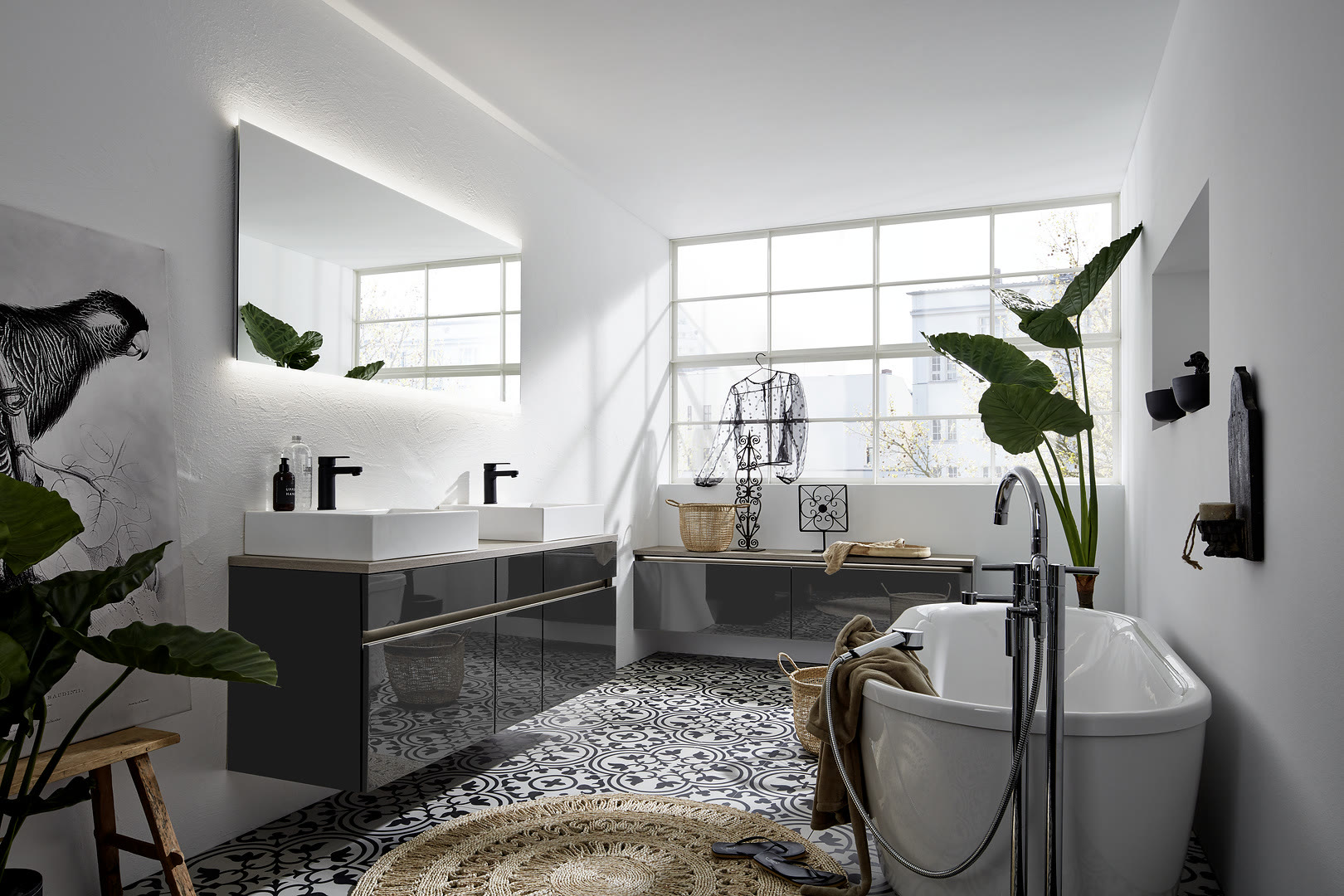
What pairs with a green vanity?
Green is a different animal. It leans calm and organic, so the pairings that flatter it are earthier than what I use for navy. Wood is green's best friend. A light oak shelf, a warm wood mirror frame, or a wood-toned countertop makes a green vanity feel natural rather than decorated. That is why so many of the green vanities I like sit next to timber somewhere in the room.
On counters, a warm white or a soft stone with gentle veining works well. A busy, high-contrast marble can fight a green front, so I keep the stone quieter and let the color and the wood carry the interest. For metal, black and warm brass both sit nicely with green. Black gives it a more graphic, modern edge. Brass gives it a softer, more traditional feel.
Green also handles a bit more color around it than navy does. A patterned floor tile or a textured wall can live happily with a green vanity as long as the palette stays in the same warm family. The trap is going cool and gray everywhere and then dropping a warm green in the middle, because the green ends up looking like it wandered in from another room.
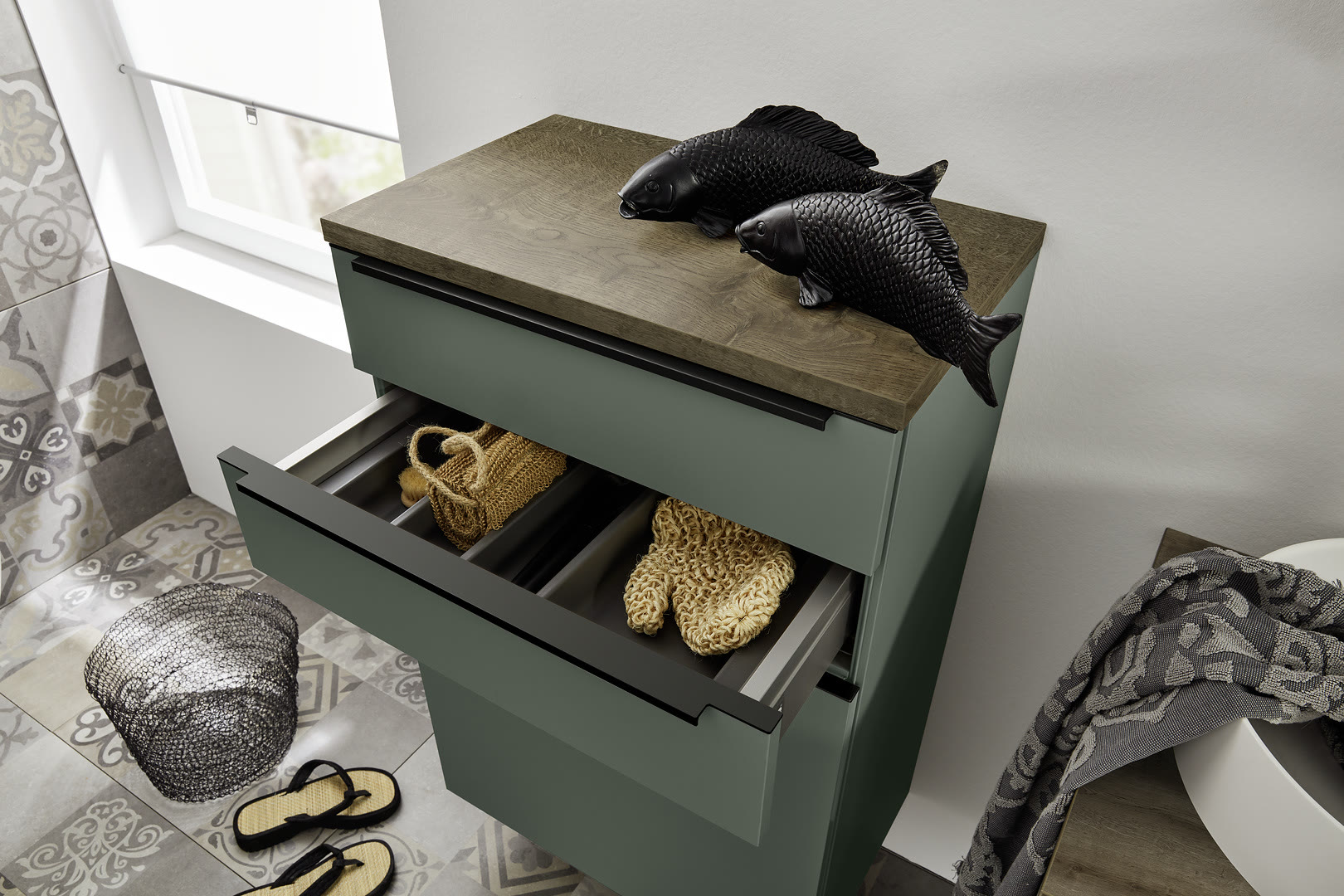
How do you keep a colored vanity from feeling dark?
This is the real question behind most of these conversations. The answer is balance and light. A colored vanity should be the darkest thing in the room, not one of many dark things. Keep the floor light, keep the walls light, and give the room a mirror that is as big as the wall allows. A generous mirror doubles the light and doubles the sense of space, which matters most in the smaller bathrooms and powder rooms where people are bravest with color.
Wood tones are the other half of the answer. A warm oak shelf or a wood-framed mirror breaks up the color and adds a second natural material, so the vanity reads as part of a considered room rather than a heavy block. If you are weighing wood finishes, we get into that in our piece on light oak versus dark oak vanities, and the same logic applies to what you put beside a colored front.
One more thing I always tell people: test the color in your own bathroom before you commit. Bring the sample home and look at it in the morning, at night under your bulbs, and against your tile if you already have it. North-facing light makes greens cooler and grayer. Warm bulbs push navy toward black. The color you fell for online is not the color that will live in your room, and the only way to know is to see it in place. It is the same reason we talk clients through finish samples in the gloss versus matte decision, because a swatch under real light answers more questions than any showroom photo.
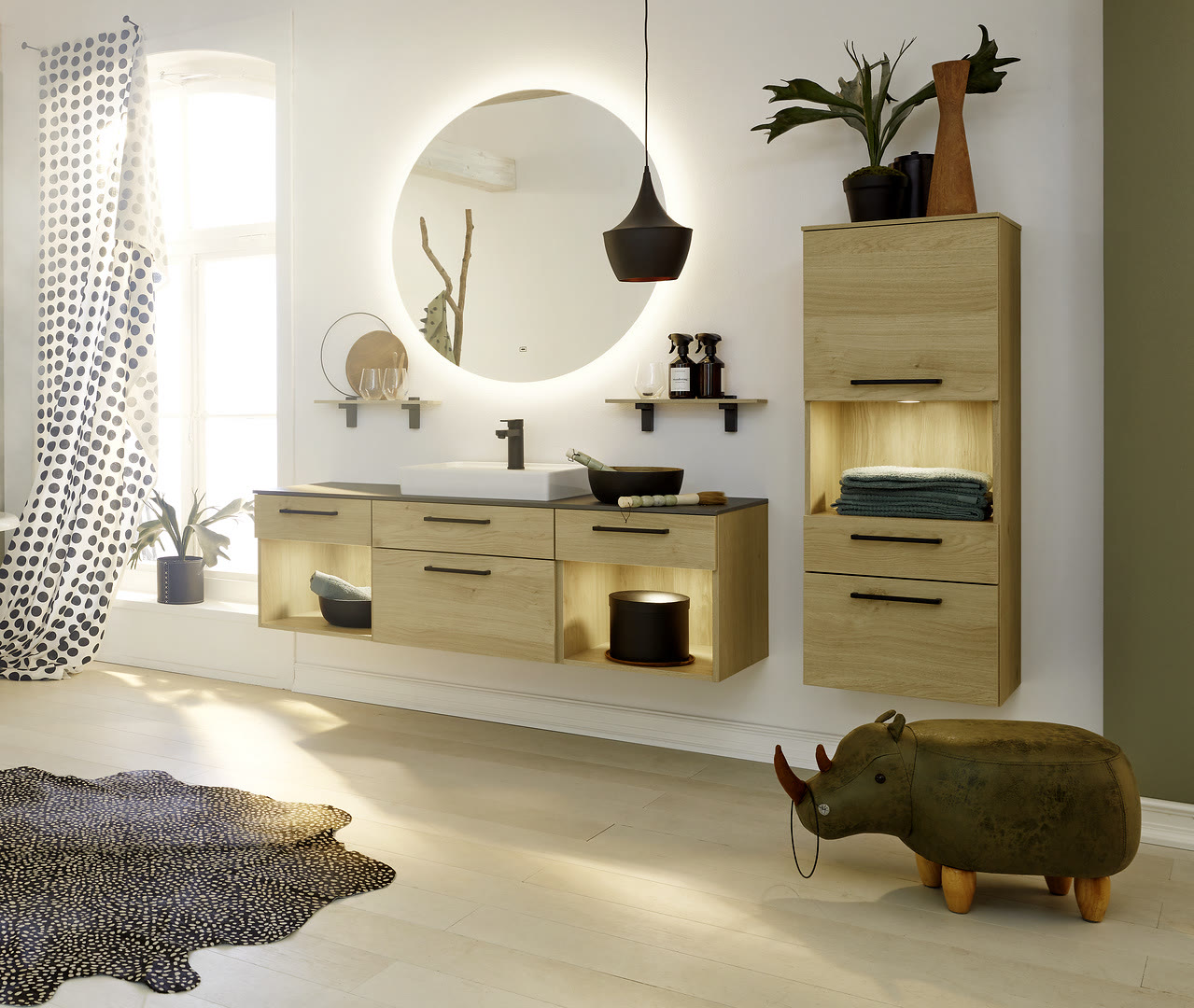
Navy or green: how to decide
When a client cannot choose, I ask what they want the room to feel like. Navy tends to read a little more formal and tailored, the bathroom equivalent of a good suit. Green tends to read calmer and more relaxed, closer to a spa feeling. Neither is better. They just set a different mood, and the right one depends on the house and the person.
I also ask how permanent the choice needs to feel. A colored vanity is not a throw pillow. It is the largest painted surface in the room, and repainting a lacquered front later is not a casual job. So the color should be one you are confident you will still like, not one you are chasing because it is having a moment. If you are early in planning and still sorting out sizes and layout, our vanity buying guide is a good place to get the practical decisions squared away before you fall down the color rabbit hole.
Done right, a navy or green vanity is one of the most satisfying things we build. It gives a bathroom real personality without a single loud gesture, and years later it still looks intentional. If you want to see how a colored vanity would sit in your space, come see the finishes in person and we will help you get the pairing right.
Frequently Asked Questions
Is a navy or green vanity going to look dated in a few years?
Will a dark vanity make my small bathroom feel smaller?
Can I pair navy and green together in the same bathroom?
What countertop works with a colored vanity?
Keep Reading

White Bathroom Vanities: High-Gloss vs Matte Finish
High-gloss white reflects light and shows smudges; matte white hides them but reads softer. Here is how to choose between them.

Oak Bathroom Vanities: Light Oak vs Dark Oak in a Modern Bath
Light oak keeps a bathroom calm and larger. Dark oak adds weight and quiet drama. Here is how I help clients choose between them.

Bathroom Vanity Buying Guide for Northern Virginia Homes
A plain guide to picking a bathroom vanity: size, wall-mounted vs floor-standing, storage that earns its space, and finishes that survive Virginia humidity.
Ready to talk through your remodel?
Visit our showroom or request an estimate. We will walk you from first ideas to final installation.