
White Oak Kitchen Cabinets: Grain, Finish, and Care
What Northern Virginia homeowners should know before comparing samples.

Sam K. · Showroom Manager
· 6 min read

White oak kitchen cabinets are a safe choice, but the way they age depends on two things most people skip: the grain cut and the finish. Get those right and the cabinets still look intentional in ten years. Get them wrong and you may be wiping fingerprints off a finish that fights you, or noticing a grain pattern that never felt calm.
I talk about this with clients in the Alexandria showroom all the time. They have pinned a dozen white oak kitchens, but the photos all look different. The tone ranges from pale and silvery to warm and almost golden. The grain can be calm and straight or full of sweeping arches. That is not just lighting. It is the cut of the oak and the finish on top.
What Do People Mean by White Oak Cabinets?
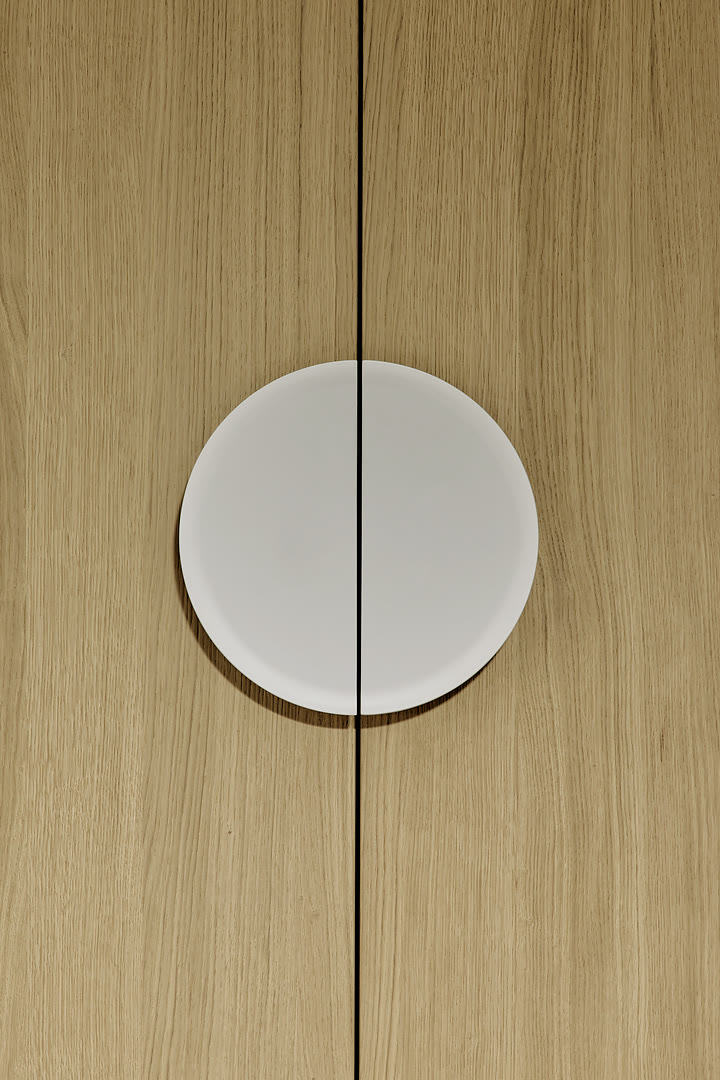
White oak is not a single color. The same tree can produce boards that read as cool and pale or warmer and more honeyed, and the finish changes that further. I covered the white oak options we carry in more detail in this white oak cabinet guide, but the short version is that white-toned oak runs through neoFLAT and neoLINE in Oak Bianco, a bright, soft-matt real oak veneer with the natural grain showing. Primo also offers Oak Crema, Nolte's real oak veneer for 2027. Oak Bianco is the airier, more silvery white, while Oak Crema leans a little warmer. I tell clients to look at both because the difference is clear under showroom light and hard to judge on a phone screen.
These are veneers, not solid wood. That matters in a kitchen. A real oak veneer over a stable core handles Northern Virginia's seasonal humidity better than a solid board often does, and it lets us get a consistent grain pattern across a run of cabinets. The grain is real oak. It is just applied as a layer over an engineered panel.
Rift-Sawn, Quarter-Sawn, or Plain-Sawn: Why the Cut Matters
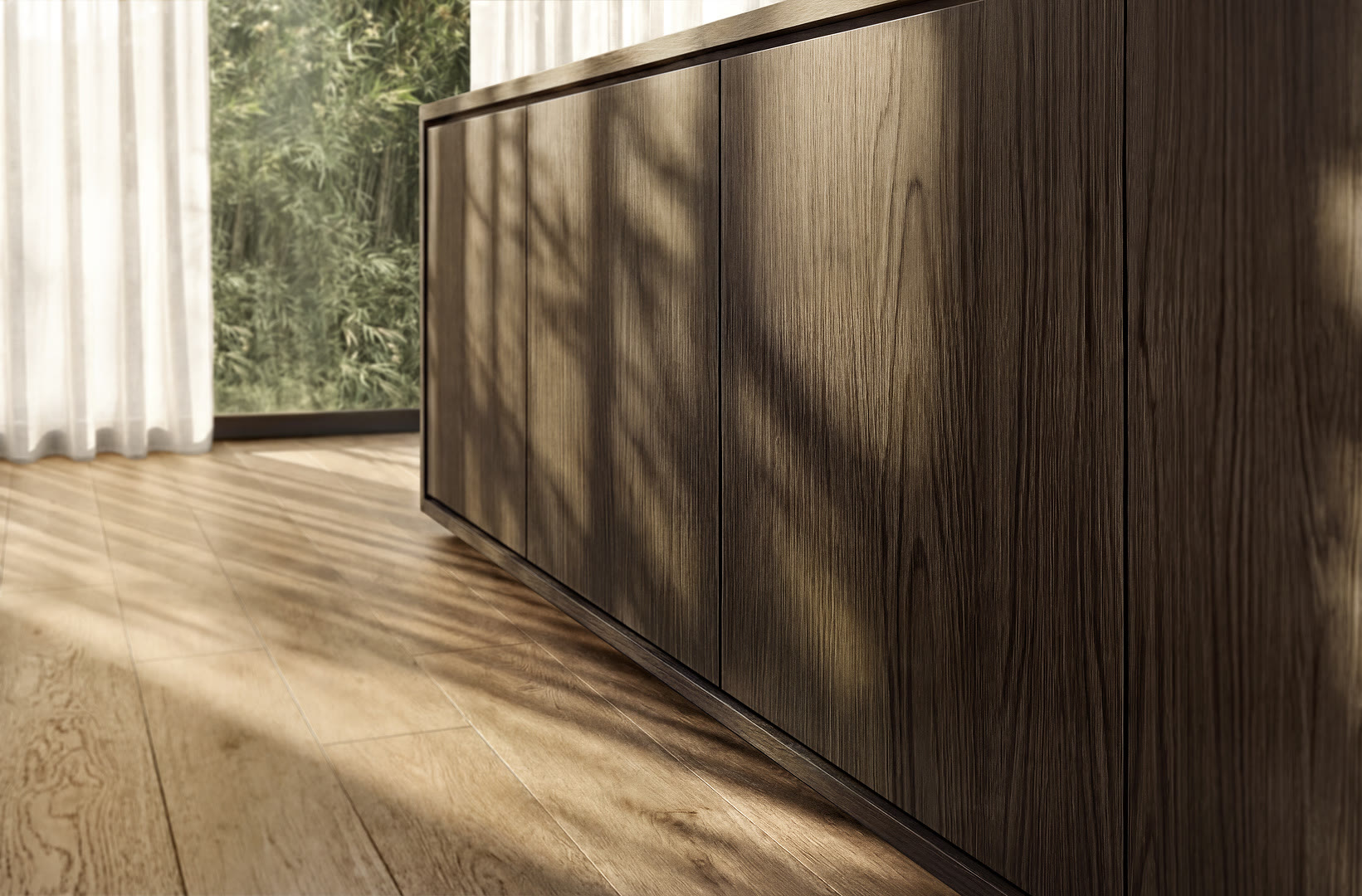
Most white oak veneer starts as plain-sawn lumber. That is the most common cut, and it gives you the cathedral grain pattern you see in older furniture. It can be beautiful, but in a run of kitchen cabinets it can also feel busy, especially on wide drawer fronts.
Quarter-sawn oak is cut so the growth rings run closer to vertical. The grain is straighter, and it often shows small ray flecks, the silvery lines that catch the light. Rift-sawn oak goes a step further. The grain is even straighter and the flecks nearly disappear, which gives a very clean, modern look.
Rift and quarter-sawn cuts cost more in general because they waste more of the log. But the calmer grain is often worth it in a modern kitchen, where wide slab doors and long runs of cabinets leave the pattern fully visible. If you want the quietest possible background, ask to compare rift-sawn samples. If you like a little movement, quarter-sawn white oak is a good middle ground.
Natural Finish vs Stain: Which One Ages Better?
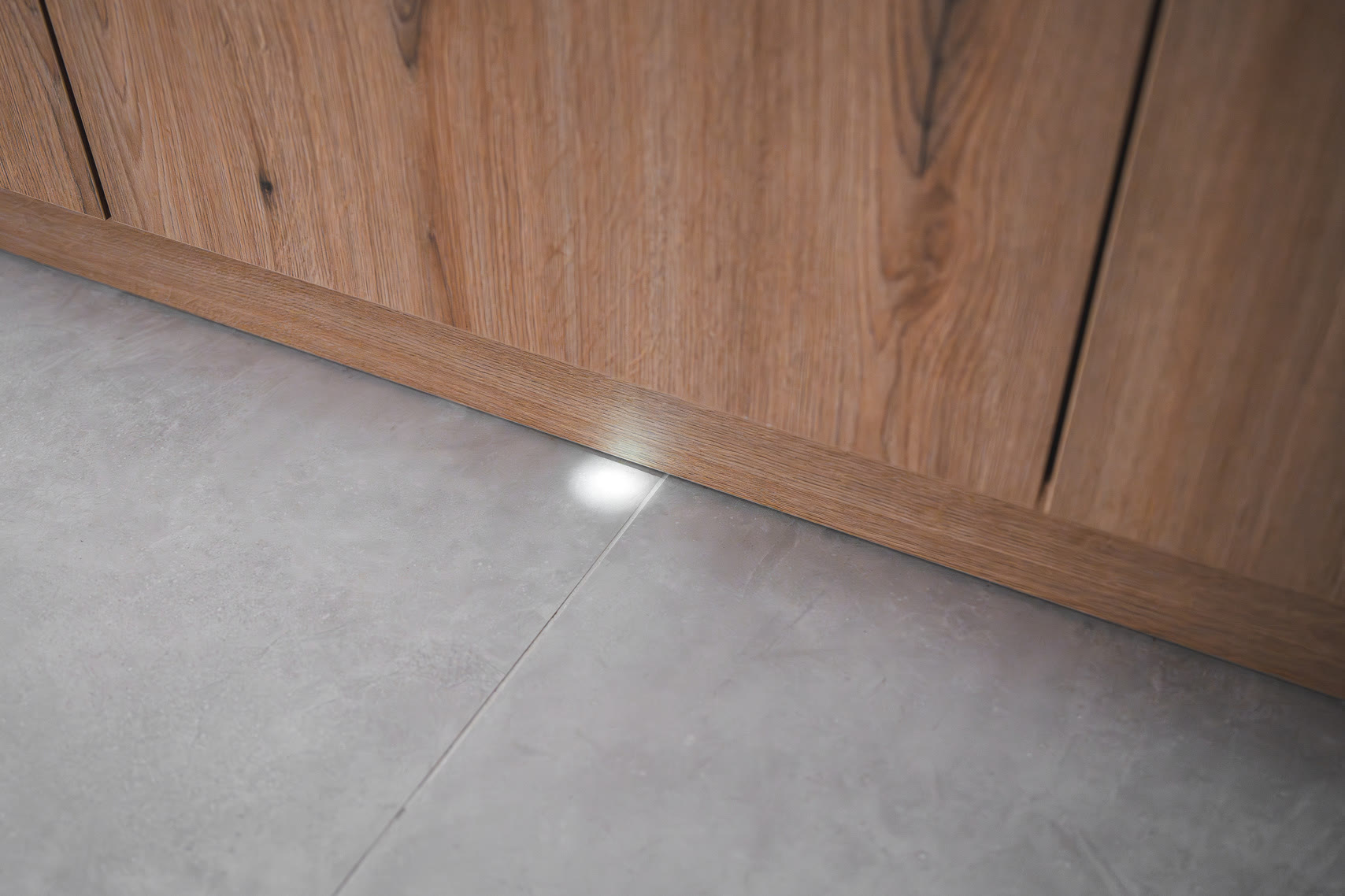
I lean toward a natural matte finish for white oak. It lets the wood do the work and tends to hide daily wear better than a stain or a high-gloss lacquer. A stain can look great on day one, but it sits more obviously on the surface and can show scratches or worn edges sooner. A natural finish may mellow slightly with light, but it keeps the change gradual and even.
If you like a whiter, brighter look, choose a finish like Oak Bianco with a soft-matt lacquer. If you want more warmth, Oak Crema is the one to compare. The finish matters as much as the wood because it decides how light hits the grain. In a North-facing kitchen, a pale natural finish can look almost gray. In strong afternoon light, the same finish can read much warmer. That is why I never let a client choose from a photo alone.
How White Oak Cabinets Age in a Busy Kitchen
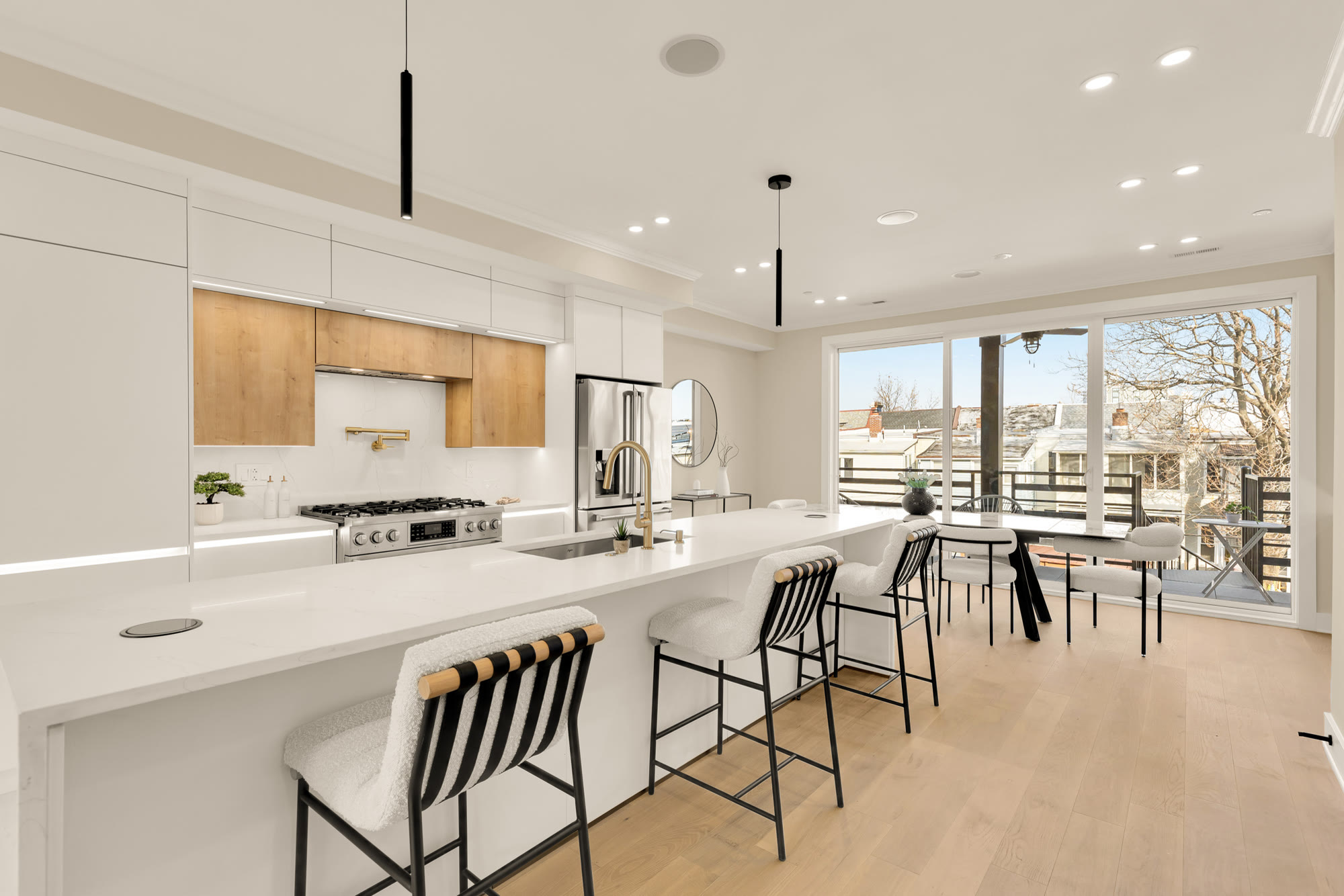
White oak is forgiving. Small dings and fingerprints do not announce themselves the way they do on high-gloss white or dark painted fronts. The grain gives the eye somewhere to land, so everyday marks blend in. The finish will change a little over time. Natural wood tends to warm or amber slightly, especially near windows with strong afternoon light. That is normal. It is not a defect.
If you want to slow that shift, keep direct sunlight off the cabinets where you can, and choose a matte lacquer instead of an oiled finish. Soft-matt lacquer is built for kitchens and is easier to clean than an oiled surface, which needs periodic care. The cabinets will still lightly change, but the shift is slow enough that most people never notice it until they compare a new sample against a door that has been in the sun for a few years.
Caring for White Oak Veneer Without Overthinking It
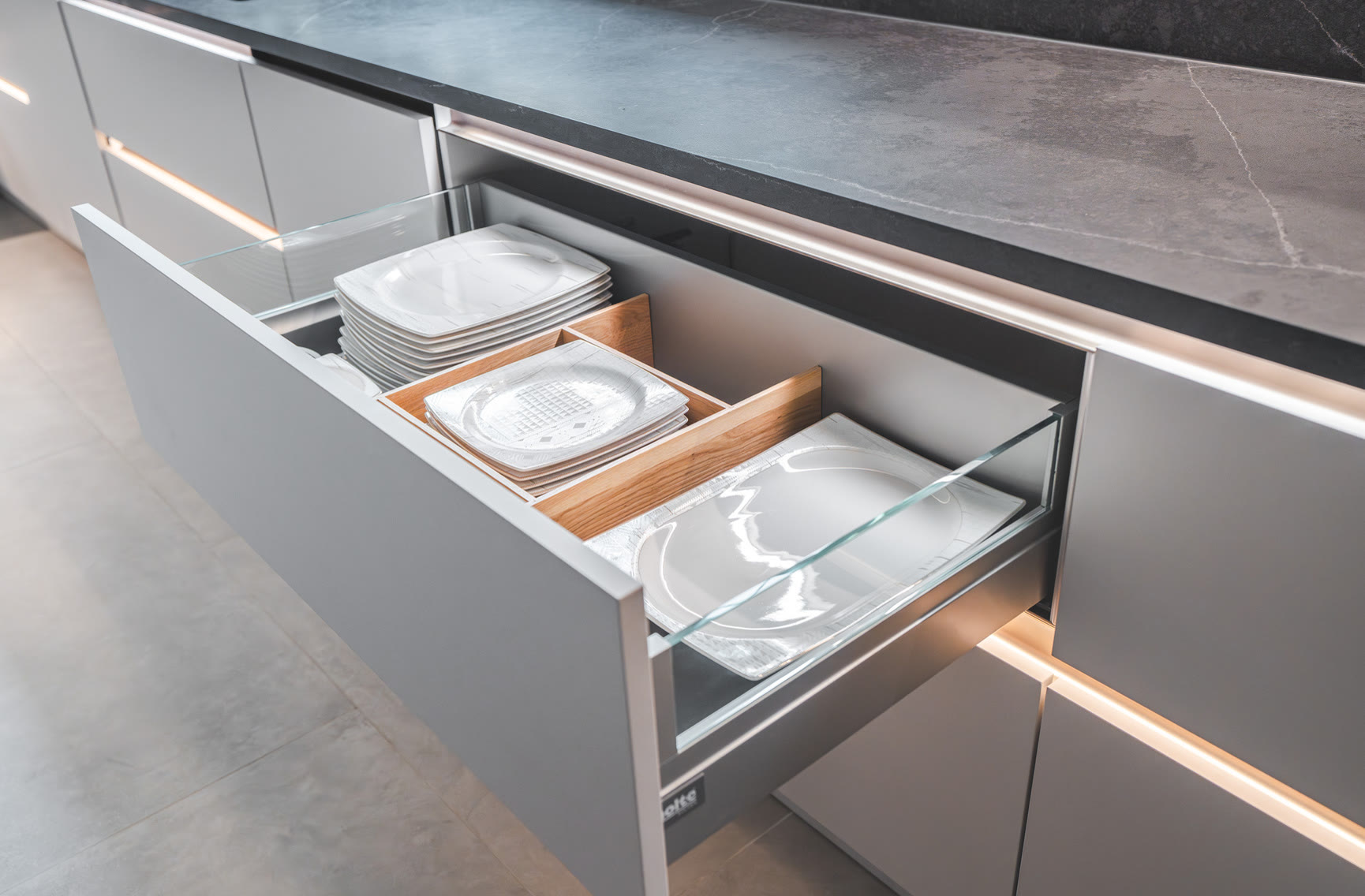
Most of the time, a soft cloth with water and a little mild dish soap is all you need. Wipe up cooking splatter before it dries. Avoid abrasive pads and strong solvents, because they can dull the finish or wear through the veneer at the edges.
For the inside of drawers, do not overfill them. That protects the soft-close hardware and the drawer boxes. And if you notice a small scratch, leave it. Touching up a matte wood finish with the wrong product usually looks worse than the scratch. If a door gets damaged, it is better to talk to the company that supplied the cabinets before trying a repair, because they can match the exact finish.
Compare the Finishes in Person Before You Decide
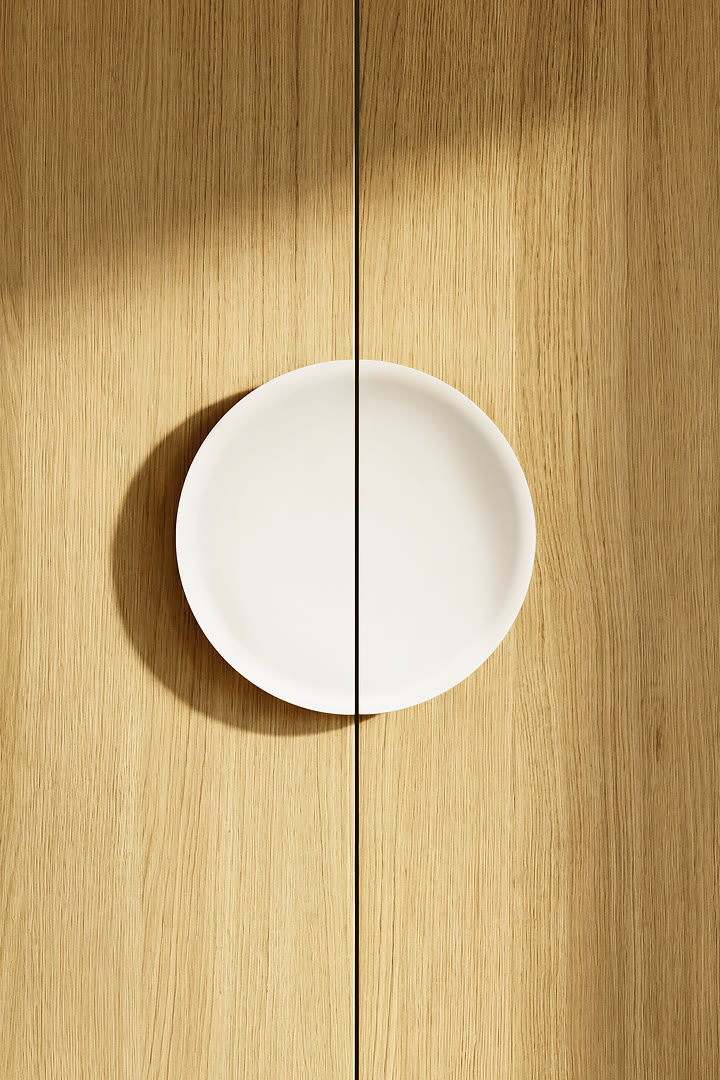
This is the step I wish more people took before ordering. Photos flatten the difference between a silvery white oak and a warm one, and they cannot show how the texture feels or how the finish reads under your own light. Our Alexandria showroom holds full-size cabinet displays, so you can open drawers, test soft-close hardware, compare matte lacquer against real wood grain and metal, and see how finishes look under real light. Each cabinet is built to order in Germany to your room's measurements, designed in 3D at our Alexandria showroom and installed by our own team across Northern Virginia, Washington DC and Maryland.
If you are ready to compare finishes, start with our custom kitchen cabinets page and plan a visit to the Alexandria showroom. I would rather you spend an hour looking at samples than six months regretting a finish you chose from a photo.
Frequently Asked Questions
Is white oak kitchen cabinetry solid wood?
Does rift-sawn white oak cost more?
Will white oak cabinets turn yellow over time?
Can I see white oak finishes before I order?
Keep Reading

Custom vs. Bespoke vs. Designer Cabinets Explained
Custom, bespoke, and designer cabinets get used interchangeably. Here is what each one really means and how to choose, from our Alexandria showroom.

Walnut Kitchen Cabinets: Grain, Finishes and Countertops
How to choose walnut kitchen cabinets: reading grain and tone, veneer versus solid wood, and the countertops that pair with Walnut Rosado and Havana.

Oak Bathroom Vanities: Light Oak vs Dark Oak in a Modern Bath
Light oak keeps a bathroom calm and larger. Dark oak adds weight and quiet drama. Here is how I help clients choose between them.
Choosing kitchen cabinets?
See our custom European cabinetry, or request an estimate for your kitchen.