
Walnut Kitchen Cabinets: Grain, Finishes and Countertops
How to read walnut grain, choose veneer over solid wood, and pair it with the right countertop in a Northern Virginia kitchen

Sam K. · Showroom Manager
· 5 min read

Walnut kitchen cabinets look best when three things line up: a grain and tone that suit your light, a veneer surface that stays consistent across long runs, and a countertop quiet enough to let the wood lead. Get those right and walnut is one of the warmest, most durable looks we build. Get them wrong and the room either feels dark or the grain fights everything around it. This guide walks through each decision, using the two walnut finishes we actually specify, Walnut Rosado and Havana Walnut.
If you want the broad comparison of cabinet materials first, we have a separate cabinet materials guide. This article stays on walnut.
What should you look at first in walnut grain and tone?
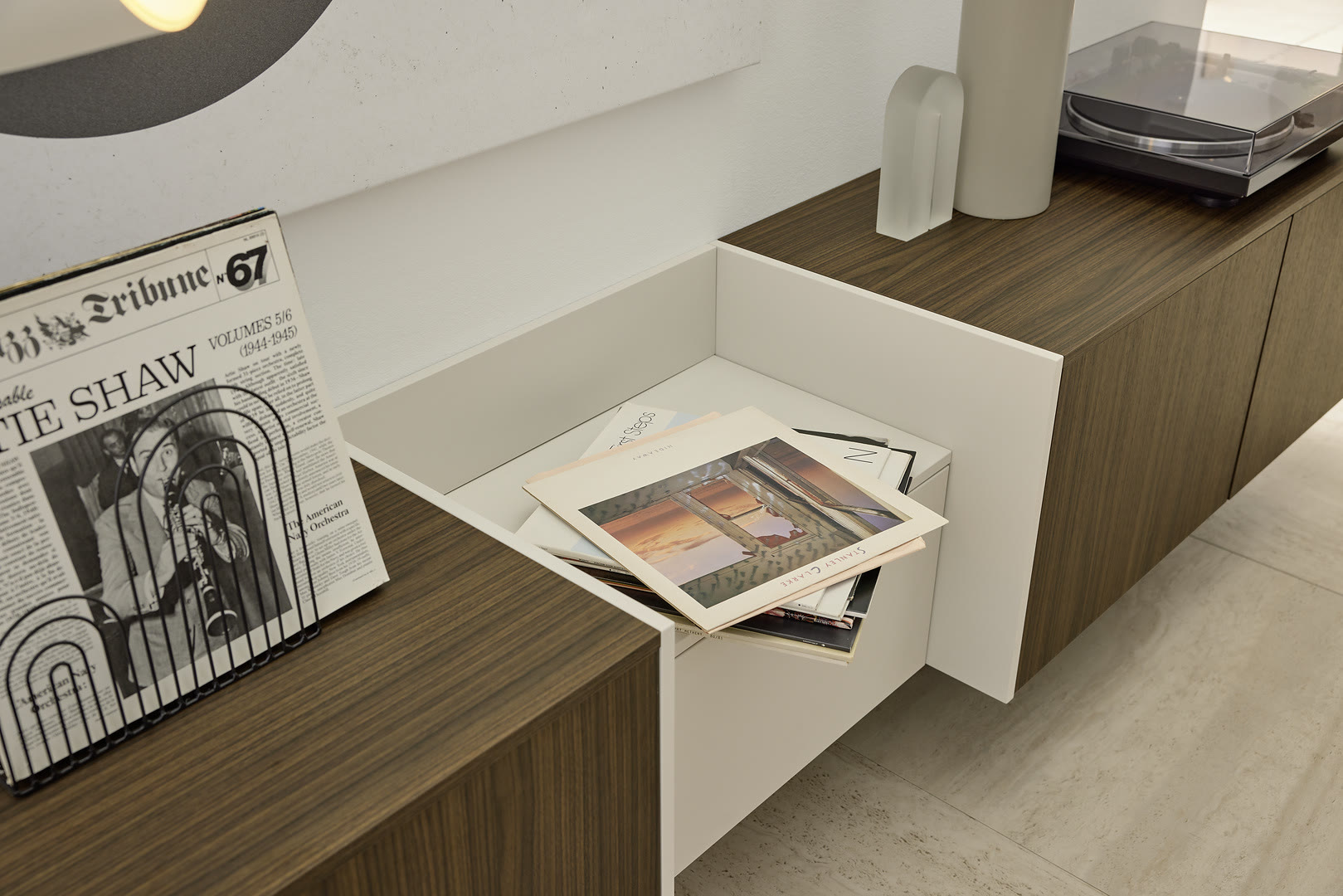
Most people choose walnut from a small chip, then are surprised when the full wall looks different. That is normal. Walnut has long, flowing grain, and a two-inch sample never tells you what a run of tall cabinets will do. The first thing I tell a client is to take the largest sample we can give them and live with it in their own kitchen for a few days.
The reason is light. Walnut shifts more than people expect between morning and evening. A client in Vienna, just outside Alexandria, loved a tone under our showroom lights and almost rejected the same sample at home, because her kitchen faces east and the wood went noticeably warmer by late afternoon. Nothing was wrong with the wood. The light was telling the truth and the chip had not.
Tone is one axis. Grain pattern is the other. Walnut can be cut to show a straight, calm grain or a more open, cathedral figure. For a kitchen we usually steer toward the quieter cut, because cabinet fronts repeat across a wall and a busy figure gets tiring fast. Save the drama for one feature, like an island front, not the whole room.
Veneer or solid wood: which walnut surface actually holds up?
This is where a lot of homeowners have it backwards. They assume solid walnut is the premium choice and veneer is the budget fallback. On a cabinet front, the opposite is usually true.
Solid walnut moves. Wood expands and contracts with humidity, and our climate swings hard between a damp summer and a dry, heated winter. A wide solid door can cup or develop seasonal gaps. A good walnut veneer over a stable core stays flat through all of that. It also lets us do something solid wood cannot: run matched grain across a whole wall of cabinets so the pattern flows door to door instead of stopping and restarting at every seam.
Veneer is real walnut. It is a thin layer of the same wood, laid over an engineered panel that will not fight the seasons. For the parts that take abuse, like the countertop and a butcher block zone, solid wood still earns its place. But for the vertical fronts you look at every day, veneer is the surface I recommend without hesitation. Judge quality by the core, the thickness of the veneer, and the finish, not by the word solid.
How do Walnut Rosado and Havana Walnut compare?
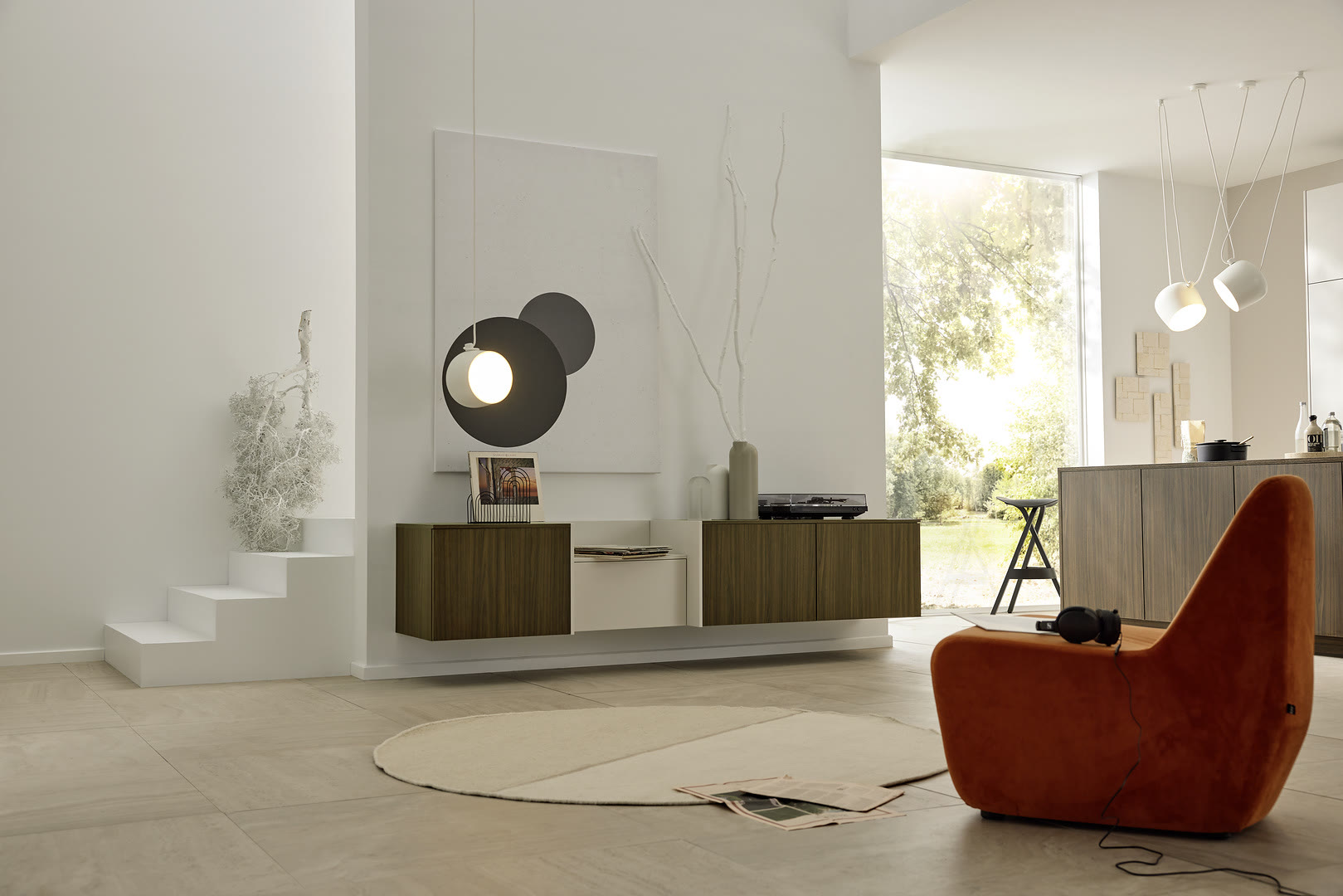
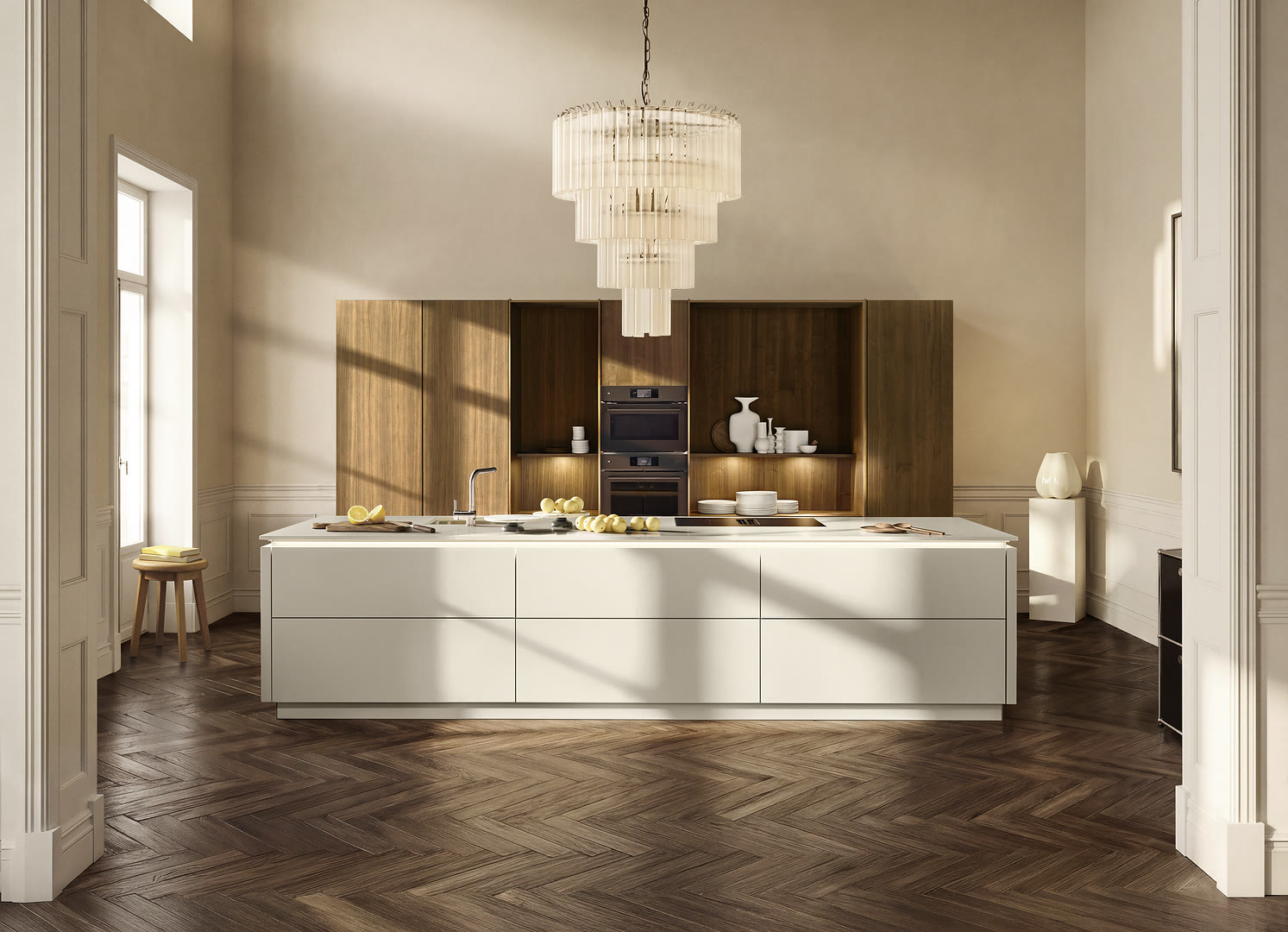
These are the two walnut finishes we specify, and they are not interchangeable. Walnut Rosado runs warm, with a reddish undertone that reads friendly and a little softer. Havana Walnut is darker and more even, closer to a deep brown with less red in it. In a photo they can look similar. In a room they set completely different moods.
Rosado suits a kitchen that gets good natural light and wants warmth, especially paired with a pale second finish so it does not go heavy. Havana holds its own in a larger, open space where you want the cabinets to feel grounded and quiet. I had a couple from Arlington nearly choose Havana for a small galley with one north window, and we talked them back to Rosado with a light countertop, because the darker finish would have closed that room down.
The honest takeaway: do not pick between them from the names or the catalog. Both finishes behave differently in your specific light, and the only reliable test is a large sample on your wall. That costs nothing and prevents the one mistake that is expensive to undo.
Which countertops pair well with walnut cabinets?
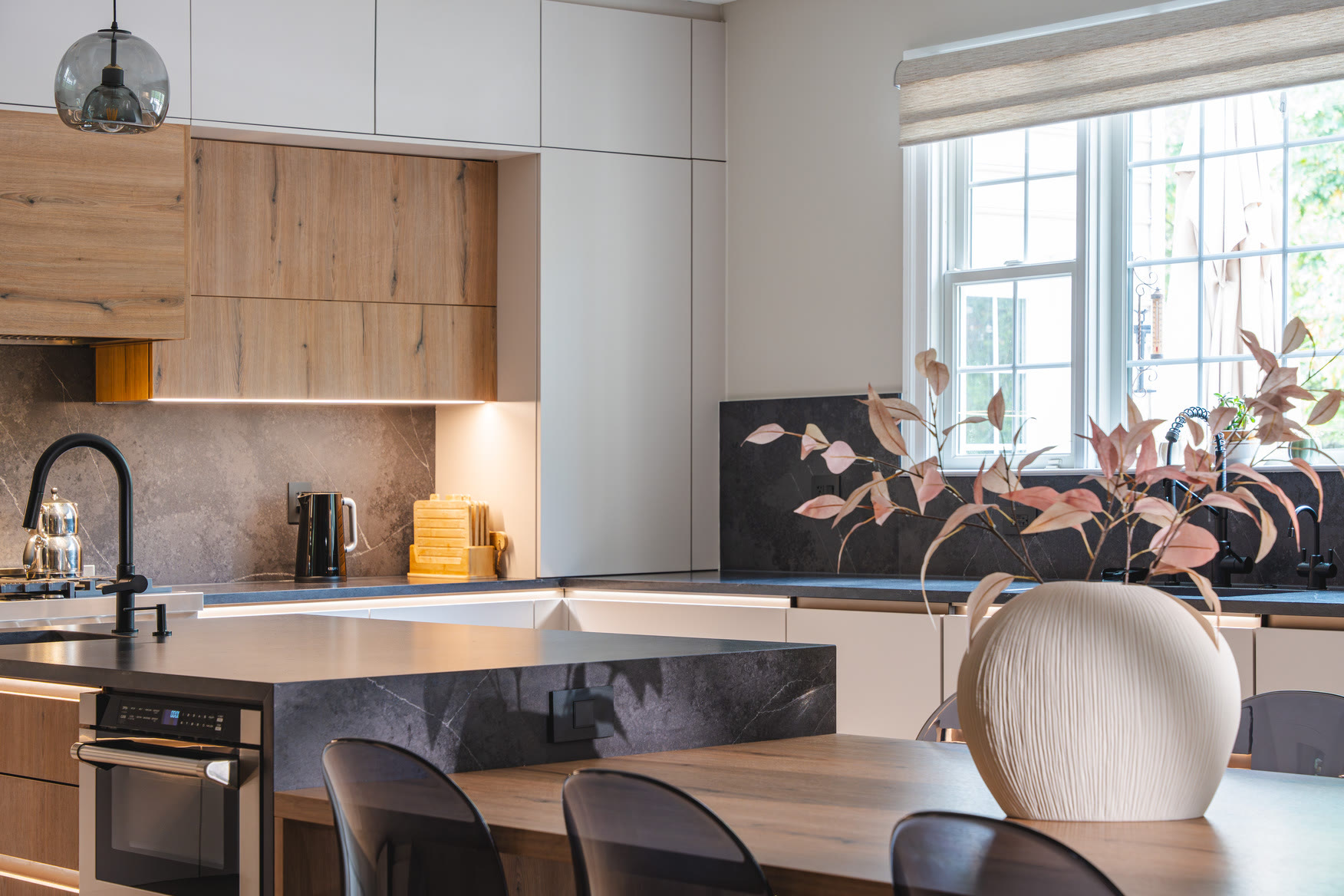
Walnut already carries a lot of visual information. The grain moves, the tone is rich, and your eye is drawn to it. So the countertop's job is usually to step back, not to compete. The pairings that work hardest in our walnut kitchens are the calm ones: a white or soft gray quartz, a honed stone with gentle movement, or a warm neutral that echoes the wood without matching it.
Where people get into trouble is reaching for a bold, heavily veined marble-look slab because it is beautiful on its own. Next to walnut, two strong patterns fight, and the room never settles. If you love dramatic stone, let it be the only loud thing and keep the walnut calmer, or save the drama for a different kitchen. For the quartz and Dekton side of this, our countertop comparison goes deeper on the surfaces themselves.
One more practical note. Walnut looks best when the countertop edge is kept simple. A thin or square edge lets the wood read as the feature. A thick, ornate edge pulls attention to the stone and away from the grain you paid for. We lay the wood sample and the slab sample side by side in daylight before anyone orders, because the pairing is the whole point, and it is easy to see once the two are touching.
Put it together and walnut is a straightforward material to live with, as long as the decisions happen in the right order: grain and tone first, veneer for the fronts, the right one of Rosado or Havana for your light, and a quiet countertop to let it all lead. If you want to see how walnut reads against real stone and your own kitchen's light, that is exactly what the samples are for.
Frequently Asked Questions
Are walnut kitchen cabinets a passing trend?
Will walnut cabinets make my kitchen feel dark?
Is walnut veneer lower quality than solid walnut?
What countertop goes best with walnut cabinets?
Keep Reading

Fluted Kitchen Cabinets: Where to Use Them and Maintain Them
Where fluted kitchen cabinets work, how to balance them with flat doors, and how to clean the grooves without turning it into a chore.

Handleless Kitchen Cabinets: Opening Systems and Daily Use
How handleless kitchen cabinets open, how each system feels to use, and which one stays cleanest. Honest trade-offs from our Alexandria showroom.

Appliance Garage Ideas: Door Styles, Storage and Layout
An appliance garage hides small countertop appliances while keeping them plugged in and ready. Here is how we plan doors, power, and layout for DMV kitchens.
Ready to talk through your remodel?
Visit our showroom or request an estimate. We will walk you from first ideas to final installation.